


Yoga Therapy in Kailua
Personalized yoga, breath, and movement on Oʻahu.

Yoga therapy (Yoga Chikitsa) | योग चिकित्सा
Ask the clinic about individual yoga therapy, session length, pricing, and availability before booking.
Yoga therapy is a one-on-one, personalized approach to yoga that uses posture, breathwork, nervous system regulation, and simple strength and mobility work to help you feel better in your real life.
This is not a “perform the pose” kind of session. It is a practical, therapeutic process designed around your body, your present ability, and your goals. If your system has been running tight, guarded, or overstimulated, yoga therapy helps you rebuild ease without forcing flexibility.
In Ayurveda, pain and stiffness often come with vata patterns: dryness, irregularity, tension, and the body bracing against stress. Yoga therapy works directly with those patterns by adding steadiness, warmth, breath, and repeatable movement that restores confidence in the body.
Best for: chronic tension patterns, low back or neck and shoulder discomfort, postural fatigue, rebuilding after injury, stress held in the body, mild mobility limitations, “desk body,” shallow breathing, and feeling disconnected from your body.
Many clients like yoga therapy because it is both calming and empowering. You leave with less noise in the nervous system, and also a clear way to keep improving at home.
Common feedback includes:
• Less tightness without aggressive stretching
• More “space” in the low back, hips, neck, and ribcage
• Improved posture with less effort
• A steadier, slower breath that feels natural again
• Less bracing through the jaw, belly, shoulders, and pelvic floor
• More confidence moving, especially after pain or injury
• Better sleep quality when the nervous system settles
How Yoga Therapy tends to feel (what clients notice)

For many people, the biggest shift is not dramatic flexibility. It is the feeling that the body is no longer fighting itself. Movement becomes simpler. Standing feels lighter. Sitting feels less compressed. You feel more at home inside your own skin.
What Happens: A Session at Ayurveda Wellness Hawaiʻi
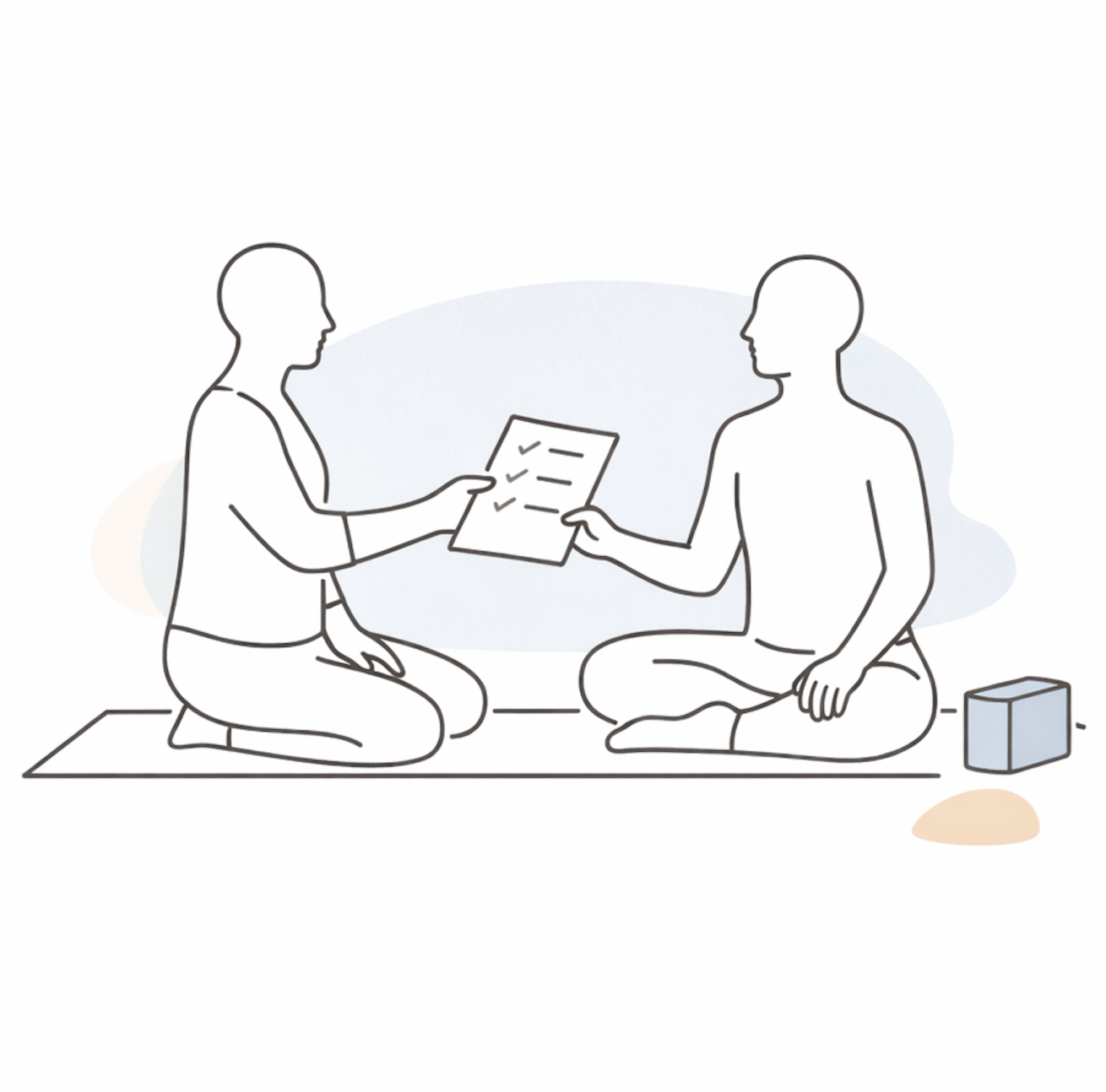
Every session is tailored to your body and your nervous system that day. We begin with a brief check-in around comfort, consent, boundaries, and what feels most important right now. Sessions are fully clothed and accessible for beginners.
Step 1
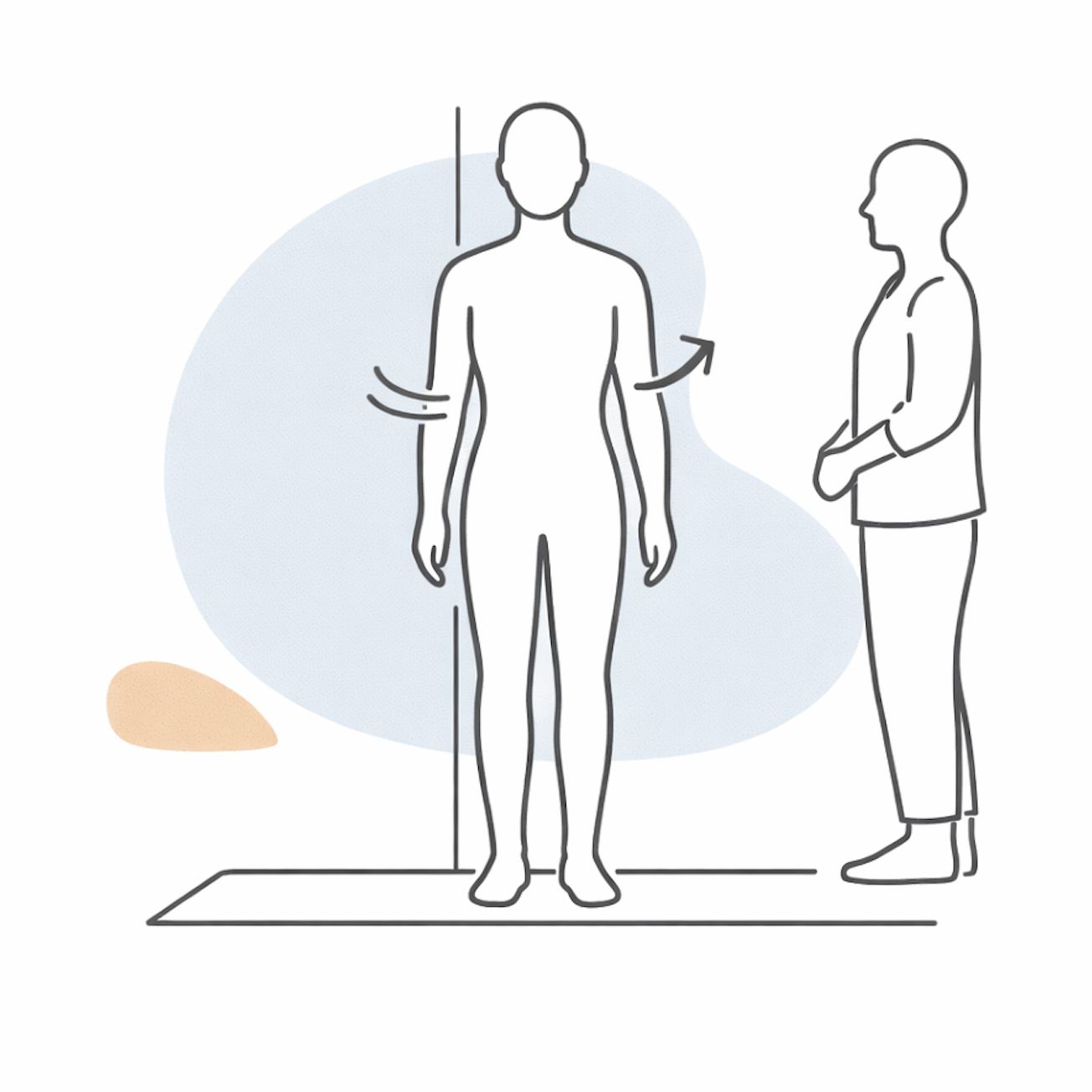
Intake + movement screen
We look at what is driving the pattern: posture, breathing mechanics, mobility restrictions, doshas, and the ways your body compensates. This helps us construct the right sequence of yoga postures.
Step 2
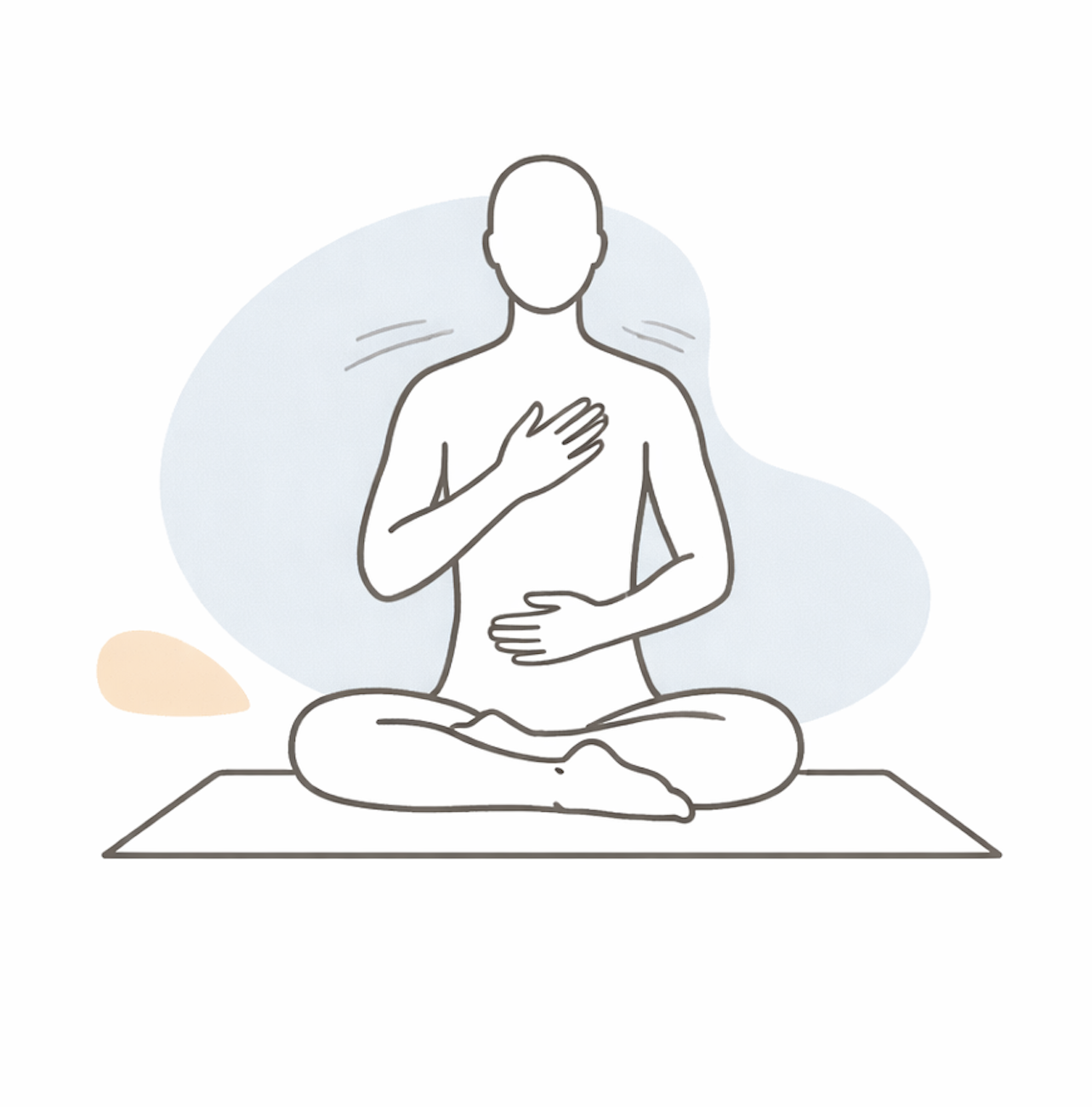
Nervous system downshift
We start with simple breath coaching to reduce bracing and help your system feel safe enough to change. Often this is where pain starts to soften, because the body stops guarding.
Step 3
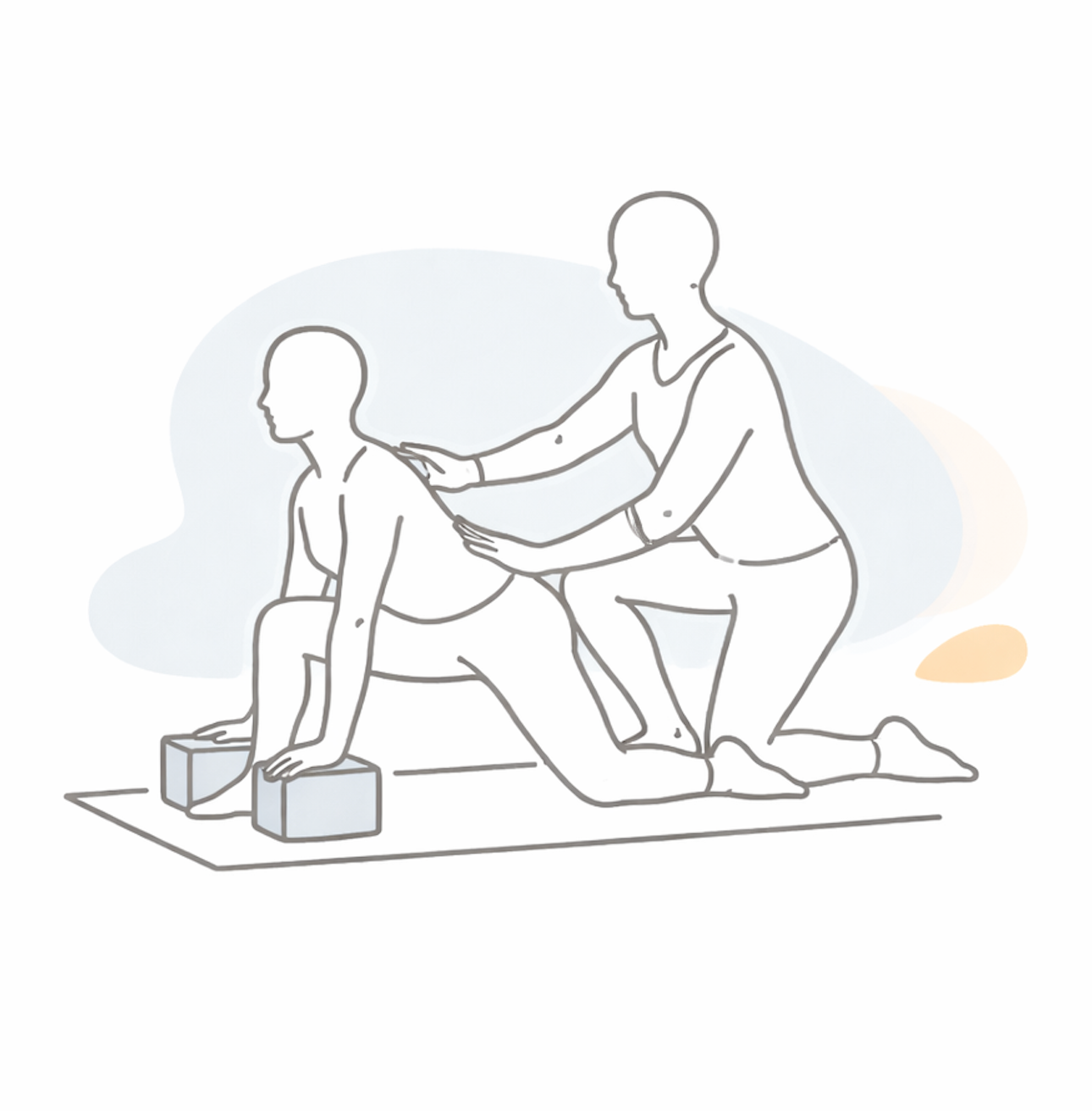
Therapeutic posture and movement
We practice a sequence that matches your needs: joint-friendly mobility, stabilizing strength, and posture training that supports your spine, hips, shoulders, and breath.
Integration & aftercare
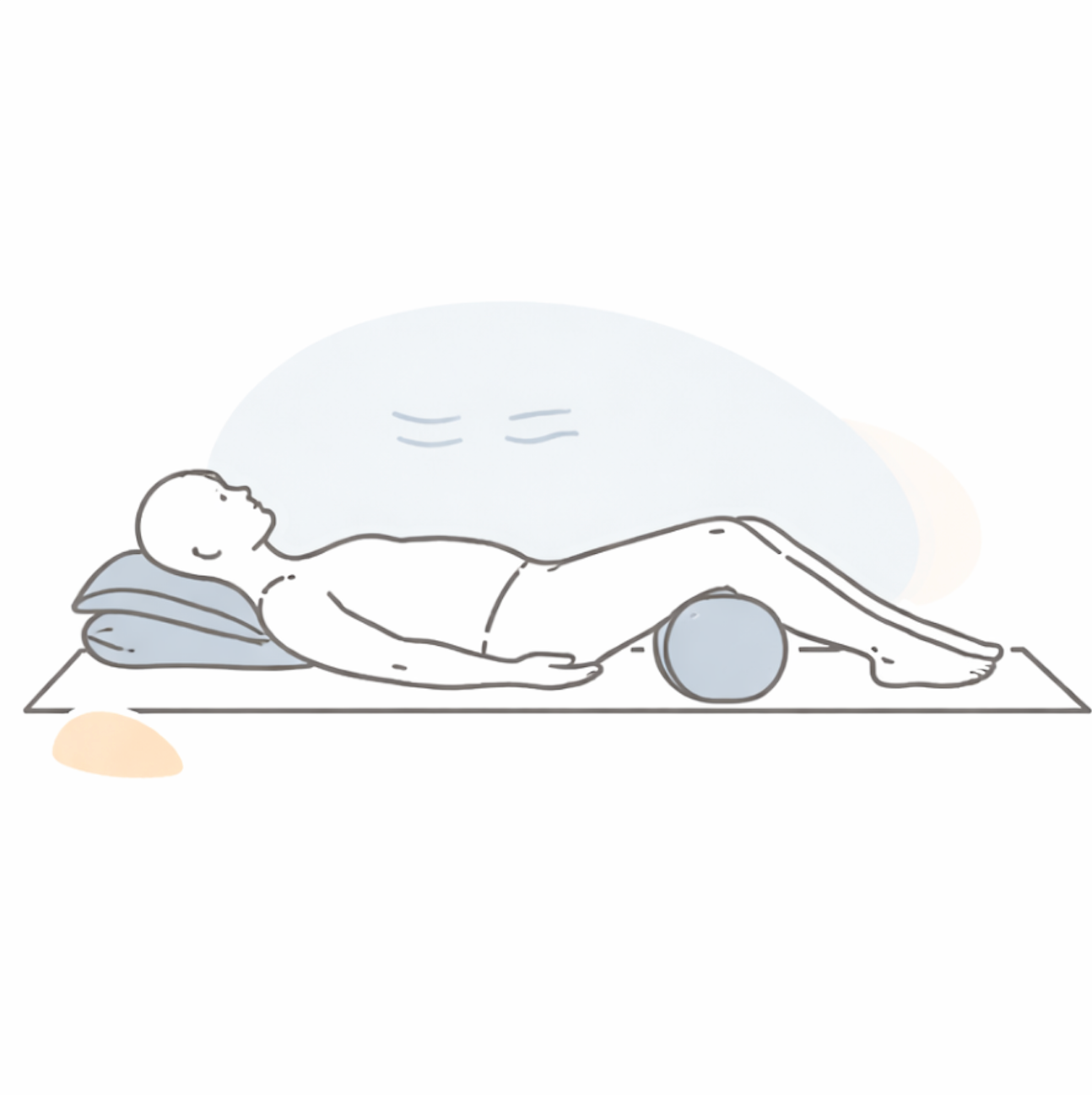
We finish with a quiet posture, guided relaxation, or meditation so the practice “lands.” This is where the nervous system learns the new pattern instead of snapping back into the old one.
Home practice plan (simple and realistic)
You leave with a short routine you can actually repeat. Usually 5 to 15 minutes is enough when the practices are targeted and consistent.
Energetics, Prana, and the Nervous System
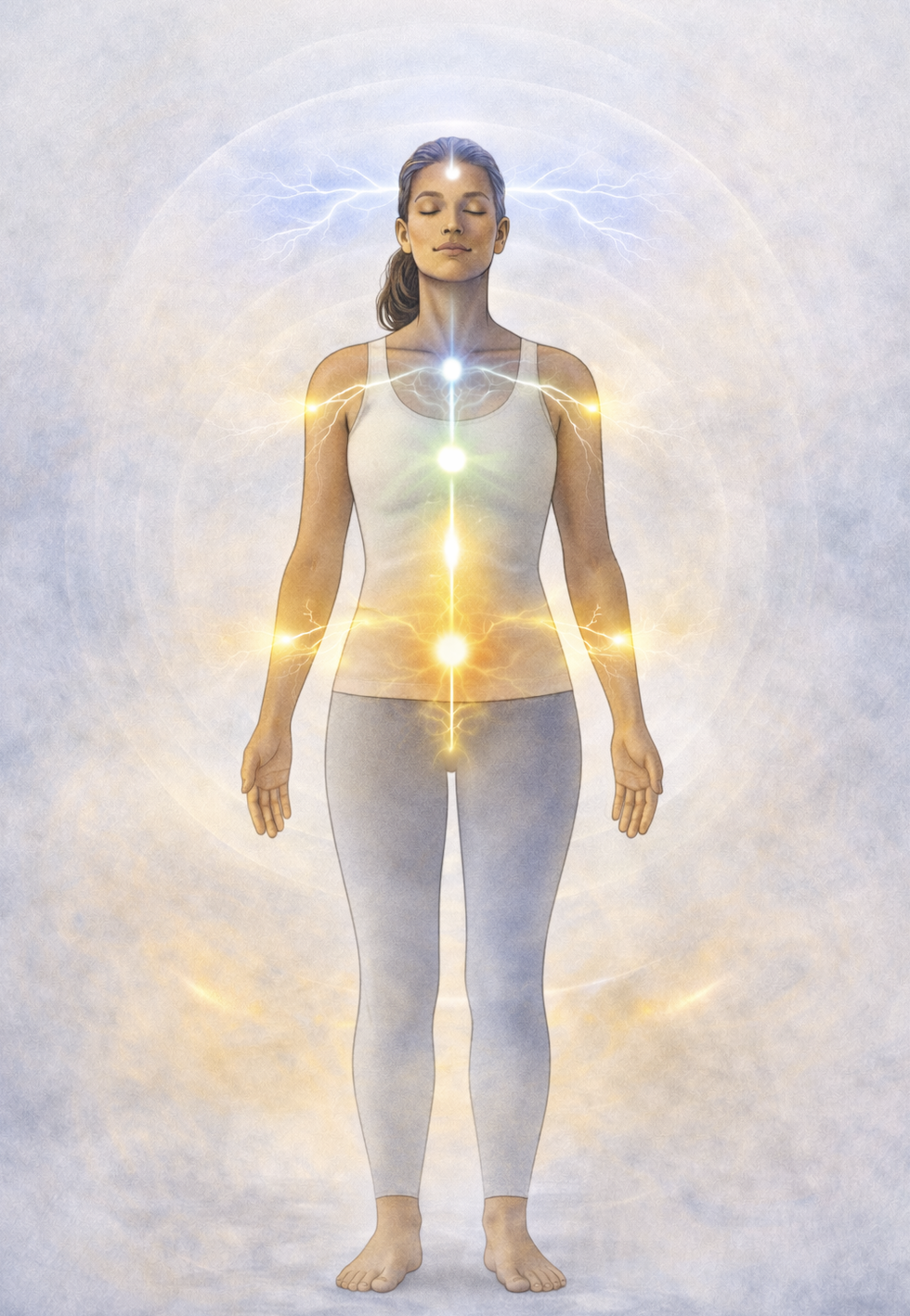
Yoga therapy is not only mechanical. It works with prana: the way energy and attention move through the system.
When the breath is shallow, the body often tightens. When the breath is smooth, the body often releases. When the breath is steady, the mind becomes less reactive. This is why yoga therapy is so effective for stress-based tension patterns: it trains stability from the inside out.
Yoga Sutra 2.46 to 2.47
स्थिरसुखम् आसनम् ॥ २.४६ ॥
प्रयत्नशैथिल्यानन्तसमापत्तिभ्याम् ॥ २.४७ ॥
Translation:
Posture is steady and comfortable.
Asana is mastered through relaxing unnecessary effort and allowing attention to expand.
This is the heart of therapeutic yoga. We choose shapes you can hold with steadiness and ease, then we reduce the strain that keeps your body stuck. Less forcing. More consistency. Better results.
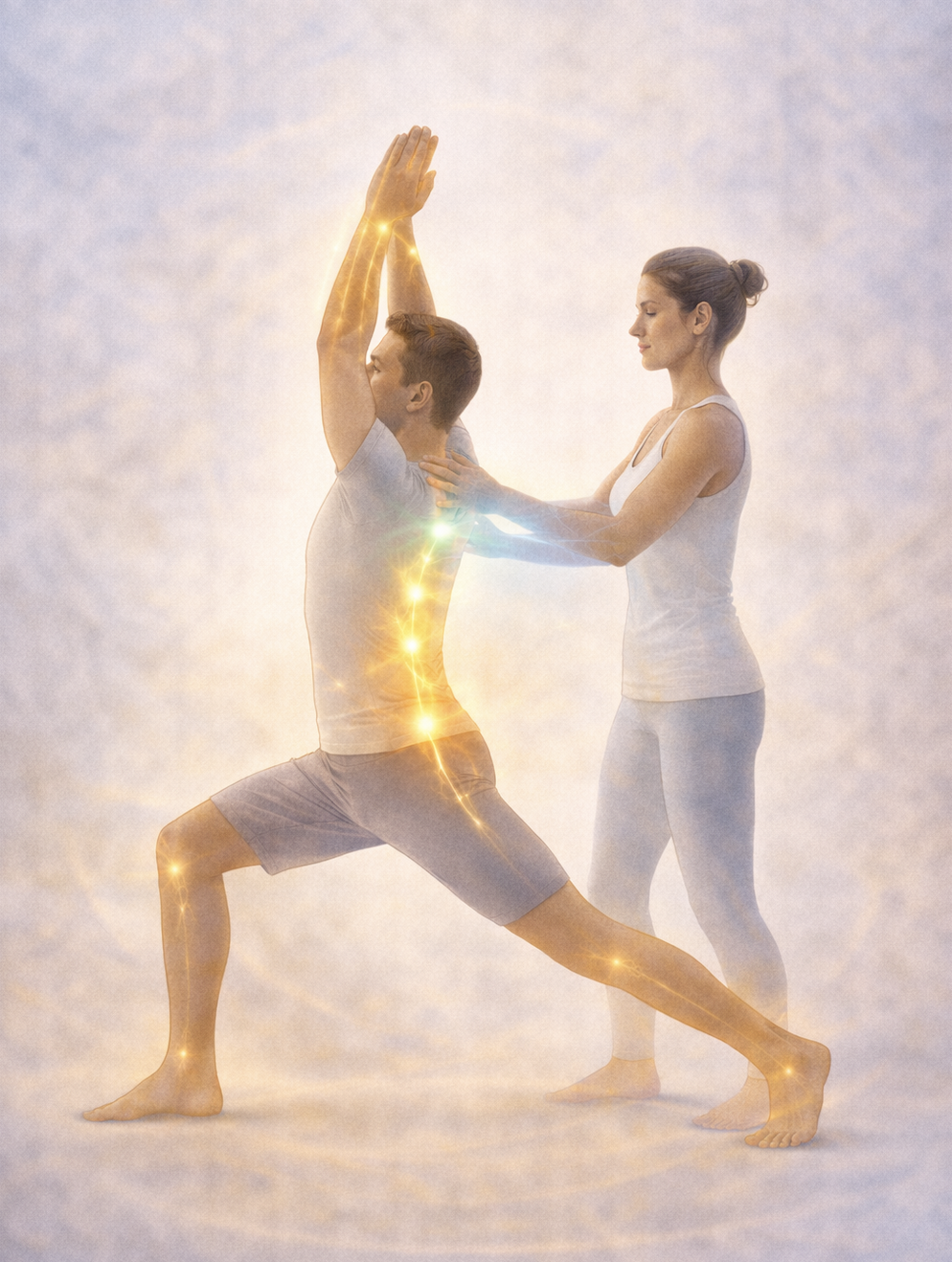
Ayurvedic yoga therapy brings Ayurveda’s assessment lens into the way yoga is chosen, sequenced, and paced. We start by looking at constitution and current imbalance, then we map that to what your body is actually doing day to day. Sleep and stress patterns, digestion, energy stability, injury history, posture at work, and training load all matter. We also factor in season, age, and stage of life, because the same practice that feels supportive in one season can feel depleting in another.
From there we design a one on one plan that includes a sequence and a simple protocol you can repeat between sessions. The goal is not to collect poses. It is to create reliable effects over time, such as better nervous system regulation, steadier digestion, fewer flare ups, and more ease in the joints and spine. Frequency is part of the design. Some people do best with short daily practice. Others need fewer sessions per week with more recovery built in. We adjust based on how you respond, not based on a fixed template.
Ayurvedic Yoga Therapy
Life stage matters as much as dosha. During high demand seasons, recovery periods, or times of sleep disruption, we often prioritize downshifting practices that improve steadiness before increasing intensity. In perimenopause and menopause, we commonly focus on spinal mobility, hip support, strength that protects the back and knees, and breath led pacing that supports sleep and heat regulation. In all cases, the plan evolves as your system and capacity change, and as the season shifts.
In short, our Ayurveda yoga therapy starts with an individualized assessment and then turns that information into a practical sequence and routine that matches your constitution, your current season of life, and the literal season you are in. We adjust pace, pose selection, and frequency based on how vata, pitta, or kapha patterns are showing up, and we evolve the plan as your sleep, digestion, energy, and pain patterns change. When it is part of a larger Ayurveda program, the yoga work reinforces the same goals as therapies like abhyanga and assisted stretching by supporting mobility and strength while helping the nervous system settle into a steadier baseline.
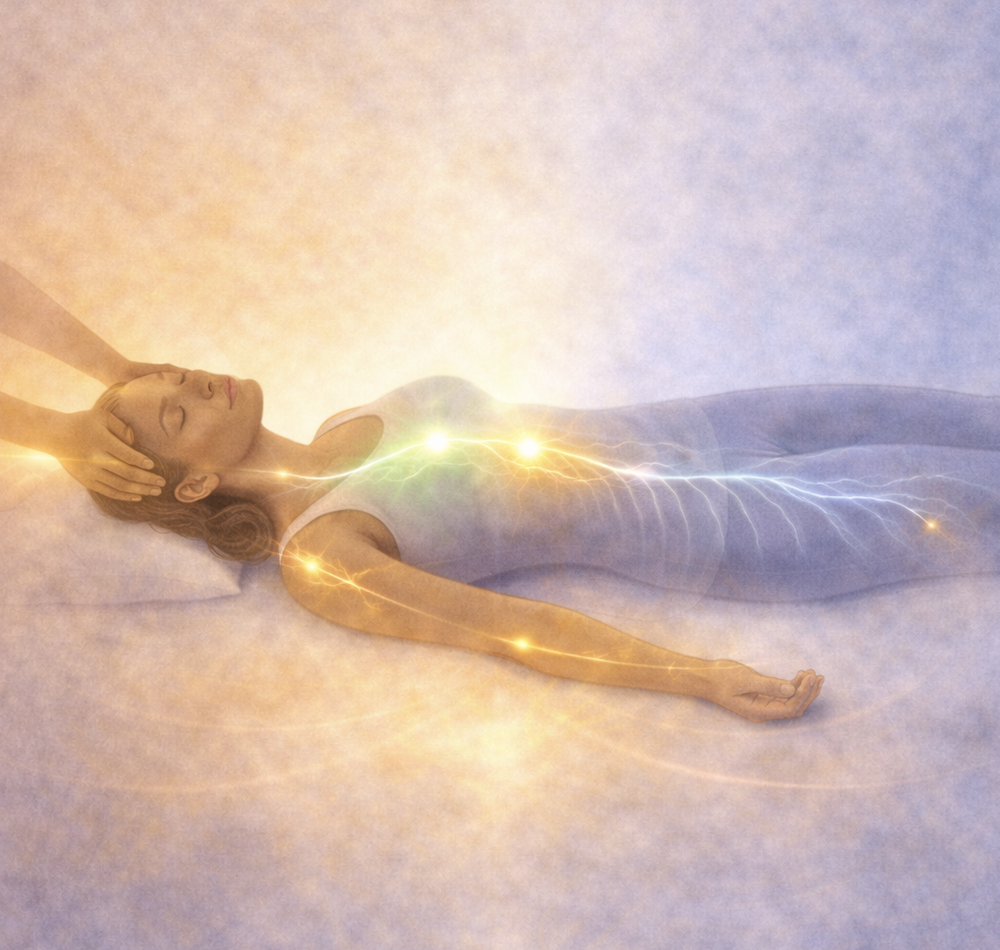
This fits naturally alongside traditional Ayurvedic body therapies like abhyanga (warm oil massage) and assisted stretching, because the work supports similar systems in different ways. Abhyanga and warm, steady touch tend to settle the sensory system and soften protective holding. Yoga therapy can then reinforce that shift through breath led pacing, grounded transitions, and strengthening that does not spike the stress response. When these are part of the same plan, the body gets a consistent message from multiple angles.
A few examples of how choices change by constitution and life stage can make this more concrete. When vata patterns are dominant, practice tends to be slower, warmer, and more rooted, with longer holds and fewer rapid transitions. Poses like balasana, supported bridge, gentle lunges, and viparita karani are often useful, especially when paired with breath practices that lengthen the exhale and reduce internal rushing. When pitta patterns are dominant, we usually reduce heat building and intensity, and emphasize steadiness and cooling qualities through supported forward folds, soft twists, side bending, and a calmer pace that keeps effort below the edge. When kapha patterns are dominant, the sequence often includes more standing work, rhythmic movement, and back body strengthening to build circulation and motivation, while still staying joint friendly and sustainable.
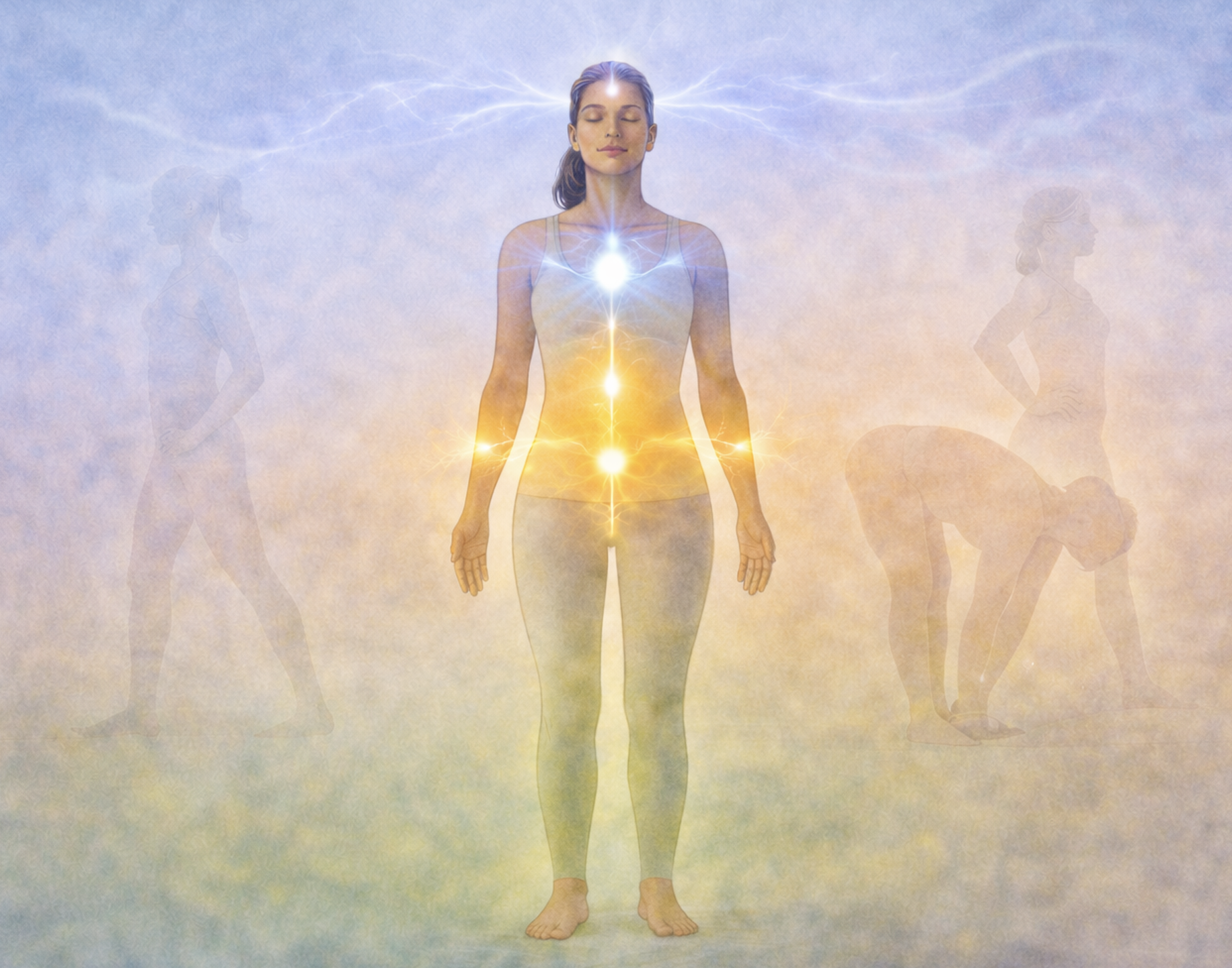
Sympathetic to Parasympathetic, Why it Matters

When stress is chronic, many people live in “go mode” all day: rushing, bracing, shallow breathing, overthinking, and pain that keeps tapping you on the shoulder. In that state, the body prioritizes output, not repair.
Yoga therapy helps train the switch back toward “rest and repair.” Breath-led movement is one of the most practical ways to do this because it gives the nervous system a predictable rhythm, and predictability is calming.
You can think of yoga therapy as building two skills at once:
• The ability to mobilize without over-tensing
• The ability to recover without effort
The goal is not to be relaxed all the time. The goal is flexibility: you can meet your day, then come back to baseline without dragging stress in your muscles for hours.

What Doctors & Researchers are Seeing
Research supports adapted yoga as one option for managing some forms of persistent pain and improving physical function. Results depend on the condition and the program studied.
In a 2024 trial of 140 adults with chronic low back pain, twelve weekly virtual yoga classes improved pain and back-related function compared with a wait-list group. [1] A 2025 knee osteoarthritis trial found yoga was not inferior to strengthening exercises for pain at twelve weeks; it did not show a significant pain advantage over strengthening. [2]
A 2024 review also found improvements in knee pain, stiffness, and function, but results varied considerably between studies. [3] An accessible, appropriately adapted practice can be assessed by how it affects your everyday movement.

The evidence is more mixed for other concerns. A trial of yoga added to conventional frozen shoulder treatment found no additional improvement in pain or disability after four weeks. [4]
For sleep, a large trial found that a specific gentle yoga program improved sleep quality among cancer survivors. This does not establish that every yoga style treats insomnia in the general population. [5] A 2025 review suggested yoga may help lower blood pressure, but rated the evidence as very low quality. [6]
Yoga can be considered alongside appropriate medical care, with the practice adapted to the person and realistic expectations about the research.
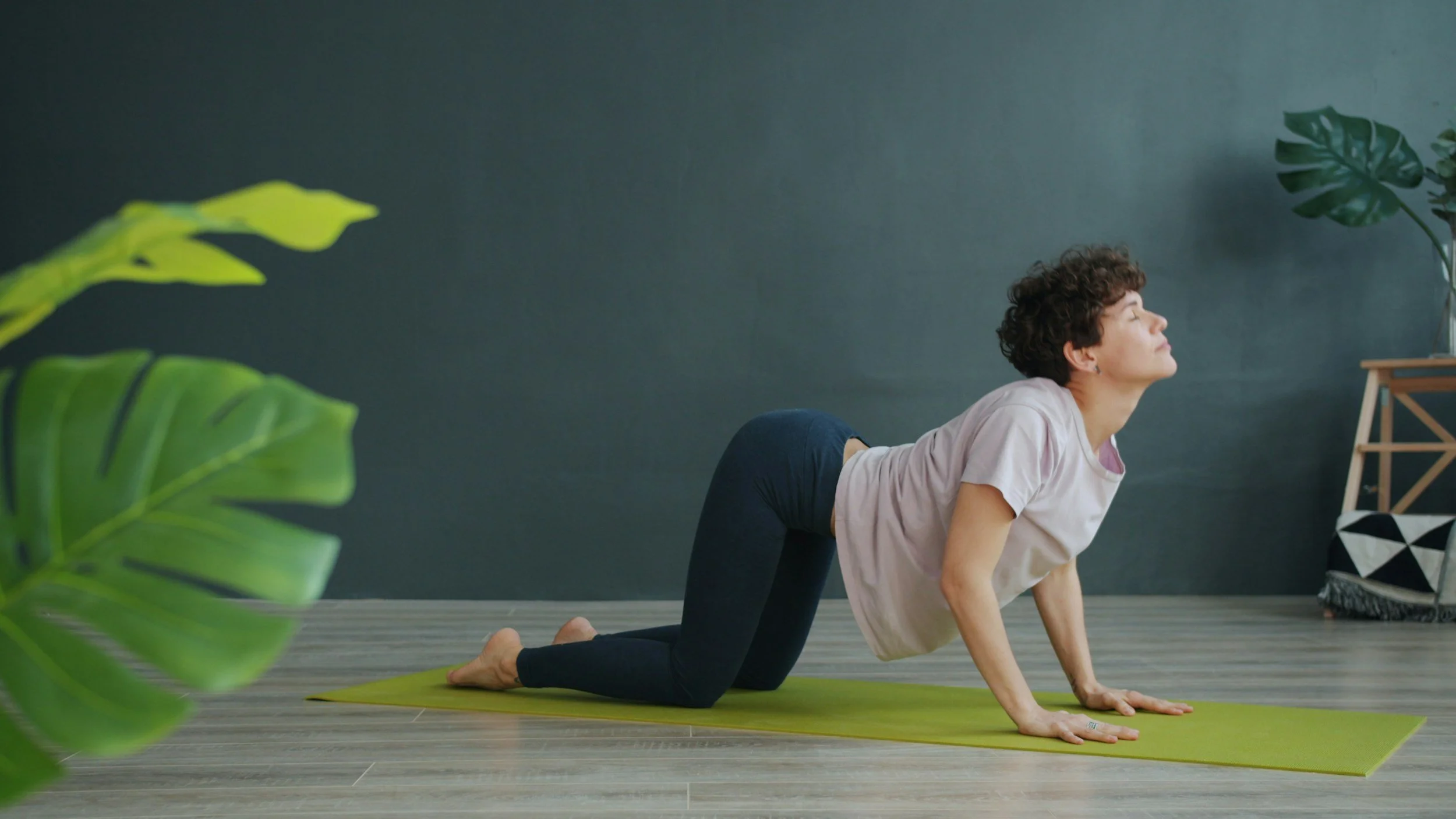
Massage research also calls for a balanced interpretation. A 2024 review of recent systematic reviews found some support for pain relief, but most conclusions had low or very low certainty. Strong evidence that massage outperformed other active treatments was uncommon. [7]
In a separate knee osteoarthritis trial, sixty-minute Swedish massage sessions improved pain and function compared with usual care at eight weeks, but differences were no longer significant at twenty-four weeks. [8]
These results suggest a possible role for massage in short-term symptom relief. They do not establish lasting recovery or prove that combining massage with yoga adds benefits. Treatment choices should reflect your goals, comfort, response, and other care you receive.
Research references
Tankha H, Gaskins D, Shallcross A, et al. Effectiveness of Virtual Yoga for Chronic Low Back Pain: A Randomized Clinical Trial. JAMA Network Open. 2024;7(11):e2442339.
Abafita BJ, Singh A, Aitken D, et al. Yoga or Strengthening Exercise for Knee Osteoarthritis: A Randomized Clinical Trial. JAMA Network Open. 2025;8(4):e253698.
Lu J, Kang J, Huang H, et al. The impact of Yoga on patients with knee osteoarthritis: A systematic review and meta-analysis of randomized controlled trials. PLOS ONE. 2024;19(5):e0303641.
Jain M, Tripathy PR, Manik R, et al. Short term effect of yoga asana—An adjunct therapy to conventional treatment in frozen shoulder. Journal of Ayurveda and Integrative Medicine. 2020;11(2):101–105.
Mustian KM, Sprod LK, Janelsins M, et al. Multicenter, randomized controlled trial of yoga for sleep quality among cancer survivors. Journal of Clinical Oncology. 2013;31(26):3233–3241.
Geiger C, Cramer H, Anheyer D, Dobos G, Kohl-Heckl WK. A systematic review and meta-analysis of yoga for arterial hypertension. PLOS ONE. 2025;20(5):e0323268.
Mak S, Allen J, Begashaw M, et al. Use of Massage Therapy for Pain, 2018–2023: A Systematic Review. JAMA Network Open. 2024;7(7):e2422259.
Perlman AI, Ali A, Njike VY, et al. Massage Therapy for Osteoarthritis of the Knee: A Randomized Dose-Finding Trial. PLOS ONE. 2012;7(2):e30248.
Yoga therapy FAQ’s
-
No. Yoga therapy is designed for real bodies, including stiff bodies, sore bodies, anxious bodies, and tired bodies. We start where you are.
-
Sometimes it can be strengthening, but the goal is function, not intensity. Many sessions feel calm and precise, like physical therapy meets breathwork.
-
Comfortable clothes you can move in. Think soft pants or shorts and a t-shirt. No special yoga outfit needed.
-
Yes, with appropriate scope and modifications. We keep it joint-friendly and focus on mechanics, stability, and reducing guarding. If you’re under medical care, yoga therapy can complement your plan. We work alongside and with your primary care team, and encourage checking in with them before beginning a new yoga therapy program.
-
It depends on your goal. Some clients come in to learn a personalized plan and then practice at home. Others like a steady rhythm of support while rebuilding after stress or injury. We’ll help you choose what is realistic.
-
If you have acute severe pain, a fresh injury, severe dizziness, unstable blood pressure, or any medical restriction on movement, let us know. We can modify, postpone, or refer out when needed.
By appointment. Closed Tuesdays.
Available times vary by service and practitioner.
Questions or help booking?
We’ll help you choose the right first visit.