

Sound Healing in Kailua
Himalayan singing bowls and tuning forks on Oʻahu.
Sound & Vibration Massage - Nāda Cikitsā नाद चिकित्सा
Ask the clinic about sound healing, session format, length, pricing, and availability before booking.
Sound & Vibration Massage is a hands-on, deeply regulating bodywork session blending therapeutic touch with Himalayan/Tibetan-style singing bowls and tuning forks. The bowls are placed on and around the body, and their vibration is used like a kind of “internal massage”—not loud or overstimulating, not forceful, but steady and profoundly settling.
Our approach is informed by traditional Himalayan bowl techniques through the Atma Buti® Sound & Vibrational School (Boulder, Colorado), and integrated through an Ayurvedic lens. We use sound in a practical way: to soften protective tension, help the breath drop, and support the feeling of circulation and movement in places that feel “stuck.”
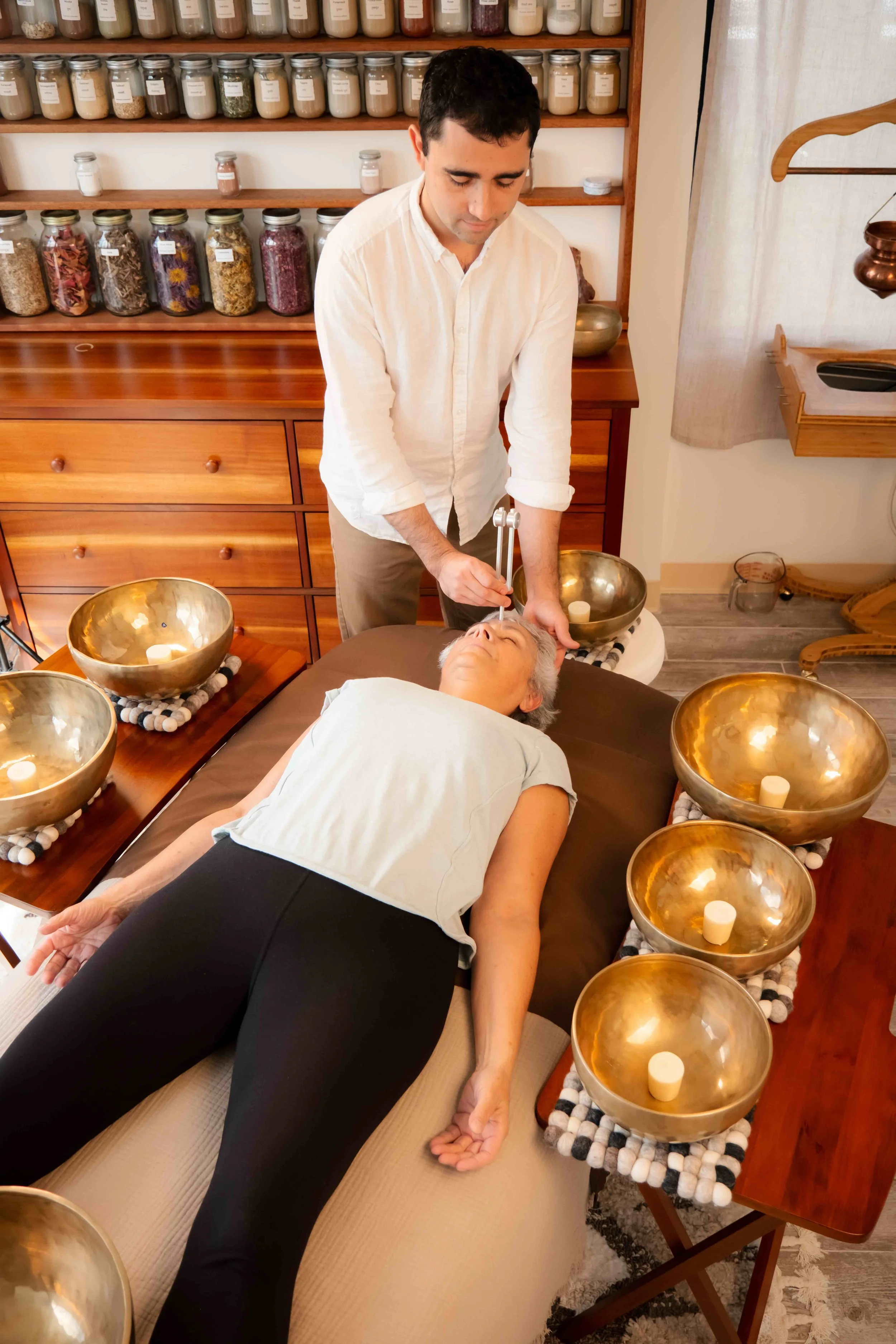
Best for: nervous system overload, stress that won’t turn off, anxious or scattered feeling, jaw/neck/shoulder holding, busy mind, sleep support, and heaviness or stagnation patterns that don’t respond well to force.
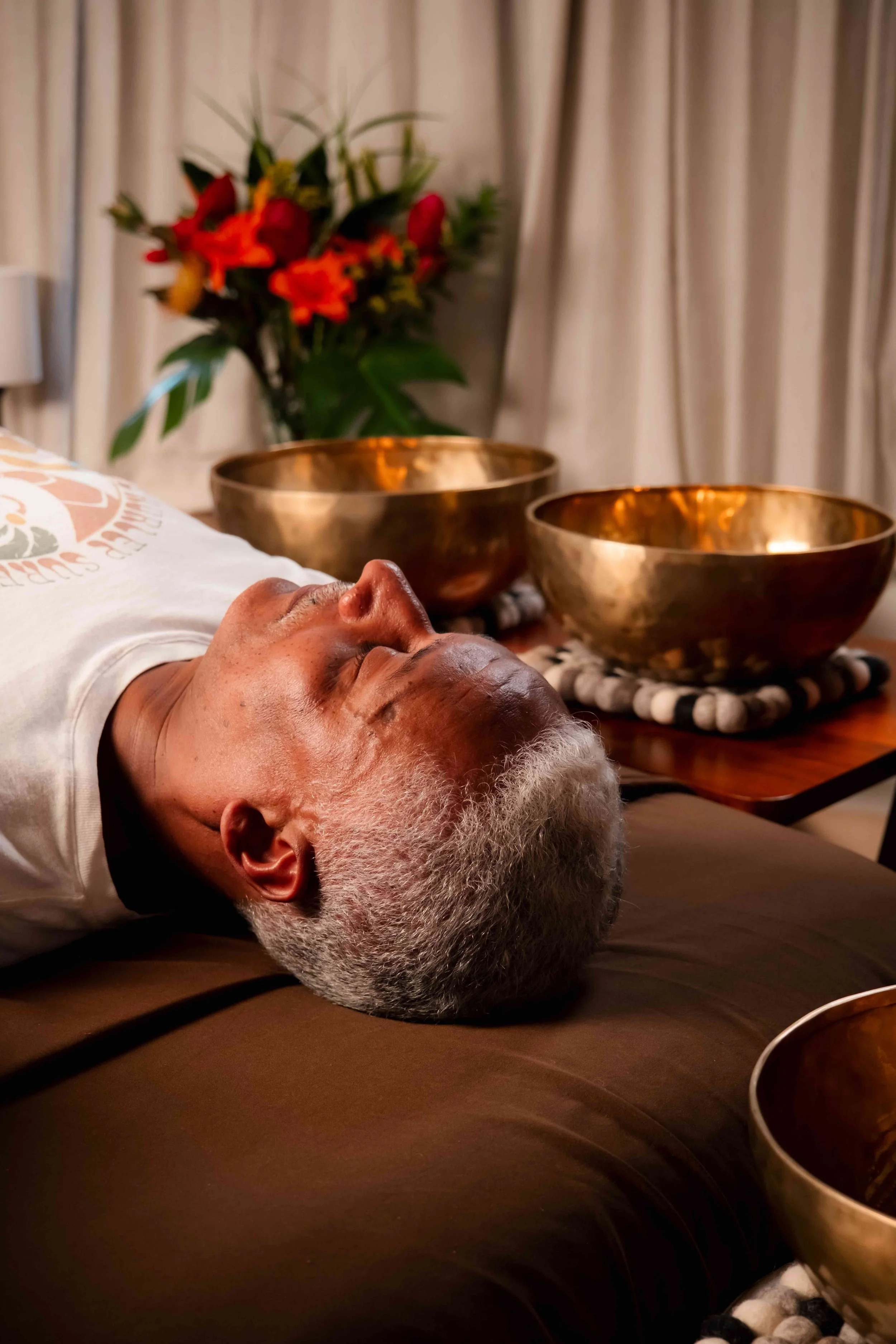
How Sound & Vibration Massage tends to feel (what clients notice)
Common feedback includes:
• A deep exhale in the nervous system—less buzzing, less bracing
• Thoughts slow down without needing to “try” to meditate
• The breath feels lower and smoother
• Neck, jaw, and shoulders soften more easily than with pressure alone
• A sense of lightness or openness through the chest and belly
• A grounded, stable feeling that lasts into the next day
• Sleep comes more easily (especially when stress has been high)
Sound work can feel subtle while it’s happening, and then very obvious afterward. People often notice it most in the small things: less jaw clenching, more spacious breathing, and a quieter “background hum” of tension.
What Happens: A Session at Ayurveda Wellness Hawaiʻi
Every session is tailored to your body and nervous system that day. We begin with a brief check-in around comfort, consent, boundaries, and how you’re feeling. Fully draped; we check in on comfort and sound sensitivity throughout.
Traditionally, bowl work can be received fully clothed or with the undressed body covered by a sheet or towel. Many clients choose to wear light comfortable loose fitting clothes during these sessions.
Step 1
Grounding + intake
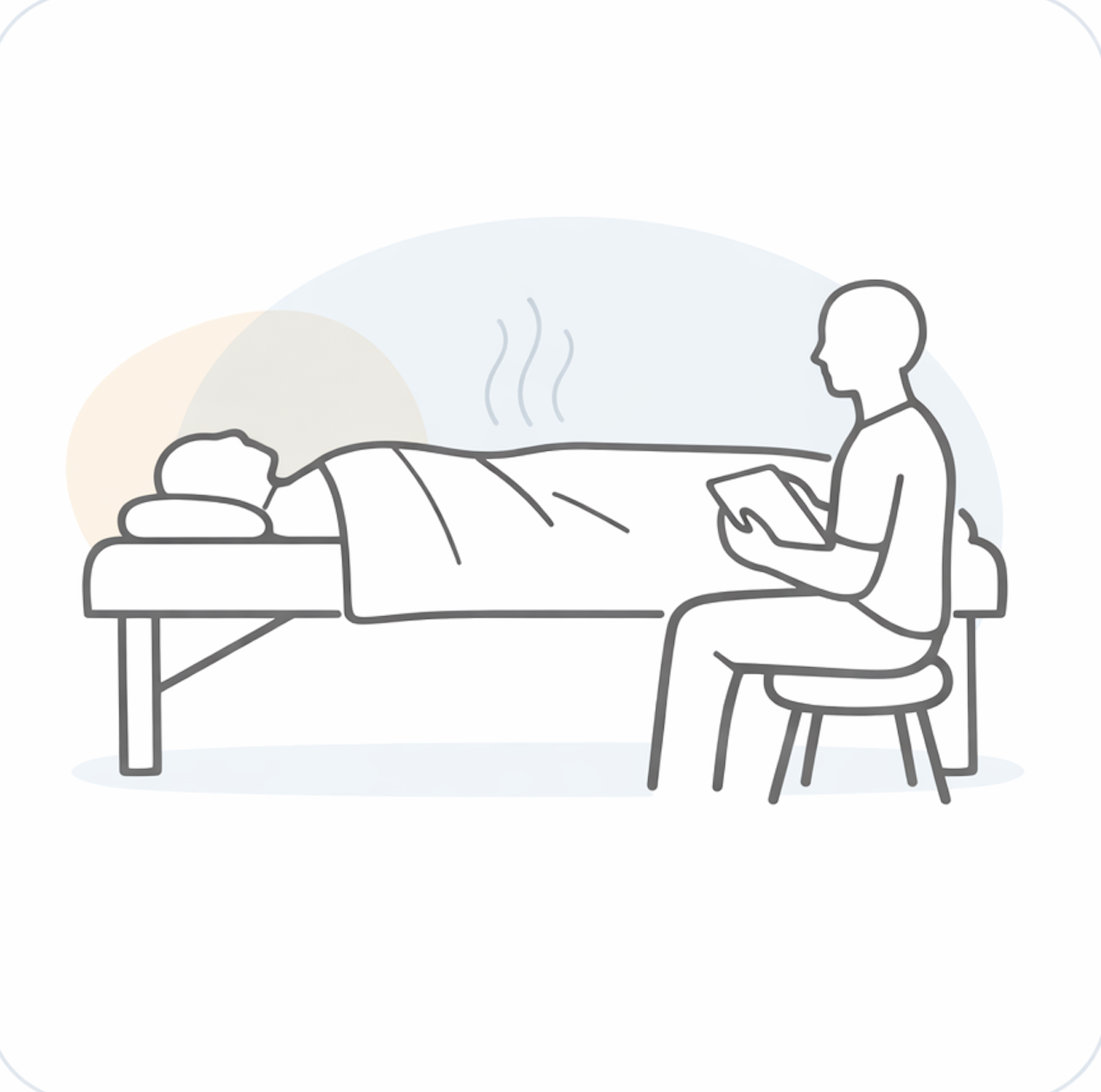
We start by orienting your nervous system: breath cues, settling the body on the table, and choosing an approach that matches your energy that day (more calming, more clearing, more grounding).
Step 2
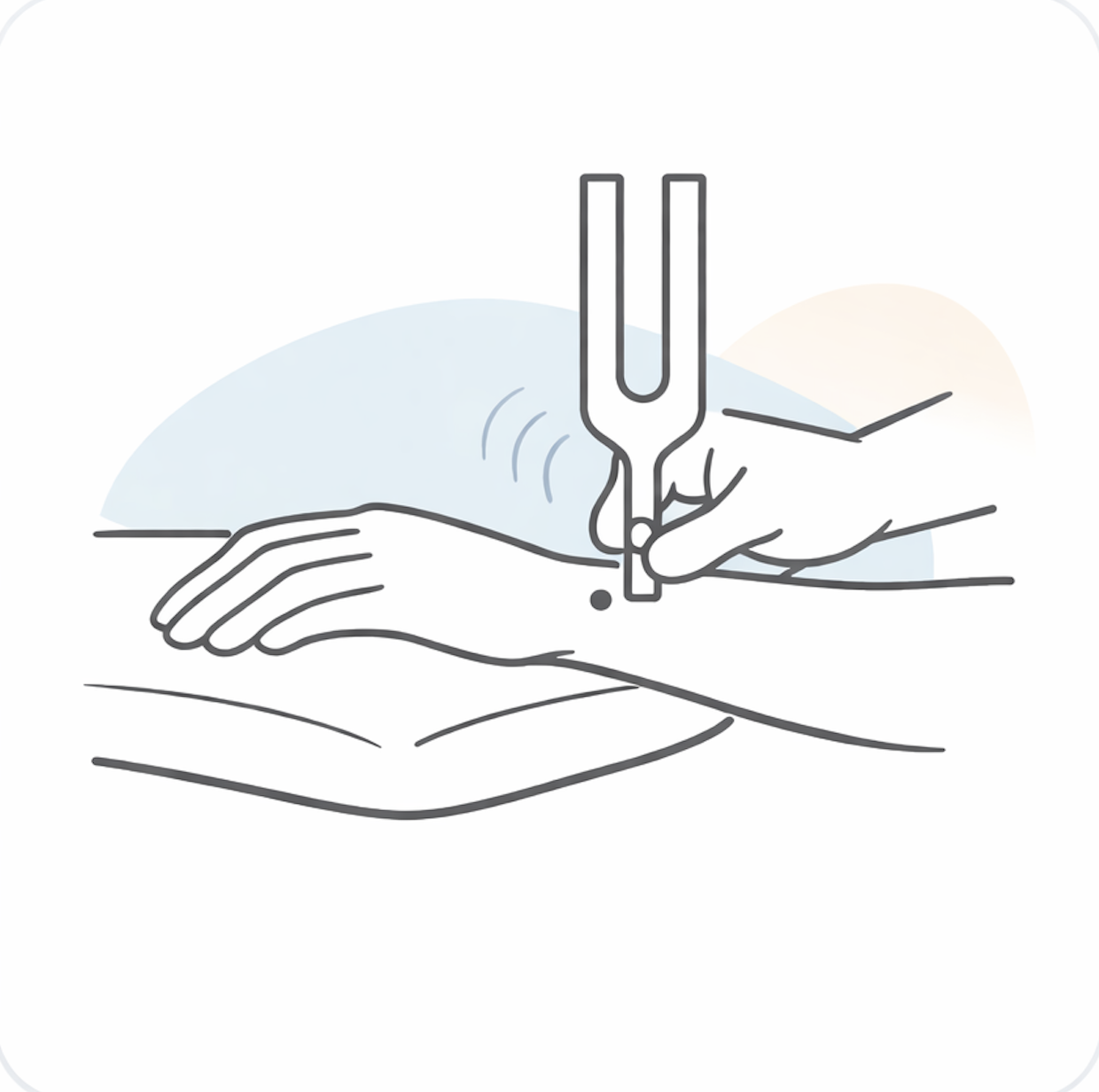
Marma + tuning fork therapy
We use tuning forks on and around key energetic points (marma), joints, and areas that feel “stuck.” This is gentle, precise work—more like a signal than a shove. It helps the body begin to soften without forcing change.
Step 3
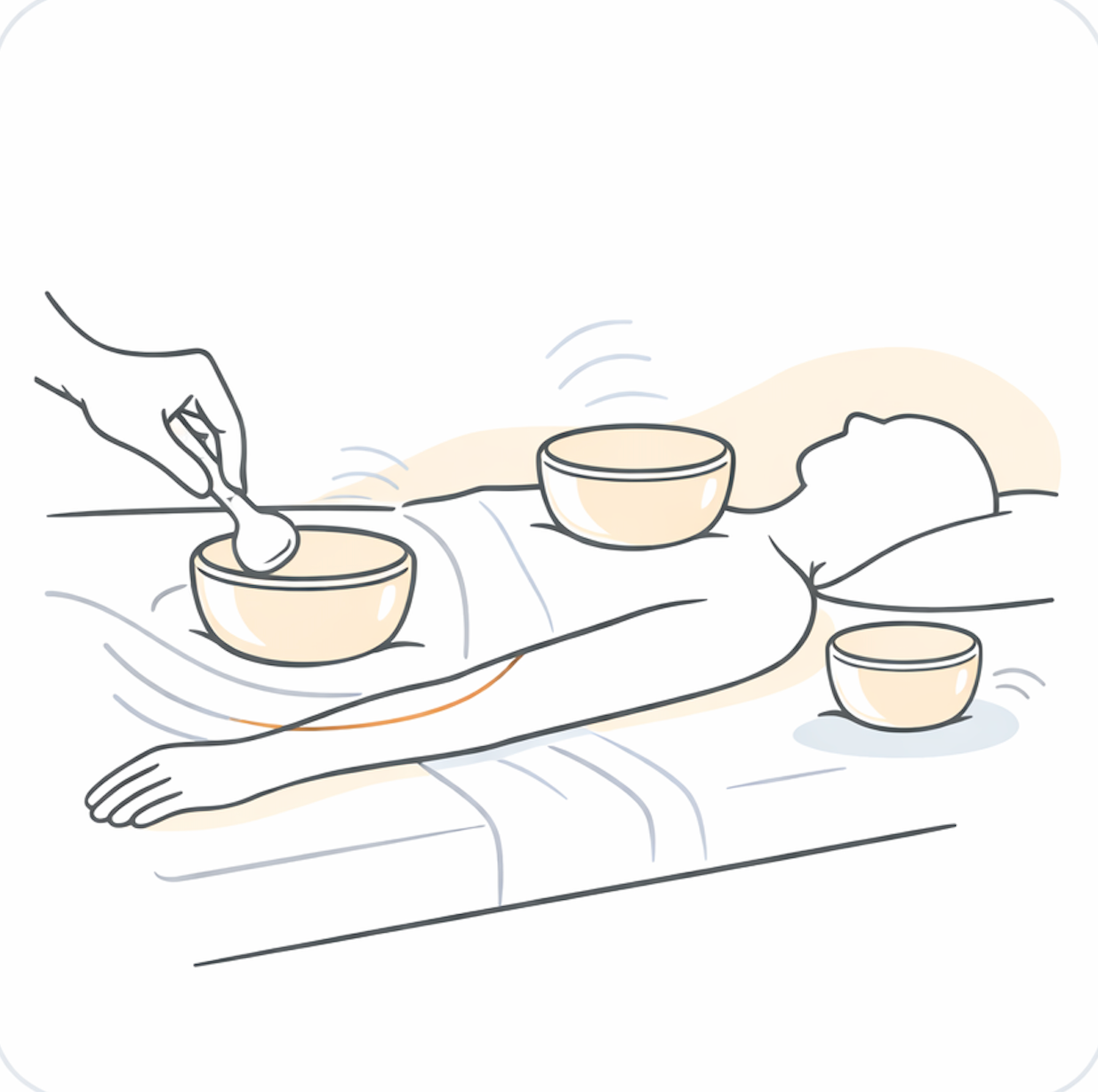
Singing bowl Sound & Vibration Massage (on + around the body)
We place bowls on the body and around the body to create a full-field experience of resonance, then perform a sweeping technique where a vibrating bowl is guided over the surface of the body, creating a wave-like vibrational massage.
Integration & aftercare
A quiet finish to help the treatment land, plus simple aftercare guidance (hydration, keeping the rest of the day lighter if possible, and letting your sensory system stay a bit more protected).
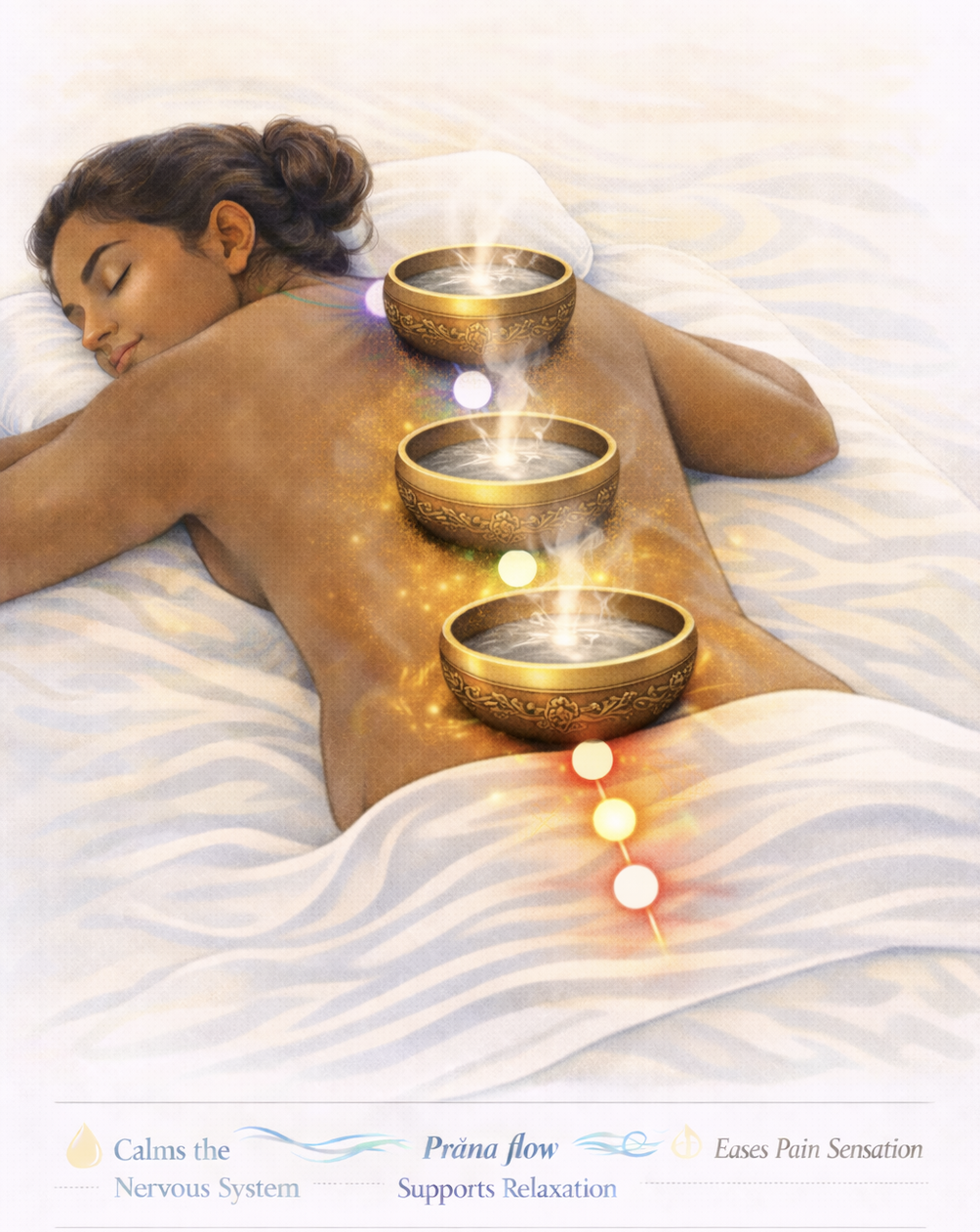
Energetics, Prana, and “Stagnation” in the Channels (Srotas)
When the system is under stress, it’s common to see a pattern of saṅga—obstruction, stagnation, or “stuckness.” Not only in the tissues, but in the mind-body relationship: the body braces, the breath gets shallow, and the nervous system stays on alert.
Caraka Saṃhitā, Vimānasthāna 5.24
देवनागरी
अतिप्रवृत्तिः सङ्गो वा सिराणां ग्रन्थयोऽपि वा।
विमार्गगमनं चापि स्रोतसां दुष्टिलक्षणम्॥२४॥
Translation:
Signs of disturbed channels (srotas) include excess flow, obstruction (sanga), knotting/nodules, or flow moving in the wrong direction.
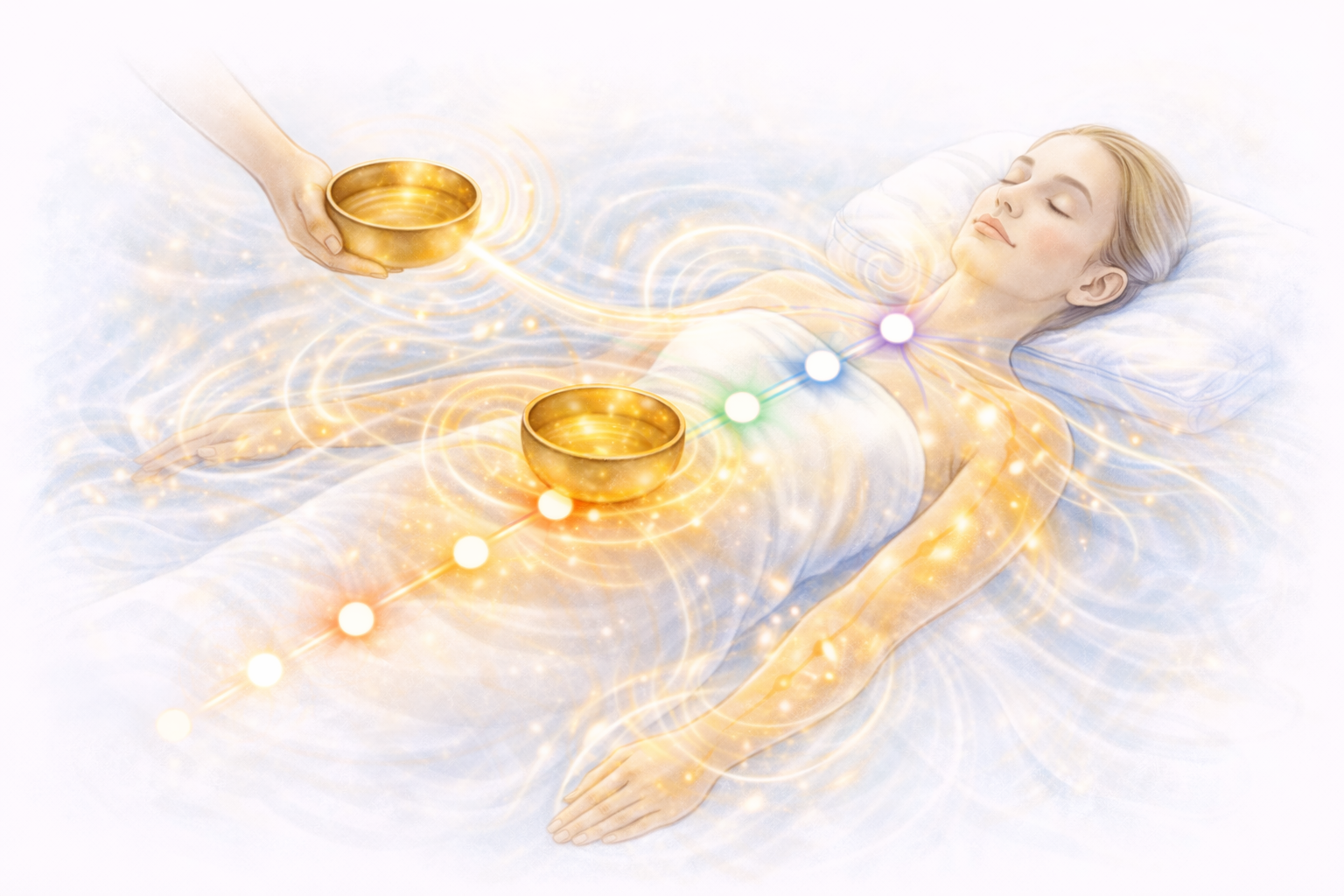
Sound & vibration massage is one way we gently invite the system back toward rhythm and flow. Vibration is felt by the body as postive signaling. When it’s steady and well-tolerated, it can help reduce guarding, soften protective tension, and encourage areas that feel “stuck” to re-organize without force.
In Ayurveda, health is not only about what’s present in the body, it’s also about movement: movement of breath, circulation, digestion, elimination, and the subtle movement of prāṇa through the channels (srotas).
Ayurveda also explicitly recognizes sound-based practices (especially mantra/recitation) as therapeutic measures within daivavyapāśraya (spiritual therapy):
Caraka Saṃhitā, Sūtrasthāna 11.54
देवनागरी
त्रिविधमौषधमिति— दैवव्यपाश्रयं, युक्तिव्यपाश्रयं, सत्त्वावजयश्च॥
Translation:
Ayurveda describes three fundamental approaches to healing:
(1) daivavyapāśraya (including sound-based measures like mantra and related traditional supports),
(2) yuktivyapāśraya (rational therapies like diet and herbs), and
(3) sattvāvajaya (supporting the mind away from harmful patterns).
We’re not using sound as a belief-based “fix.” We use it as a direct nervous-system language: rhythm, resonance, and vibration that the body can actually feel.
Cramping Patterns and Menstruation
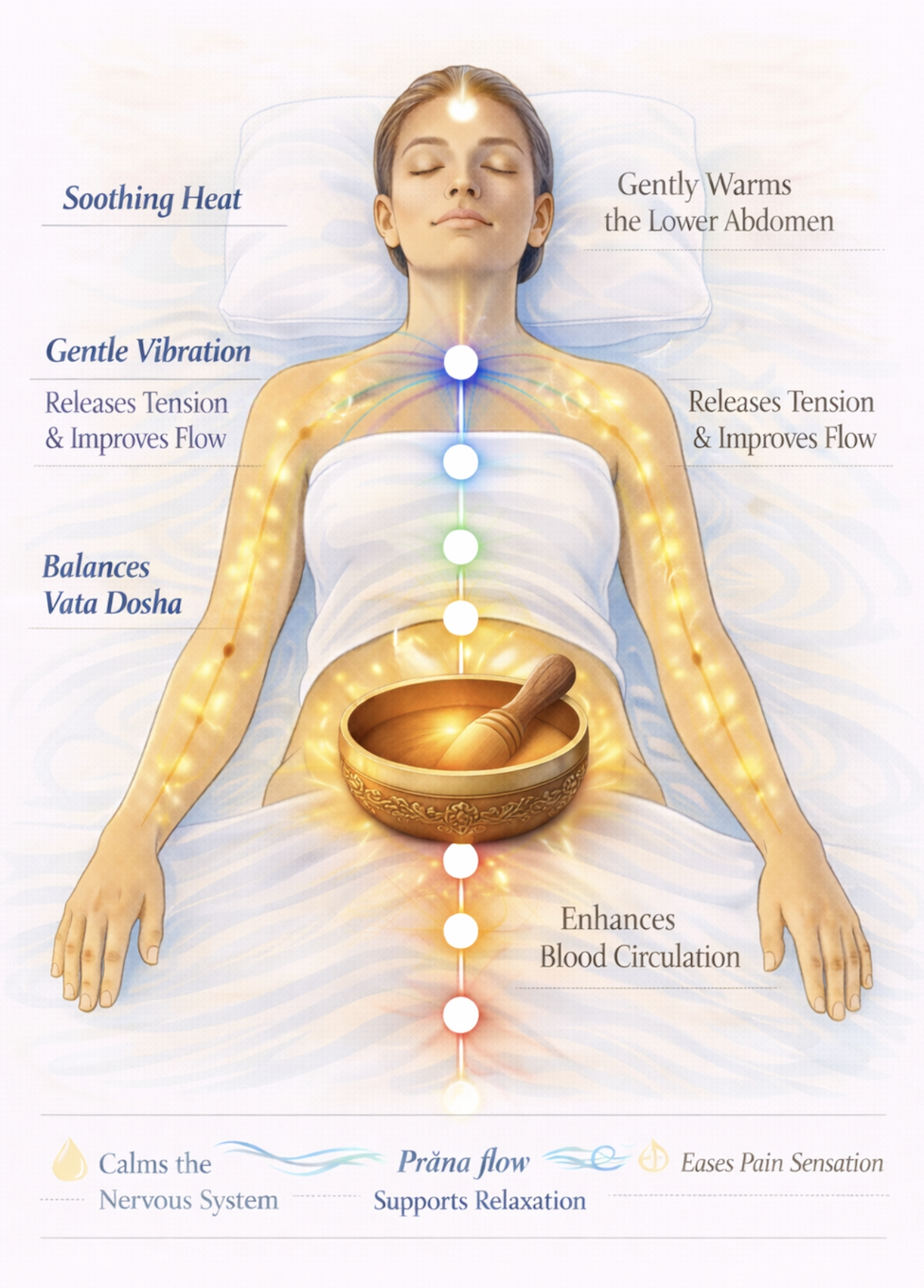
Menstrual cramping often has a “spasm + congestion” feeling to it. In our warm water sound/vibrational massage, heat and gentle rhythmic vibration work together to encourage softening in the lower abdomen, low back, hips, and pelvic floor. Many people notice the body “lets go” without having to force stretching, and the discomfort feels less sharp or gripping as the nervous system settles.
From an Ayurvedic lens, cramping patterns commonly carry a vata signature, especially when pain feels spasmodic, changeable, or tight. In classical language, the pelvic field is governed by apana vayu, the current responsible for downward movement and elimination. When apana is disturbed, movement becomes irregular and can express as gripping, colicky pain. Warmth and steady, wave-like vibration are deeply vata-pacifying qualities, grounding the system and supporting smoother flow through the pelvic channels (artava vaha srotas). In simple terms, when movement is supported, pain often decreases.
From a Western physiology perspective, primary dysmenorrhea is strongly linked to elevated uterine prostaglandins during menstruation, which can intensify uterine contractions and vasoconstriction, contributing to reduced uterine blood flow and ischemic-type pain. Heat therapy has consistent evidence for reducing menstrual pain, and recent meta-analytic work across many randomized trials suggests heat can meaningfully reduce pain intensity, with a favorable safety profile compared with NSAIDs. Warm water exposure also appears to influence the autonomic nervous system; for example, a randomized trial of warm-water footbaths found reduced dysmenorrhea pain alongside improved heart rate variability, suggesting a shift toward parasympathetic tone. On the sound/vibration side, low-frequency vibroacoustic approaches have emerging evidence for relaxation and stress physiology (including HRV changes), which matters because pain intensity is amplified when the system is in a higher sympathetic “alarm” state. Music-based interventions have also shown reductions in menstrual pain and associated symptoms in controlled studies.
Sympathetic to Parasympathetic, Why it Matters
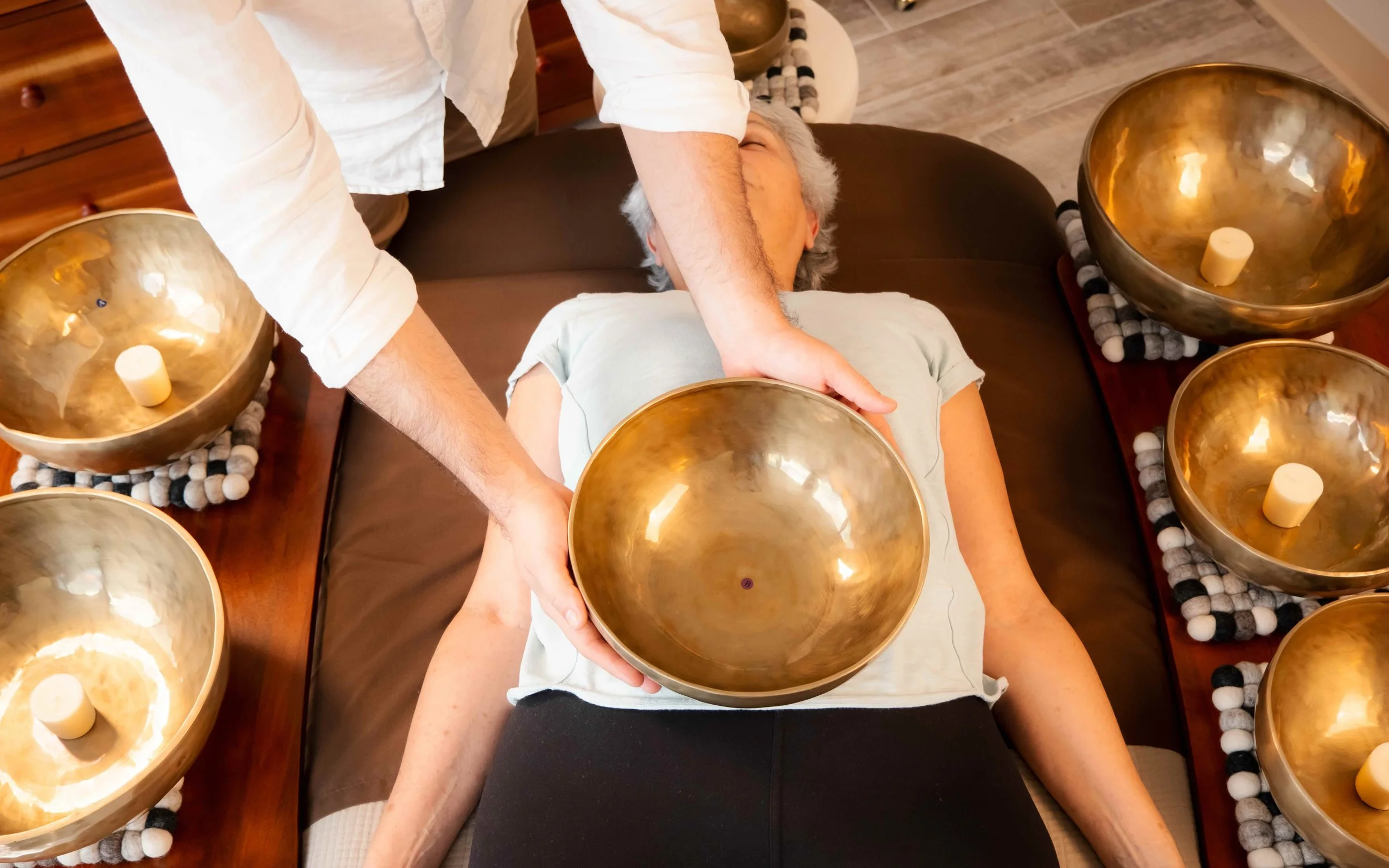
When someone has been living in sympathetic mode (rush, vigilance, “on” all day), the body prioritizes output: quick thinking, bracing, shallow breathing, and readiness to respond. That’s useful in short bursts—but when it becomes the default, the system has less access to the restorative side of physiology: digestion, tissue repair, immune regulation, and deep sleep.
Sound & vibration therapy is designed to help the body downshift and relax, not by pushing the mind or tissues to relax, but by giving the nervous system a steady, patterned signal that says: you’re safe enough to soften now.
Many clients describe it as meditation that happens to them, rather than something they have to perform.
What Doctors & Researchers are Seeing
Singing bowl sound meditation and mood/stress research is showing promising, early evidence.
An observational study on a Tibetan singing bowl meditation session found significant improvements in self-reported mood states (including tension, anger, fatigue, and depressed mood) immediately after the session, with pain also reported as improved for many participants.
Vibroacoustic “sound massage” and stress physiology (HRV/EEG).
A 2024 study using questionnaires plus ECG/EEG reported that vibroacoustic sound massage increased HRV markers interpreted as increased parasympathetic activity, with EEG patterns consistent with increased relaxation and reduced arousal. Translation: sound + vibration may measurably support nervous system downshifting.
Vibration therapy, circulation, and “stuck” body zones (context matters).
Low-frequency vibration has been studied in different clinical and research contexts, including microcirculation measures. In a randomized controlled pragmatic trial in lipedema patients, adding low-frequency vibrotherapy to manual lymphatic drainage (MLD) improved outcomes more than MLD alone. This doesn’t mean vibration is “lymph medicine,” but it does support the idea that gentle vibration can be a useful adjunct for fluid movement and comfort in certain situations.
Localized vibration and pain modulation (supportive evidence).
A systematic review on localized vibration described plausible neurophysiological mechanisms for pain relief and supports its use as part of pain management approaches—especially when used appropriately and not aggressively.
What this means in practice: Sound & Vibration Massage is not about “fixing” you. It’s about helping your system spend meaningful time in a more regulated state—so stress, tension, and stagnation patterns have a chance to unwind.
References (as listed on-page)
Sound meditation / singing bowls
• PubMed 27694559
• PMC 5871151
Vibroacoustic sound massage + stress physiology (HRV/EEG)
• PMCID: PMC11436230 (PMID 39338668)
Low-frequency vibration + MLD (lipedema trial)
• PubMed 29847188
Low-frequency vibration + microcirculation (experimental)
• PMC 5077302
Localized vibration + pain (systematic review)
• PMC 9980599
Classical Ayurveda (srotas + saṅga; three modes of therapy)
• Caraka Saṃhitā, Vimānasthāna 5.24
• Caraka Saṃhitā, Sūtrasthāna 11.54
Sound healing & Vibrational Massage FAQ’s
-
A sound bath is typically a group or passive listening experience. Sound & Vibration Massage is hands-on and body-based: bowls may be placed on the body, tuning forks are used on specific points, and we work directly with the areas where your system holds tension or feels stagnant.
-
They can, if appropriate and if you’re comfortable. Bowls may be placed on the body and also played around the body. We can also keep everything off-body if you prefer.
-
Yes. This work should not feel overwhelming. We can adjust volume, pacing, and where instruments are placed. If you have migraines, tinnitus, PTSD, or sensory sensitivity, please tell us—there are many ways to work softly and still get benefit.
-
Tibetan metal bowls can be filled with warm water during the session. The warmth adds another layer of soothing and can feel especially grounding when stress is high, the body feels dry or tense, or the nervous system has trouble settling.
-
Yes. We often place bowls and tuning forks near marma points, areas that hold tension, and zones where clients commonly feel congestion or “stuckness.” This is always gentle and based on your comfort.
-
Let us know if you have a pacemaker or implanted electronic device, uncontrolled seizure disorders, acute illness/fever, a fresh injury, or any medical condition where vibration is restricted. If you’re pregnant, we can discuss what feels appropriate (and keep instruments off-body as needed).
-
Some people love it as a one-time reset. Others benefit most from a short series (weekly or biweekly) to help the nervous system learn the downshift more reliably. We’ll help you choose a rhythm that fits real life.
By appointment. Closed Tuesdays.
Available times vary by service and practitioner.
Questions or help booking?
We’ll help you choose the right first visit.