


Shirodhara - शिरोधारा
60 minutes · $155
Abhyanga + Shirodhara: 90 minutes · $199
With Bryce. Book an appointment.
Shiro-dhārā शिरो + धारा = “a steady stream (of liquid) on/over the head”
In practice: a steady flow of warm herbal infused oil onto the head/forehead region.
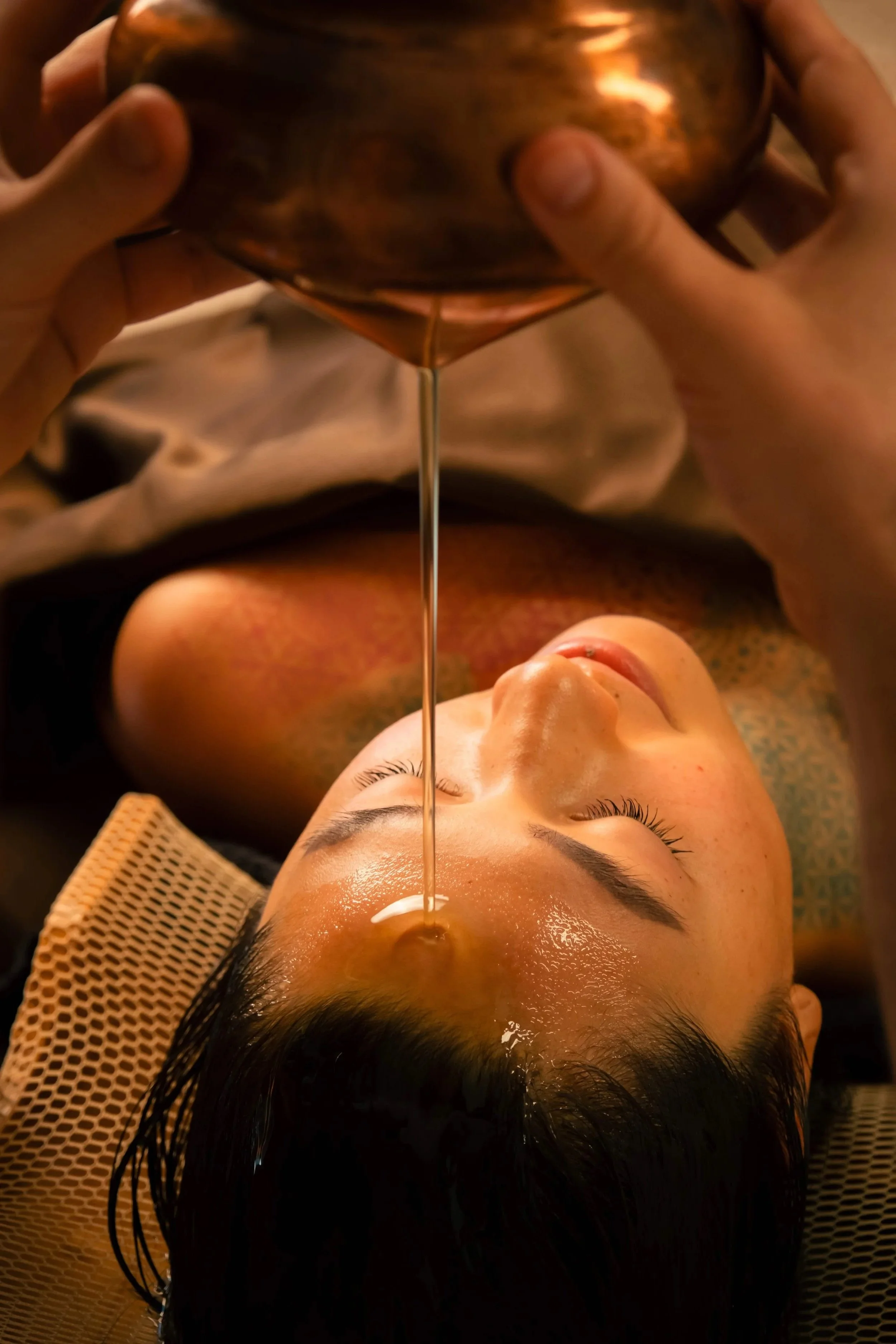
When your mind won’t “turn off,” sleep gets light or broken, and your body stays in go-go-go mode, the most effective next step often isn’t more effort, it’s downshifting your nervous system.
Shirodhara is one of Ayurveda’s most beloved therapies for exactly that: a gentle, continuous stream of warm, herbalized oil applied across the forehead to invite quiet, meditative rest.
Best for: stress, busy thoughts, anxiety, headache tension, and sleep support.
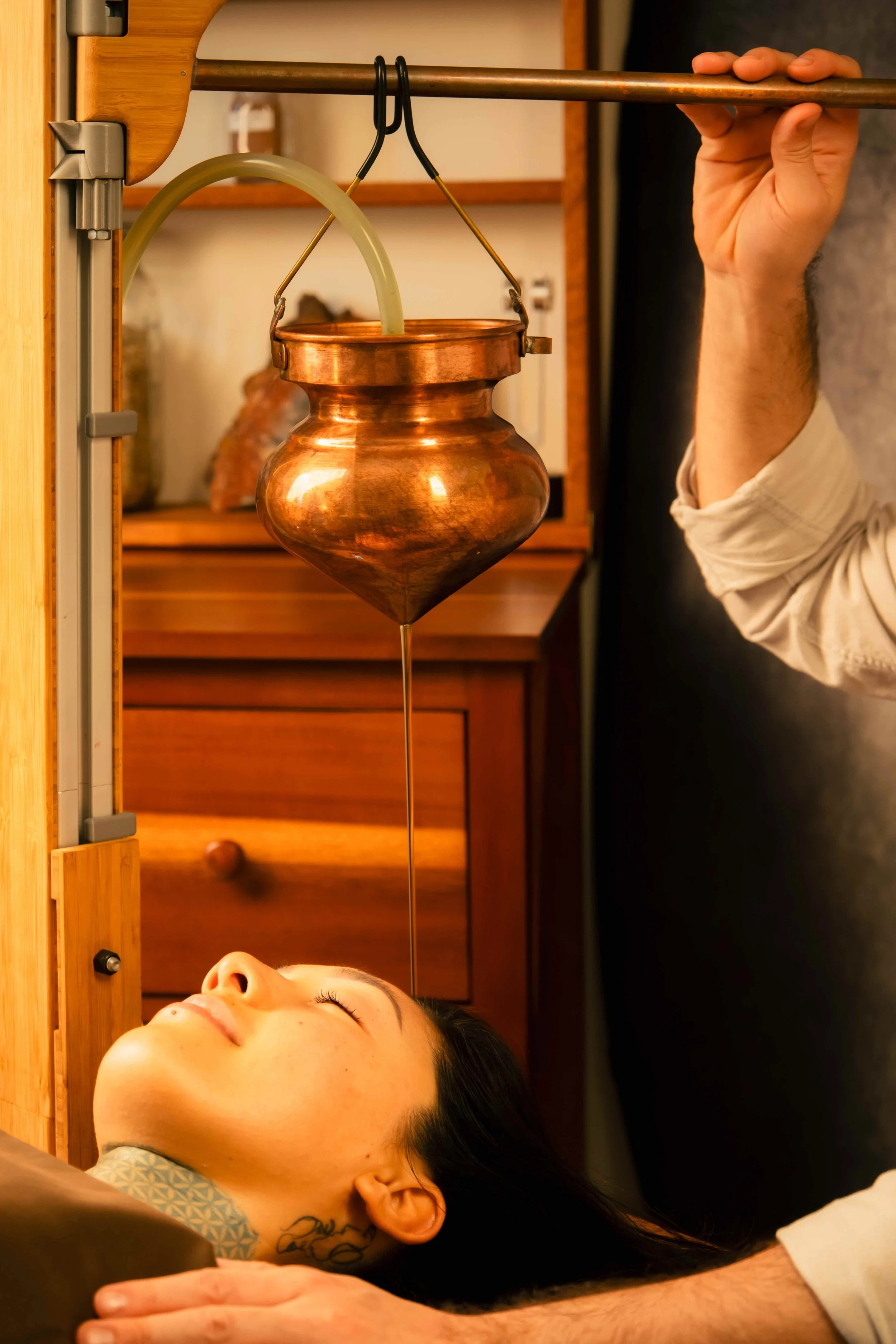
Many people describe the experience as a “reset” button: the mind softens, the breath deepens, and the body drops into a calmer state that can feel similar to a relaxation response or meditative stillness. Research in healthy volunteers has also observed a shift toward an “alert calmness” pattern during standardized Shirodhara protocols—promising, though still an emerging area of study (KD Duri 2013).
How Shirodhara tends to feel (what clients notice)
Shirodhara isn’t just relaxing—it’s organizing. Common feedback includes:
The mind gets quieter (less looping / less mental noise)
Sleep feels easier (falling asleep or staying asleep improves)
The face and jaw soften (less “held” tension)
The whole system feels steadier for a day or two afterward
What happens in a session at Ayurveda Wellness Hawaiʻi
Your Shirodhara session is designed as nervous system support, and it’s commonly and best integrated with bodywork so your whole system can receive the shift (not just your head). Depending on your needs that day, your visit may include:
Warm-oil massage (abhyanga)
Abhyanga helps the body settle before Shirodhara by grounding the nervous system and softening held tension. When the tissues feel safe and supported, Shirodhara tends to feel deeper and last longer.
Marma therapy (acupressure points)
Marma work gently opens key points that influence circulation, breath, and mental clarity, helping the system shift out of stress mode. It pairs beautifully with Shirodhara by guiding energy flow and supporting a calmer, more organized state.
Gentle sound / vibrational elements
Sound therapy gives the nervous system a steady rhythm to entrain to, helping quiet mental noise and smooth out overstimulation. Combined with Shirodhara, it creates a layered sense of stillness that supports rest, repair, and deep integration.
Energetics, prana, and the nervous system

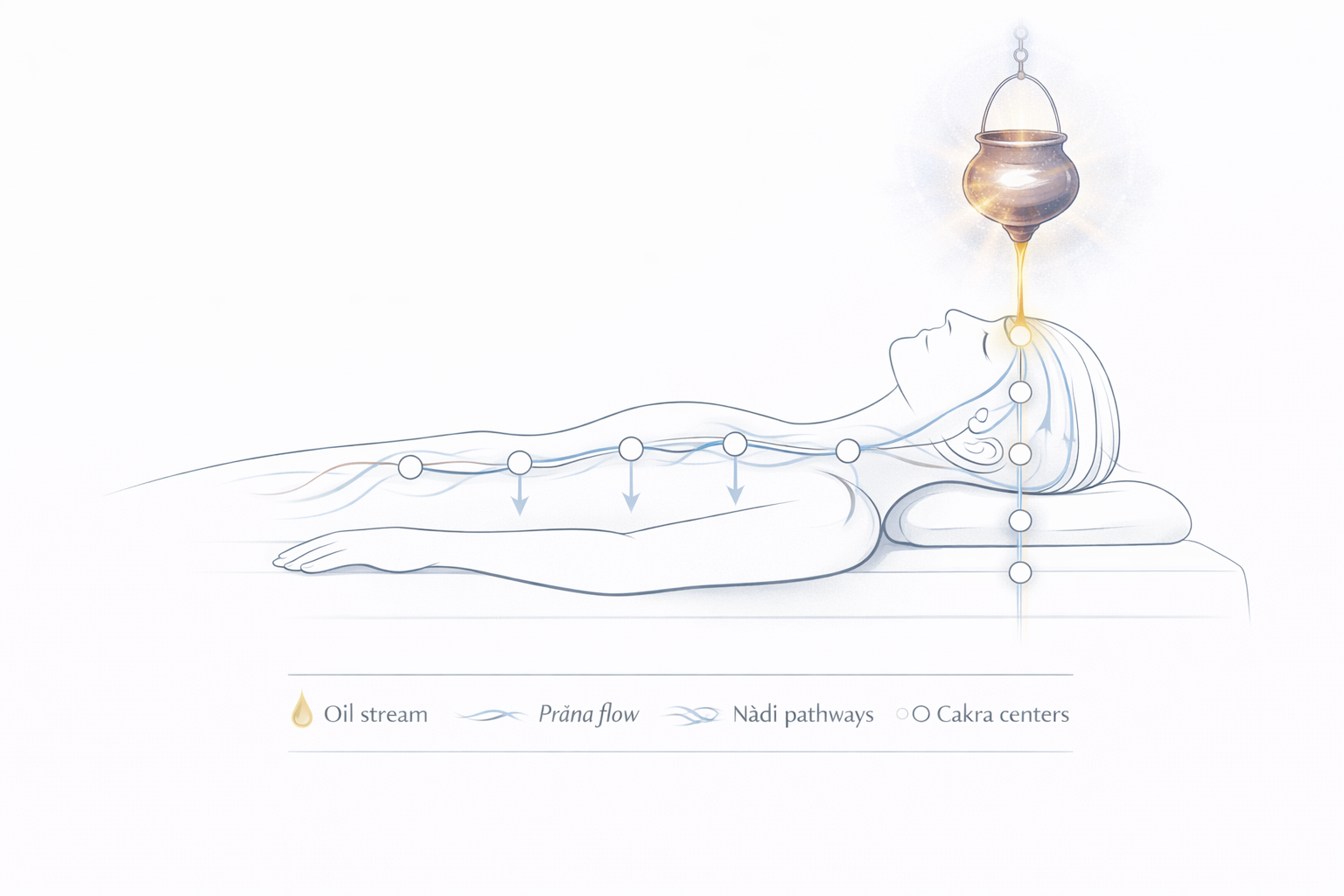
The steady oil stream lands at the center of the forehead, a point traditionally associated with mind, perception, and the meeting place of subtle channels. From an energy healing lens, this is like giving the system a gentle, rhythmic anchor. The flow is continuous and predictable, which invites the mind to stop scanning, stop bracing, and start settling.
You can think of it as a kind of “metronome for the nervous system.” When the surface mind softens, prana has an easier time distributing through the nadi network, and the whole body tends to feel more organized, more grounded, and less pulled in a hundred directions at once.
In Ayurveda, Shirodhara is part of a larger family of head oil therapies called murdha taila. Classical texts describe four main approaches, including a continuous stream of oil poured onto the head and forehead, which is the method most people mean when they say Shirodhara.
Ayurveda frames this process as calming disturbed vata in the head and supporting the clarity of the senses. Vagbhata, a classical Ayurveda authority, emphasizes additional benefits of head oil therapies like this:
Ashtanga Hridaya, Sutrasthana 22.34
देवनागरी
कचसदनसितत्वपिञ्जरत्वं परिफुटनं शिरसः समीररोगान् ।
जयति जनयतीन्द्रियप्रसादं स्वरहनुमूर्धबलं च मूर्धतैलम् ॥ ३४ ॥
Translation:
Head oil therapy helps with hair fall, premature graying, scalp dryness and cracking, and vata type head conditions, and it supports clear functioning of the senses, plus strength in the voice, jaw, and head.
Sympathetic to parasympathetic, why it matters
When someone has been living in sympathetic mode, the body prioritizes vigilance and output. Shirodhara is designed to support the opposite: rest, digestion, repair, and recovery. In a controlled study with healthy volunteers, Shirodhara was associated with improved mood and reduced perceived stress, along with slower breathing, lower heart rate, and reduced diastolic blood pressure. EEG findings also showed an increase in alpha rhythm, a pattern commonly linked with relaxed alertness.
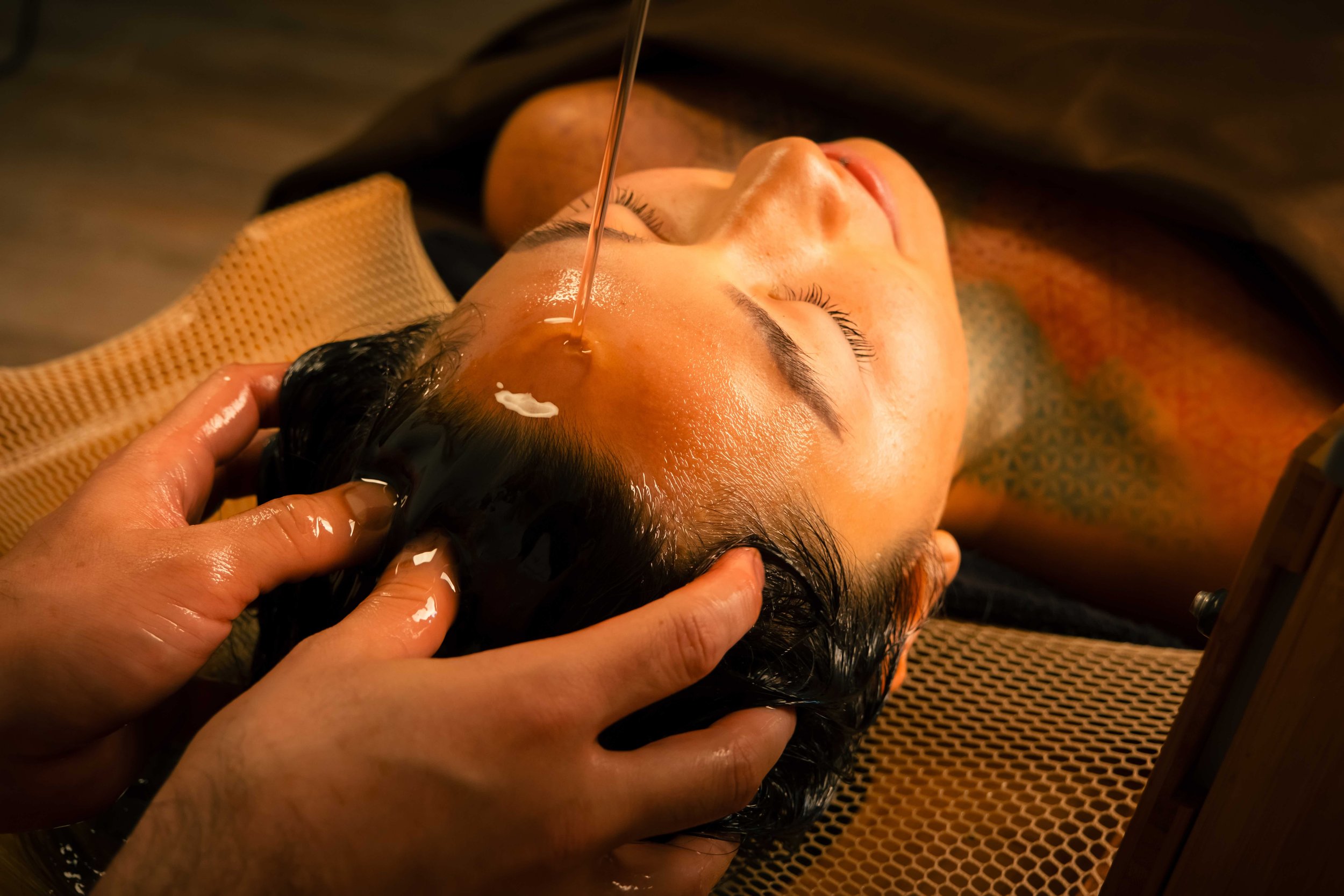
That combination matters. Slower breathing and calmer cardiovascular patterns are some of the clearest outward signs that the body is shifting toward parasympathetic tone, which is exactly the internal environment where deeper healing processes can do their work.

What Doctors & Researchers are Seeing
Early research lines up with what clinicians see. In healthy volunteers, Shirodhara has been associated with increased alpha activity on EEG and improved stress and mood ratings, patterns commonly linked with relaxed alertness. A randomized single blinded crossover pilot study found sesame oil Shirodhara improved subjective sleep quality compared with warm water Shirodhara. Clinical research in insomnia has also reported improvements when Shirodhara was part of the intervention. A case study tracking biological markers reported reduced cortisol after a Shirodhara series, alongside improved mood and sleep.
https://pmc.ncbi.nlm.nih.gov/articles/PMC3667433/?utm_source
https://journals.lww.com/aayu/fulltext/2010/31010/evaluation_of_insomrid_tablet_and_shirodhara_in.9.aspx?utm_source
https://pmc.ncbi.nlm.nih.gov/articles/PMC8039348/?utm_source

FAQ’s
-
Try to arrive hydrated and avoid coming in very hungry. A light meal one to three hours before is usually ideal. If you are sensitive to caffeine, consider keeping it light earlier that day so your system can settle more easily.
-
Most people feel calmer and more inward after Shirodhara. If you can, plan a lighter schedule afterward so your nervous system can integrate the treatment. You can drive home, but we recommend giving yourself extra time and avoiding rushing.
-
For best results, leave the oil in for 2 to 3 hours after your session, then rinse it out.
-
Start by applying a gentle shampoo to dry hair before your hair is wet. Massage it through first, then add water and rinse. For thicker or longer hair, a second shampoo may be needed. If you use conditioner, apply it mostly to the ends.
-
We choose oils based on your constitution, the season, and what your system is asking for. Oils may be infused with traditional herbs such as bhringraj, brahmi, gotu kola, sandalwood, and jatamansi. If you have sensitivities, we can keep the oil simple and avoid strong aromas.
All oils and herbs used in our practice are 100% USDA Organic
-
Yes. Let us know ahead of time about allergies, asthma, migraine triggers, or fragrance sensitivity. We can use a simpler oil and keep the session very gentle.
By appointment. Closed Tuesdays.
Available times vary by service and practitioner.
Questions or help booking?
We’ll help you choose the right first visit.