


Marma Therapy in Kailua
Ayurvedic point therapy on Oʻahu. Ask about a session.
Marma Therapy मर्म चिकित्सा
Ask the clinic about marma care, session length, pricing, and availability before booking.
Marma therapy is a focused Ayurvedic acupressure session using gentle, precise holds on marma points (vital junctions in the body) to ease tension patterns, settle the nervous system, and restore a sense of flow.
If you’ve been feeling overstimulated, “stuck” in your body, or like your mind won’t fully turn off, marma work offers a steady, non-forceful way to come back into regulation. Many clients love it because it is powerful without being intense or overstimulating. It is more about clarity and unwinding than forceful pressure.

Best for: emotional stress, anxious or scattered feeling, headaches or jaw tension, shallow breathing, stubborn tight spots that don’t change with stretching, travel fatigue, feeling depleted, and nervous system overload.
Marma can be received as a standalone session, or blended into a body treatment plan alongside Abhyanga, Shirodhara, or topical basti.
How Marma therapy tends to feel (what clients notice)
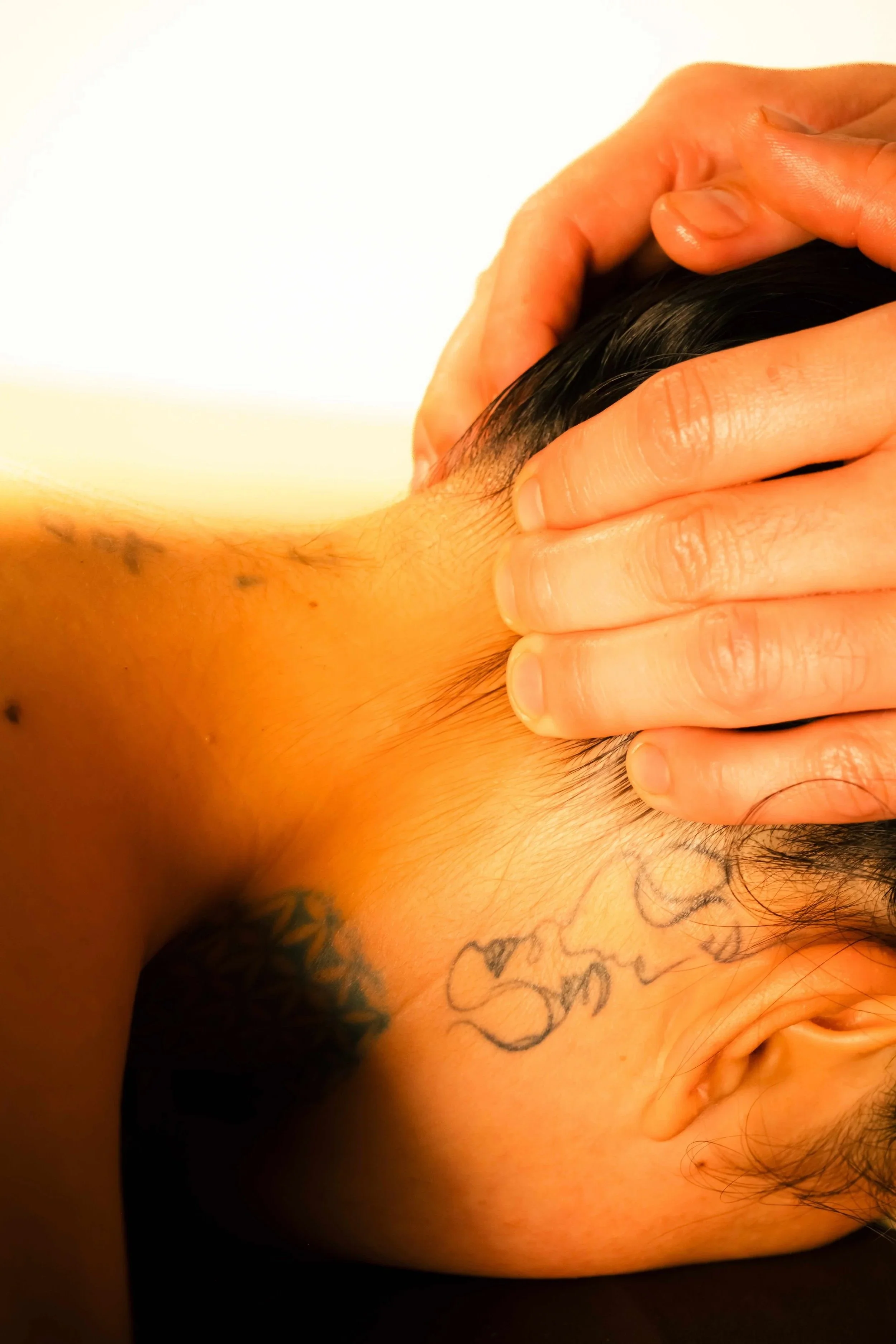
Common feedback includes:
• The mind gets quieter without trying
• The breath drops lower and becomes more natural
• The jaw, temples, and forehead soften
• A “stuck” area finally releases without aggressive work
• The body feels more organized, grounded, and less reactive
• Sleep comes more easily that night, or the next few nights
• Emotions feel more digestible, less bottled up
Some notice immediate shifts. Others feel it land later, like the body keeps unwinding after the session. Either way, the goal is the same: less bracing, more ease, more internal steadines
What Happens: A Session at Ayurveda Wellness Hawaiʻi
Marma sessions are always adaptive and tailored to your system that day. We use steady pressure, supportive pacing, and frequent check-ins. You stay fully draped. Marma can be done with minimal oil, or through light clothing depending on what’s appropriate and comfortable.
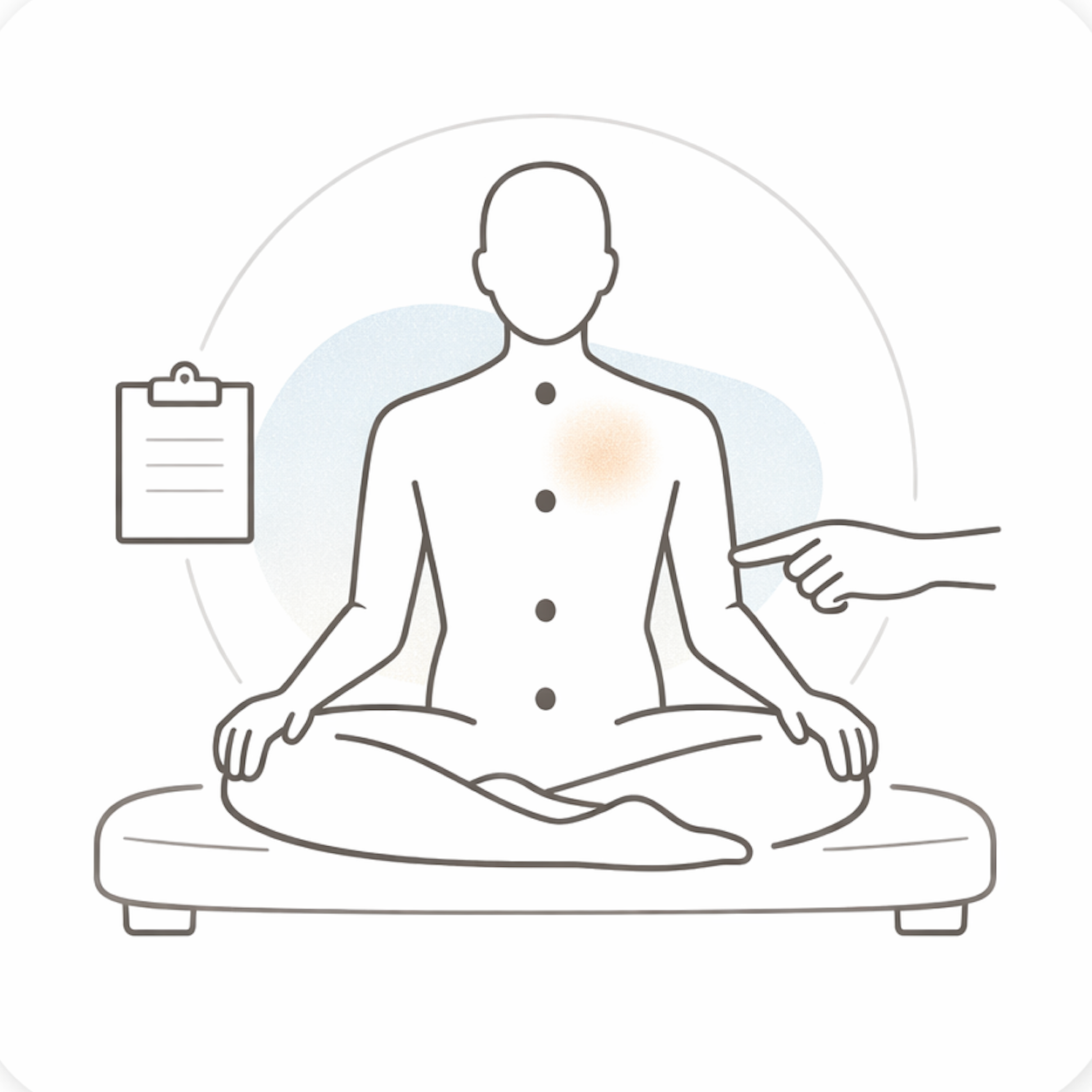
Step 1
Arrive, assess, and set focus
Quick check-in on how you’re feeling, what feels stuck, and your main goal. We do a brief body scan to set the focus.
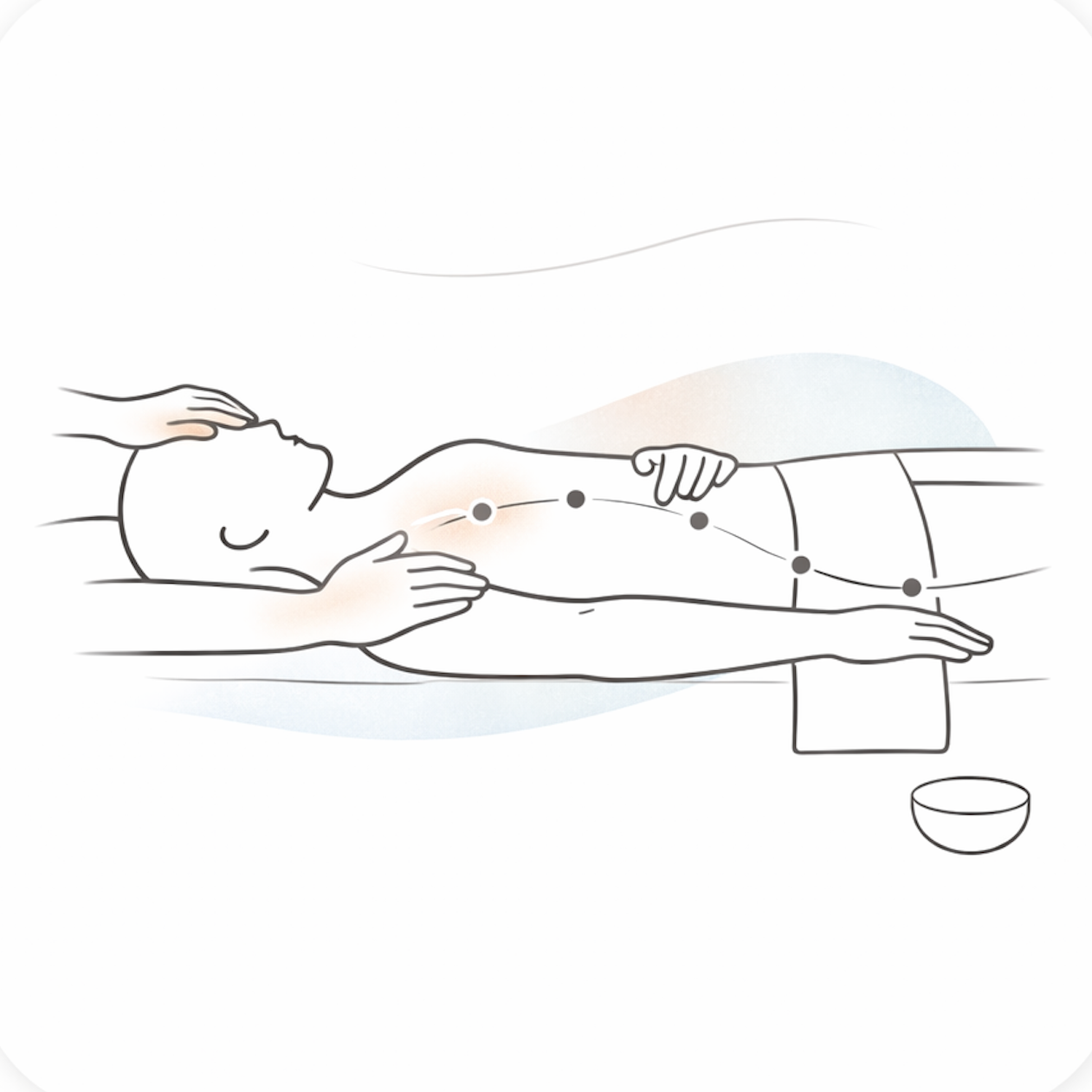
Step 2
Ground with polarity holds
Gentle holds at the head, feet, and abdomen to settle the nervous system and support grounding.
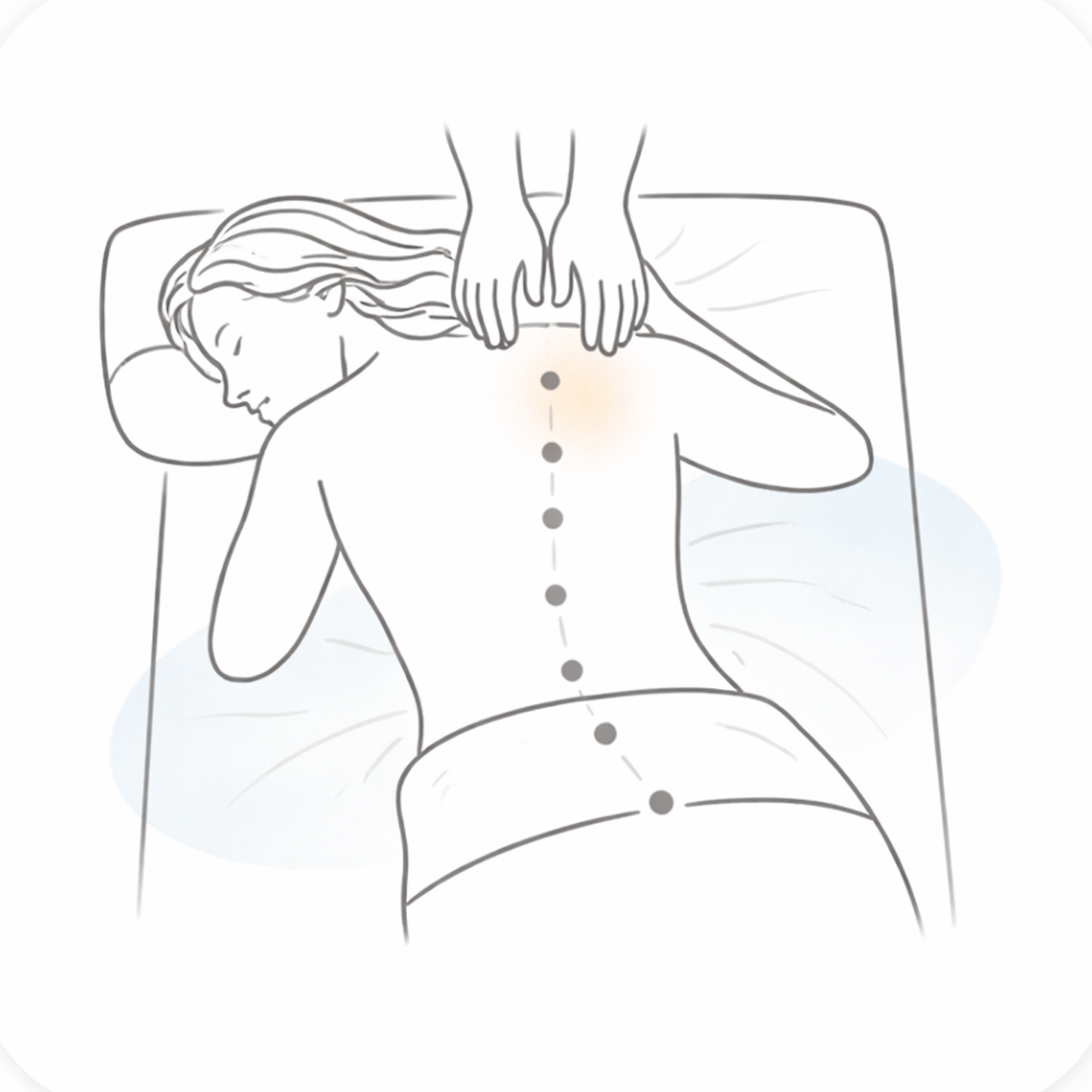
Step 3
Targeted marma flow
We work specific marma points based on what your body needs, then close slowly with simple aftercare (hydration, pacing, optional home holds).
Integration & aftercare
A quiet finish to help the treatment land, plus simple aftercare guidance (hydration, keeping the rest of the day lighter if possible, and letting your sensory system stay a bit more protected).
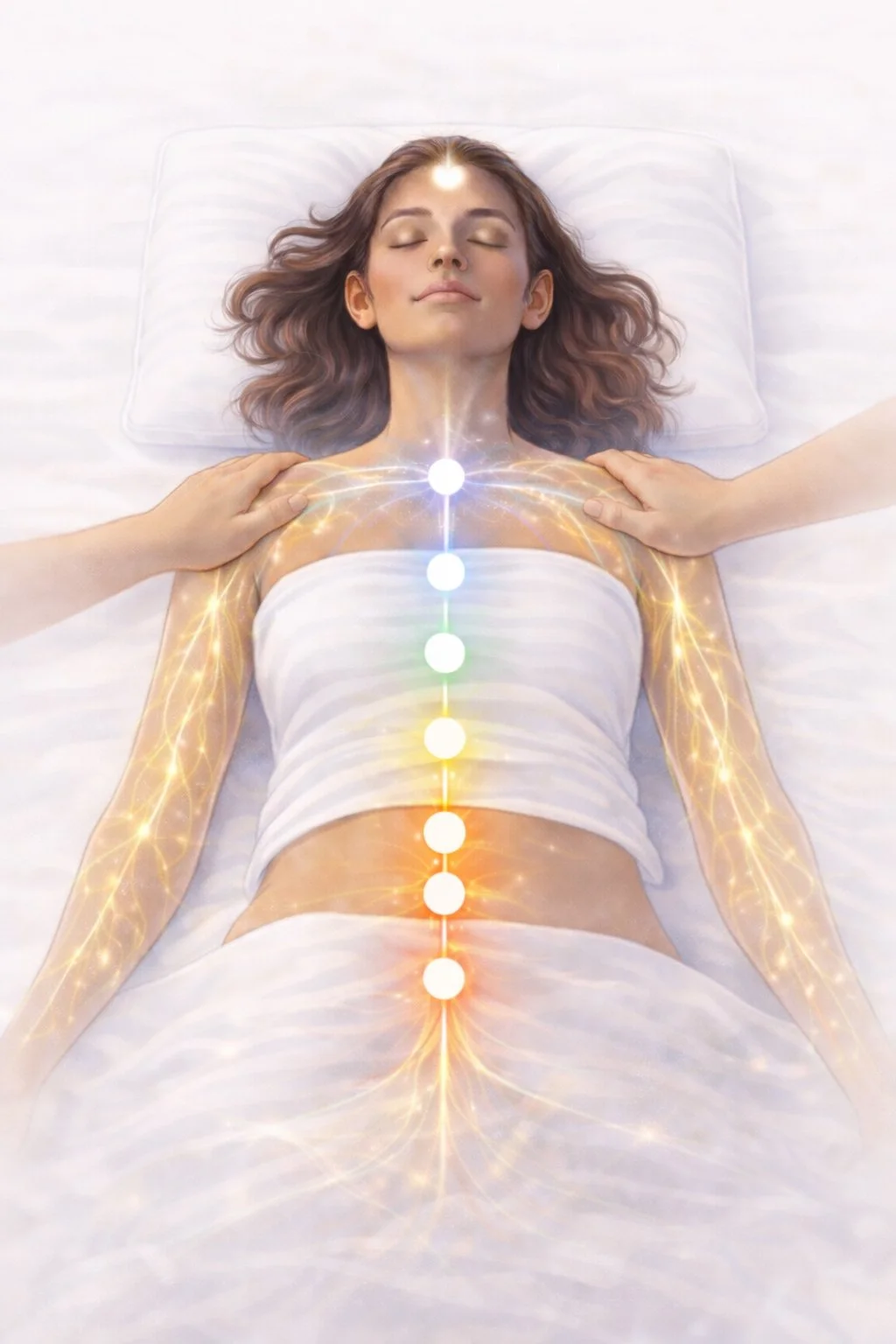
Marma, Prana, and the Subtle Body
For a modern mind, you can think of marma like “switches” in the system. They’re not just local points in a muscle. They’re places where sensation, breath, circulation, and the nervous system’s protective responses tend to concentrate. When stress is high, those switches can stay stuck in guarding mode, even when the threat has passed.
Suśruta Saṃhitā, Śārīrasthāna 6.15
सुश्रुतसंहिता — शारीरस्थान ६ (प्रत्येक-मर्म-निर्देश), श्लोक २३
मर्माणि नाम: मांससिरास्नाय्वस्थिसन्धिसन्निपाताः ।
तेषु स्वभावत एव विशेषेण प्राणास्तिष्ठन्ति, तस्मान्मर्मस्वभिहतास्तांस्तान् भावानापद्यन्ते ।।
Translation:
Marma are the meeting places of flesh, vessels, ligaments, bone, and joint. In them, life-force abides by nature - intimately, especially.
So when a marma is struck, the whole being is thrown into its corresponding disturbance.
In Ayurveda, marma points are considered places where structure and energy meet. They are often described as junctions of muscle, vessels, ligaments, bones, and joints, and are traditionally associated with prana (life force) and the body’s communication pathways.
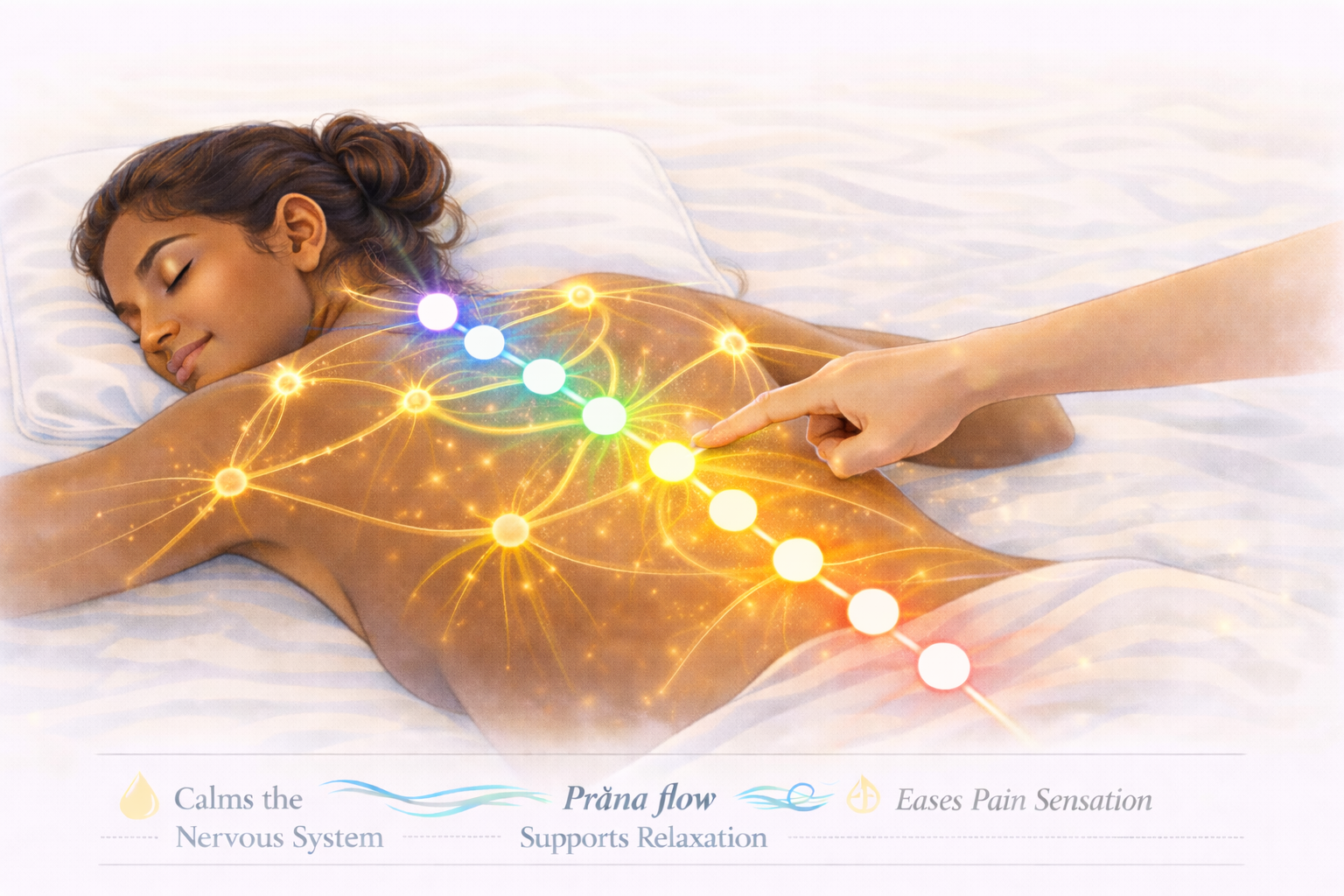
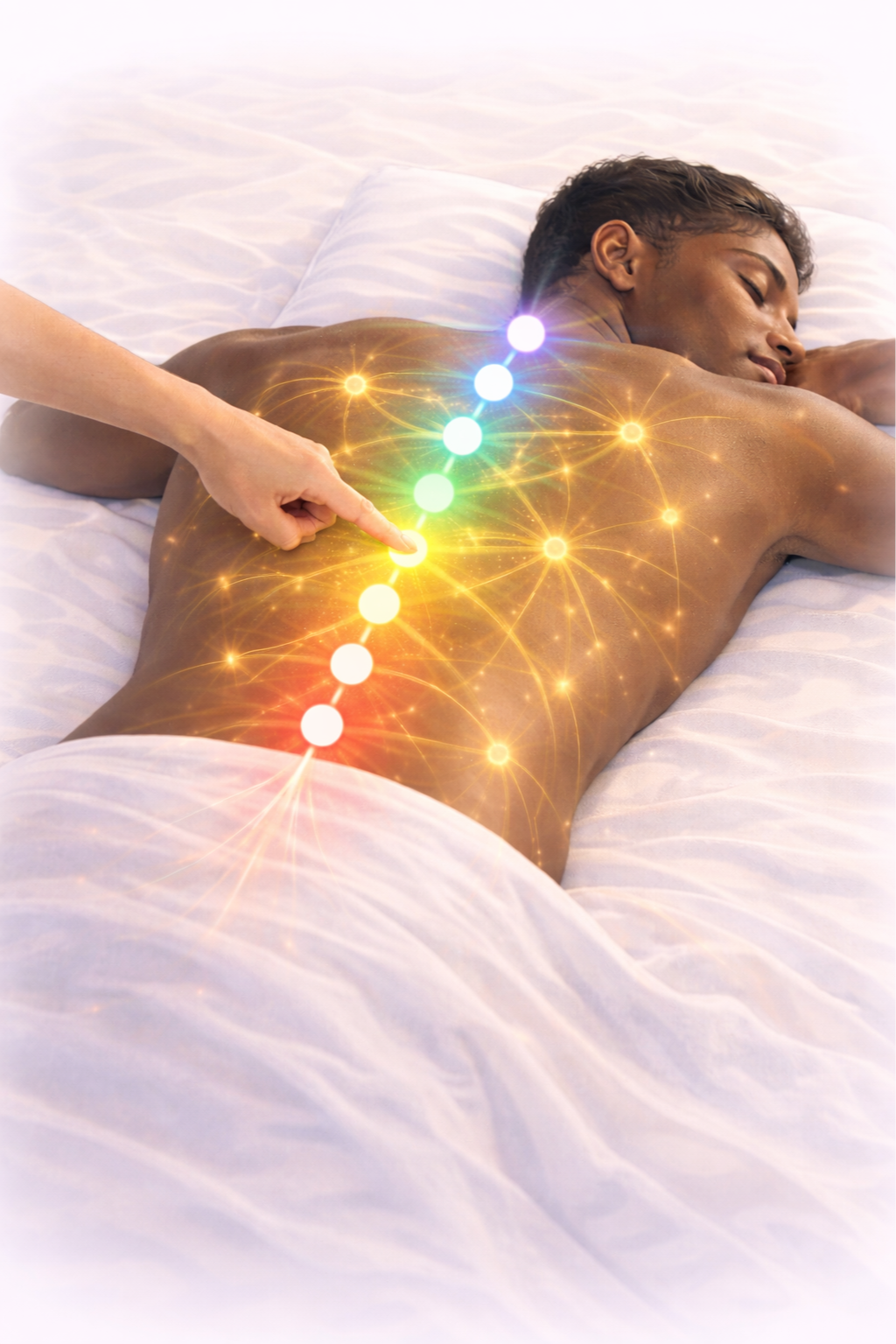
Gentle, accurate pressure helps the system update. Instead of forcing a release, we give the body a clear signal of safety and coherence, so tension can unwind from the inside out. This is why marma work often feels bigger than muscle relief. People commonly notice changes in jaw clenching, desk-body tightness, shallow breathing, and stress held in the gut, because the “holding pattern” is being addressed at the level of regulation, not just structure.
Soma, Vata, & Tejas
Classically, marma are also spoken of as deeply connected to subtle regulation, not only anatomy. Suśruta describes marma as seats where Soma, Maruta (Vata), and Tejas are especially present, along with the qualities of the mind. That’s a poetic way of saying marma sit close to the levers of cooling and stability, movement and nerve signal, heat and transformation.
सोममारुततेजांसि रजःसत्त्वतमांसि च ।
मर्मसु प्रायशः पुंसां भूतात्मा चावतिष्ठते ॥
So when we work marma, we’re often working at two levels at once:
• local tension patterns (jaw, neck, shoulders, hips)
• whole-system patterns (stress held in the gut, scattered focus, sleep disruption, “wired but tired” states)
This is one reason marma can feel especially effective for modern life. Desk-body tightness, scrolling-neck, clenched jaw, shallow breath, and a sensitive digestive system are rarely just “one spot.” They’re usually a nervous system pattern that found a home in the tissues.
In session, we keep the approach calm and respectful. The goal is coherence. When the body feels met, it often does the releasing on its own timetable.
Sympathetic to Parasympathetic, Why it Matters
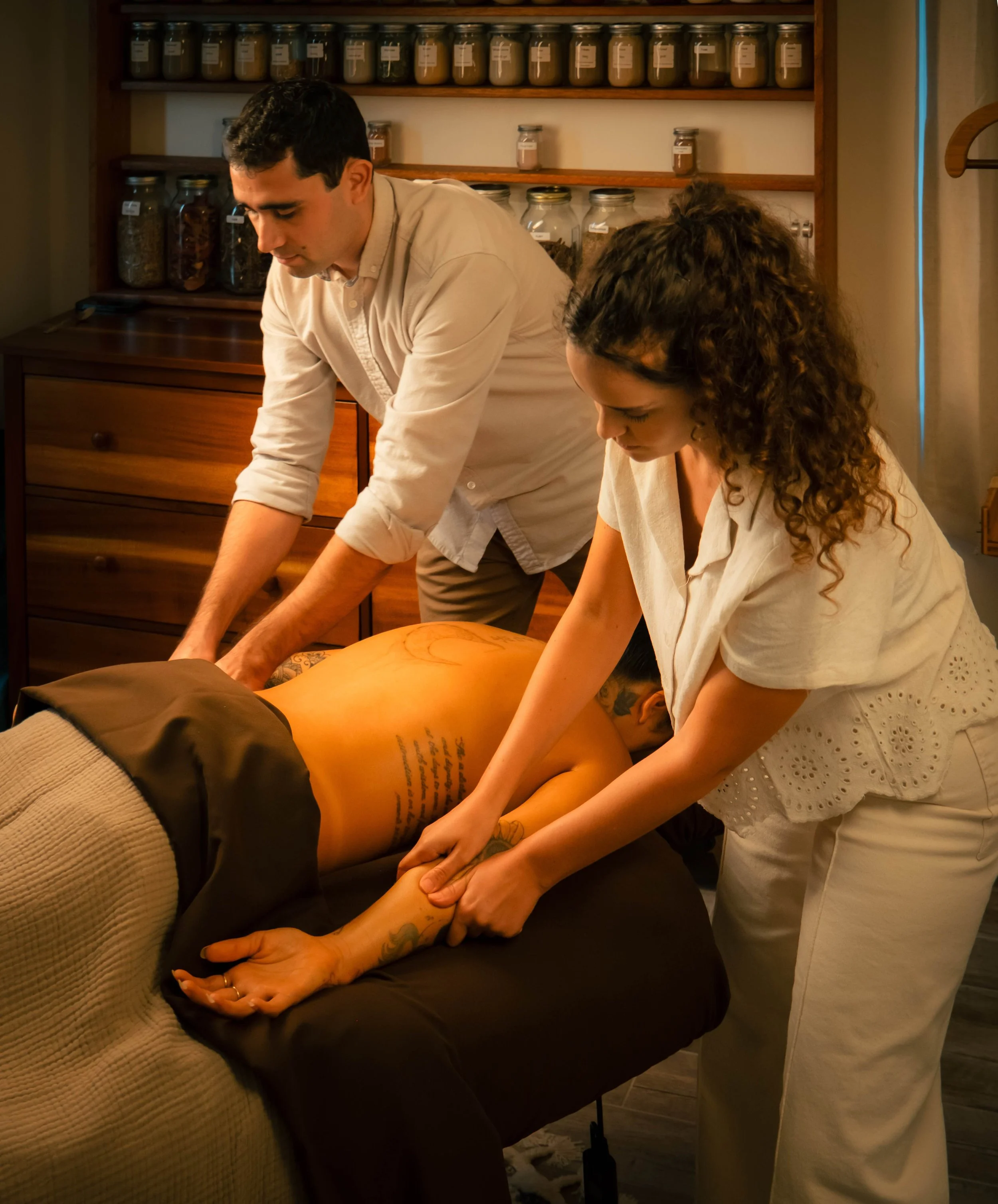
When you’ve been living in sympathetic mode (rush, vigilance, overthinking, always “on”), the body prioritizes output over repair. Digestion gets touchy. Sleep gets lighter. Muscles brace even when you’re not moving.
Marma therapy is designed to help the system exit bracing mode. Slow, steady contact gives your nervous system a clear signal that it is safe enough to soften. That downshift is where healing capacity lives: better sleep depth, smoother digestion, less reactive tension, and steadier energy.
What Doctors & Researchers are Seeing
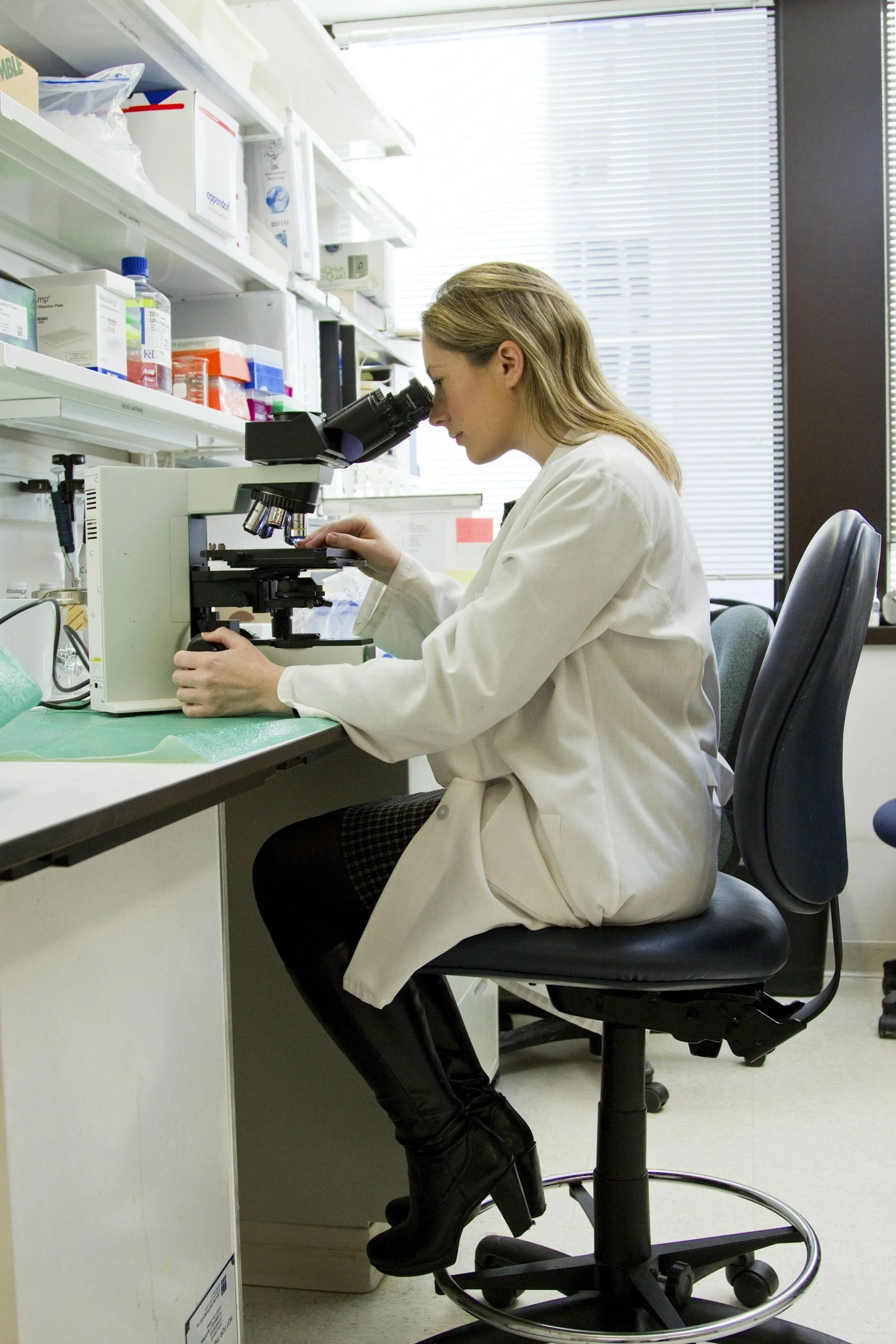
Marma therapy itself has less modern research than acupuncture or acupressure overall, but the wider body of research on acupressure suggests measurable benefits for stress-related symptoms and pain patterns.
Preoperative anxiety support. Systematic reviews have found acupressure can reduce anxiety and improve some physiological stress markers in surgical settings.
Sleep support. Meta-analyses on auricular acupressure suggest it may improve insomnia outcomes, though study quality varies and results should be interpreted with healthy caution.
Pain support. Reviews of auricular acupressure report improvements in pain and disability in chronic musculoskeletal pain conditions, particularly immediately post-treatment.
What this means in practice: marma therapy is a gentle, low-load intervention that can help your nervous system regain flexibility. The goal isn’t to make you “relaxed forever.” It’s to help your system return to baseline more easily, and to reduce the background noise of stress held in the body.
References (as listed on-page)
• Sushruta Samhita, Sharirasthana 6 (marma definition and classification)
• PubMed 37321140 (acupressure and preoperative anxiety)
• PubMed 38576710 (acupressure and anxiety, meta-analysis)
• PubMed 41424527 (auricular acupressure for insomnia, systematic review/meta-analysis)
• PubMed 39018502 (auricular acupressure for chronic musculoskeletal pain, systematic review/meta-analysis)
• PubMed 16801211 (marma therapy for stroke rehabilitation, pilot study)
Marma Therapy FAQ’s
-
Try to arrive hydrated and avoid coming in very hungry. A light meal one to three hours before is usually ideal. If you are sensitive to caffeine, consider keeping it light earlier that day so your nervous system can settle more easily.
-
Not necessarily. Marma can be done through light clothing or with minimal oil depending on the session plan. You will always be fully draped, and we’ll choose the most comfortable option for you.
-
Marma is generally gentle and precise, not aggressive. Some points can feel tender if your system is holding a lot of tension, but the goal is always workable sensation, never forcing. We check in throughout and adjust immediately.
-
Most people feel calmer and more inward afterward. You can return to your day, but if you can, plan a lighter schedule so the treatment can land. Many clients feel best when they avoid rushing and give themselves a slower evening.
-
Some people feel a shift in one session. For longer-standing patterns (chronic stress, headaches, tightness that keeps returning), a short series often helps. We can suggest a realistic rhythm based on your schedule and your goals.
-
If you have acute illness, fever, a fresh injury, active infection, or any medical condition where touch therapy is restricted, let us know and we’ll help you choose the safest option. If you are pregnant, we can still do marma, but we use pregnancy-safe points and gentler pacing.
By appointment. Closed Tuesdays.
Available times vary by service and practitioner.
Questions or help booking?
We’ll help you choose the right first visit.