


Targeted Warm Oil Therapy (Basti) in Kailua
Targeted warm oil therapy on Oʻahu.
Targeted Warm Oil Therapy (Basti) बस्ति
60 minutes · $125 for 1–2 regions
90 minutes · $185 for 3–4 regions
With Bryce. Book an appointment.
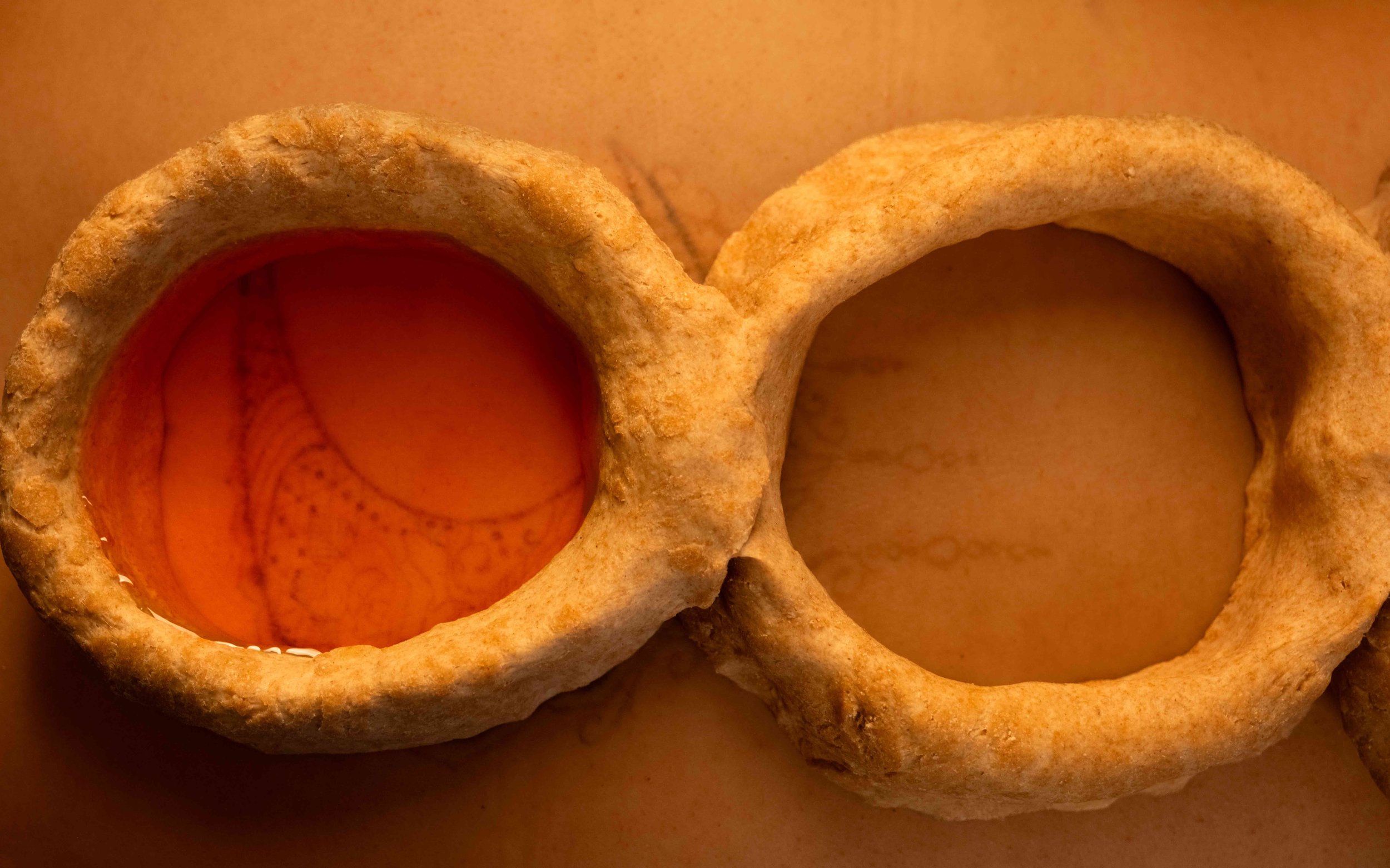
In many modern Ayurveda clinics, basti is also used to describe a localized therapy where warm medicated oil is gently pooled over a specific area of the body using a soft dough ring. In practice, it is a quiet, steady oil bath for the tissues, held in one place long enough for the region to soften and receive.
In classical Pancakarma, basti most often refers to an internal therapy and is considered one of Ayurveda’s primary approaches when vata is predominant. On this page, we are referring to topical basti, also called warm oil pooling.
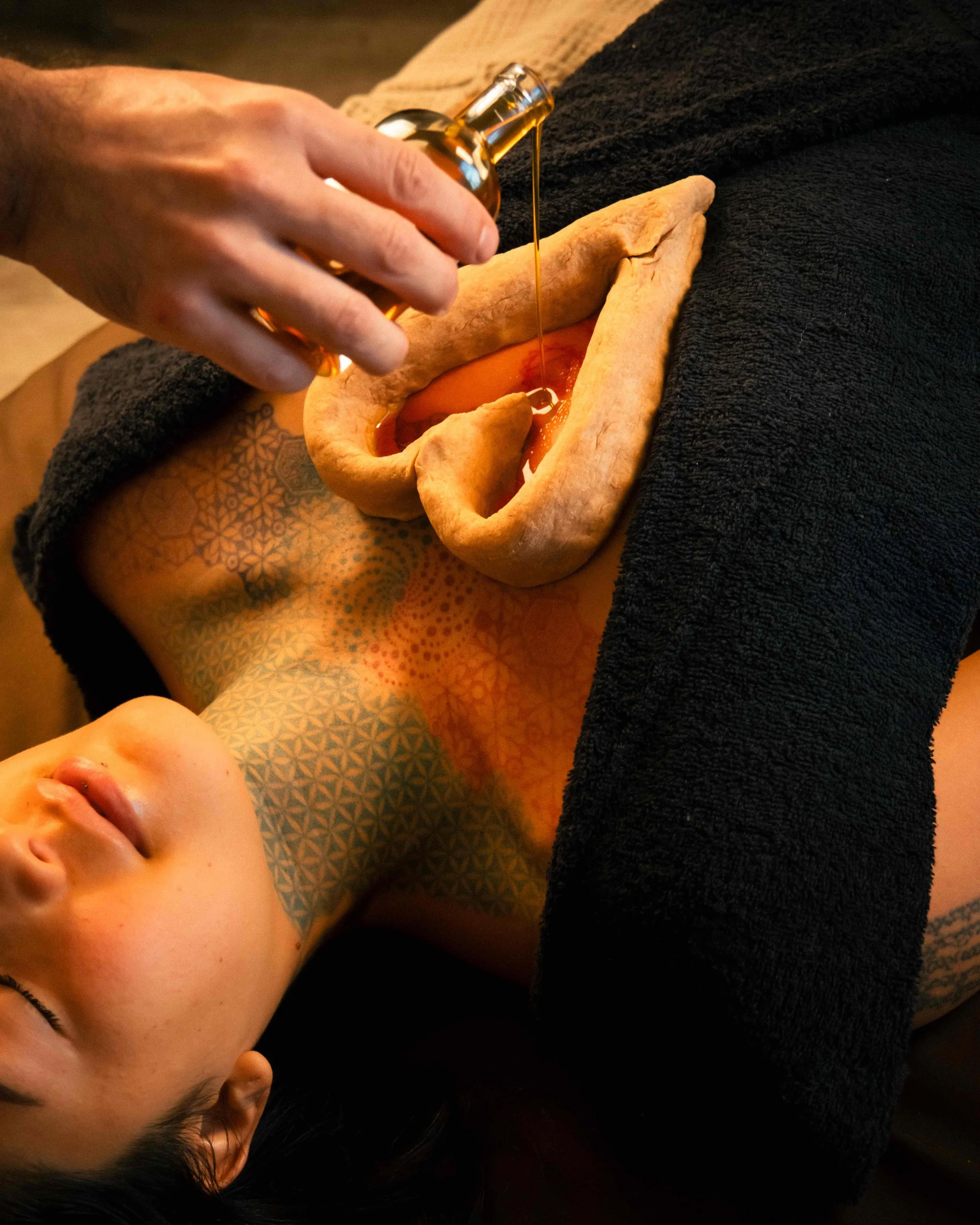
Best for: lingering ache or stiffness, chronic tightness patterns, joint dryness, guarded low back or neck, menstrual cramping, and mobility support when things feel stuck. Not for fresh acute injuries.
How Basti tends to feel (what clients notice)
Common feedback includes:
Warmth that feels like it reaches through the whole region
Muscles around the joint or spine stop gripping
Movement feels easier without forcing stretching
Pain feels quieter—less sharp, less reactive
The body settles, especially when discomfort has been impacting sleep
Many people notice the difference most in how the area behaves between flare-ups. Getting up from sitting feels smoother. The back or joint feels less “watched” and less protective. Sleep is less interrupted by discomfort, and there’s less need to constantly stretch or crack the area for relief. Over time—especially with a short series—topical basti often supports a calmer baseline tone in the tissues, so movement feels more confident and less guarded.
The oil used is selected at the time of the appointment to suit your individual needs, body type, and even weather patterns. Herbal infused oils can range from gently warming and relaxing to cooling and rejuvenating.
What Happens: A Session at Ayurveda Wellness Hawaiʻi
Every session is tailored to your body and nervous system that day. We begin with a brief check-in around comfort, consent, boundaries, and how you’re feeling. Fully draped; we check in on pressure and boundaries throughout.
Traditionally, only the area receiving basti is uncovered, clients may choose to keep clothing on or disrobe according to comfort. We’re trained and licensed professionals and are able to work around clothing. If you choose to wear something, we recommend simple garments you wouldn’t mind getting a drop or two of oil on.
Step 1
Herb + oil selection
We choose the herbal oil based on your constitution, season, and the quality of what’s happening in the area (dry/tight, guarded, inflamed-feeling, or depleted.

Step 2
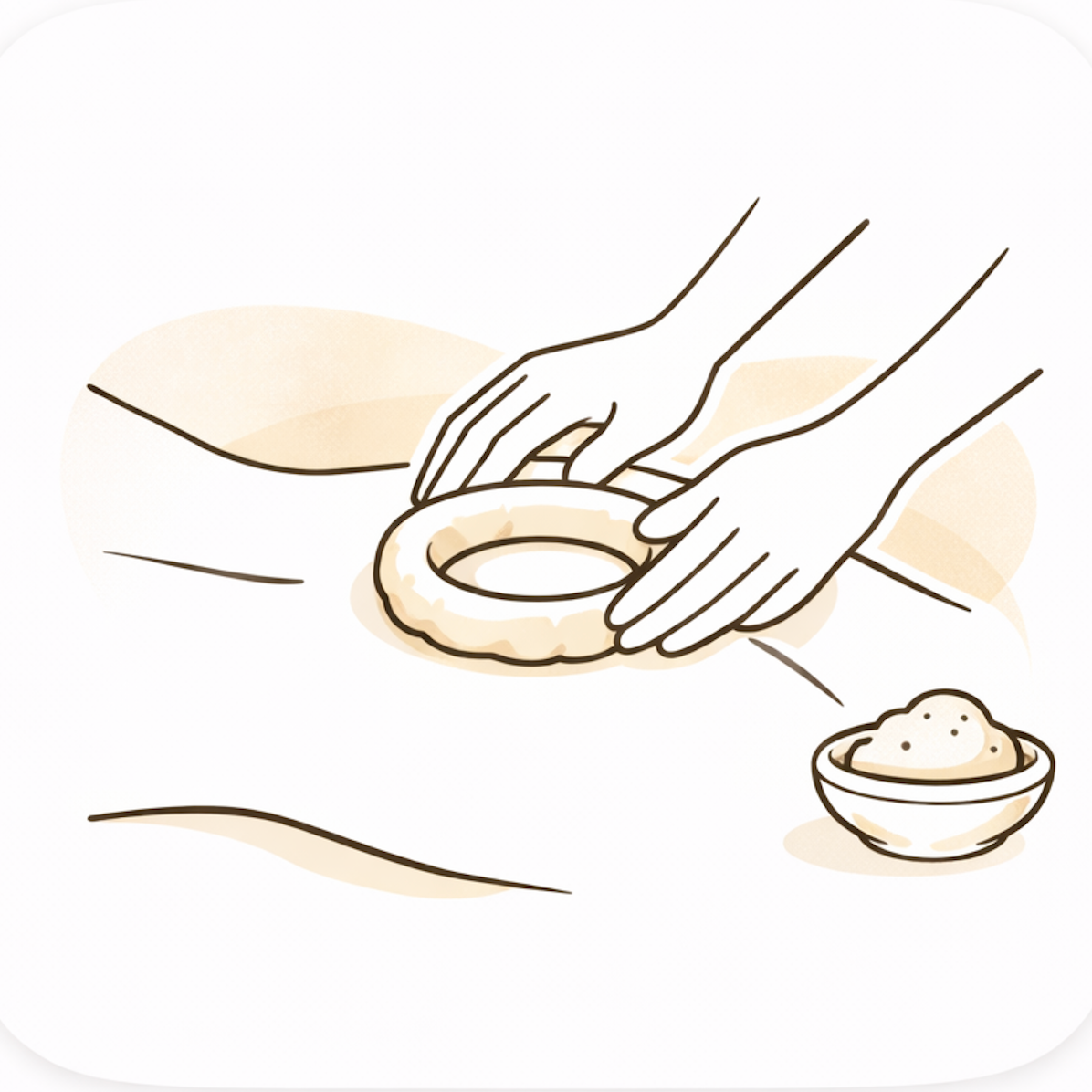
Forming the dough reservoir
A soft dough ring is made and sealed onto the body using a blend of wheat flour and chickpea flour. This creates a comfortable reservoir that stays secure over the target region.
Step 3
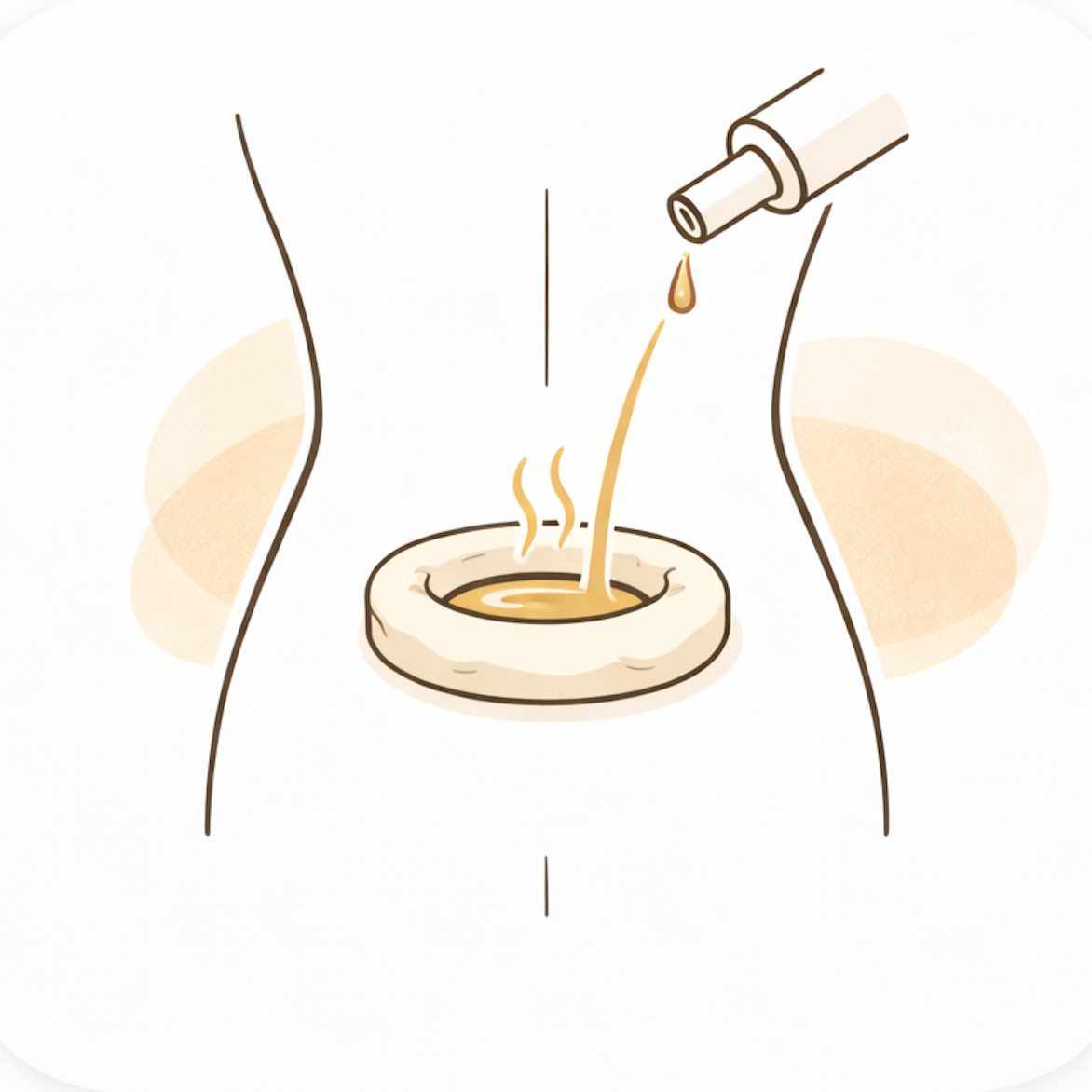
Warm herbal oil is slowly poured
The oil is held in place long enough to allow deep soaking and softening of the local tissues—steady warmth and contact. Typically, 35-45 minutes
Integration & aftercare
After topical basti, most people feel calmer and a little more “open” in the area we worked, like the tissues are less guarded. If you can, keep the rest of the day simple: move gently, stay warm, hydrate, and avoid intense workouts or long periods of sitting right away. A warm shower later is fine (skip very hot water and strong soap directly on the area if your skin is sensitive). The goal is to let the softness settle into your movement patterns, so the relief isn’t just temporary, think easy walking, light stretching, and an early night whenever possible.
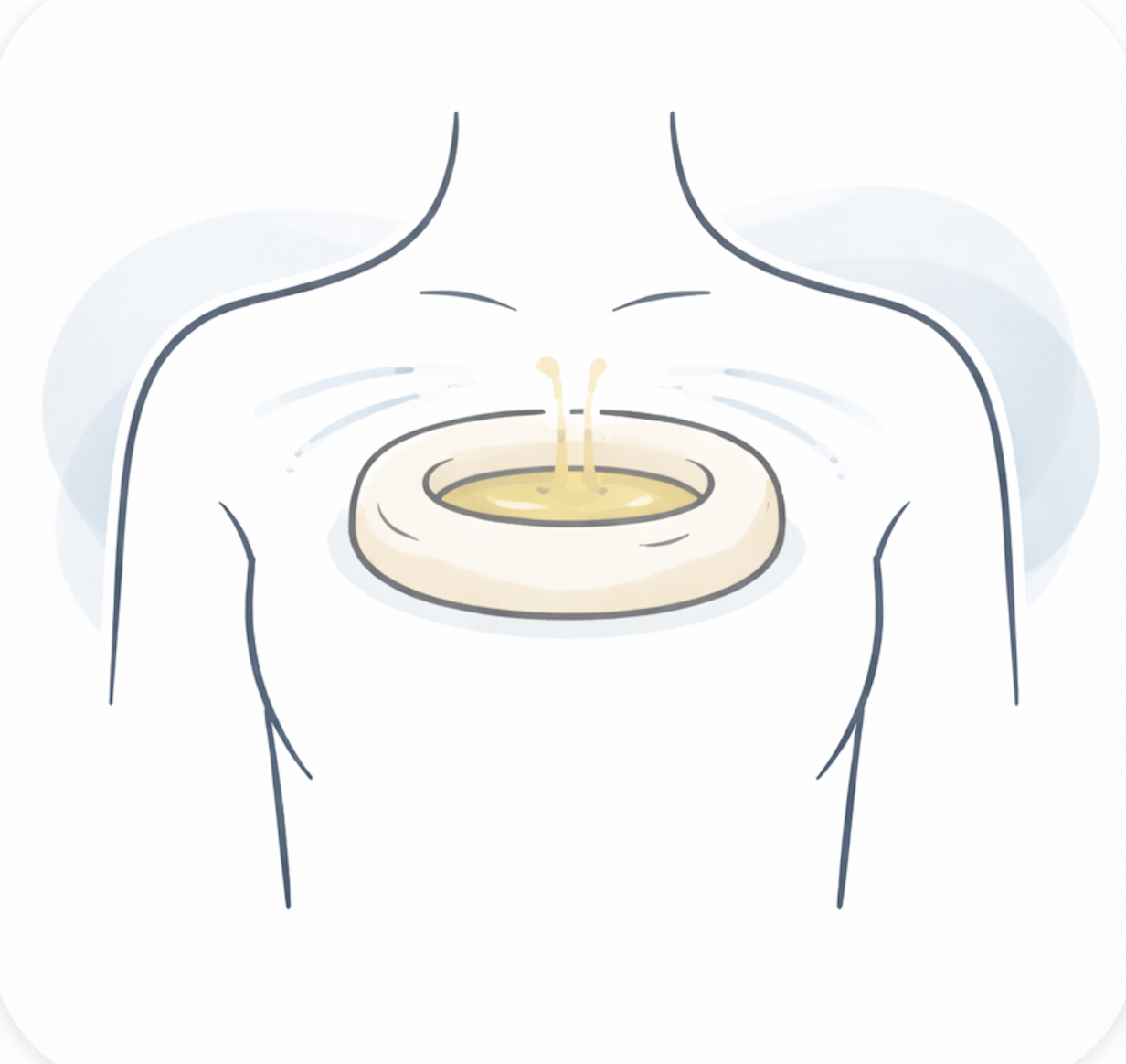
Heart
A calming oil pooling over the heart area to support nervous system regulation, emotional steadiness, and a sense of ease in the chest.
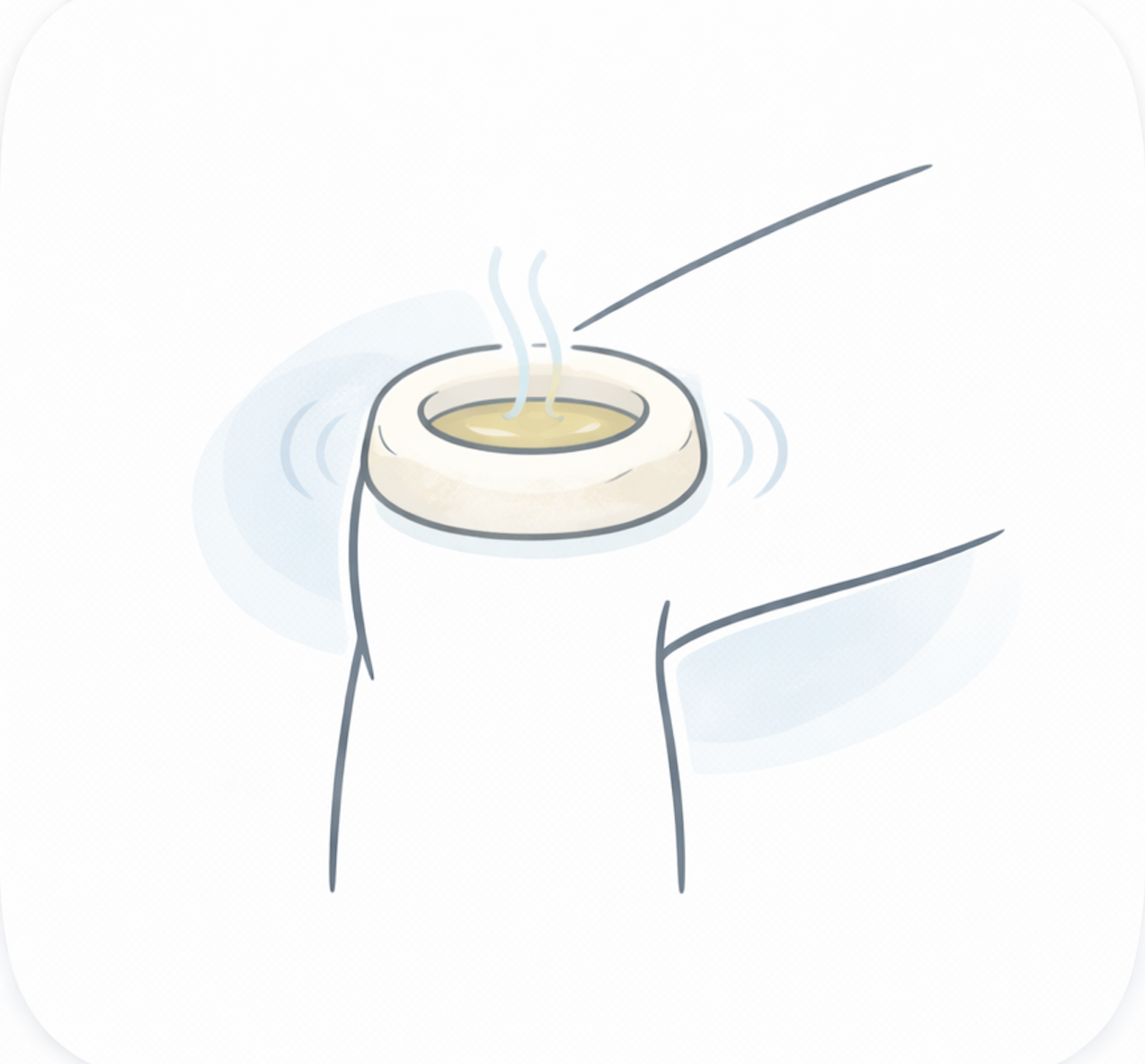
Knee(s)
Targeted warm oil pooling over the knee joint to nourish tissues, ease stiffness, and support comfortable movement.
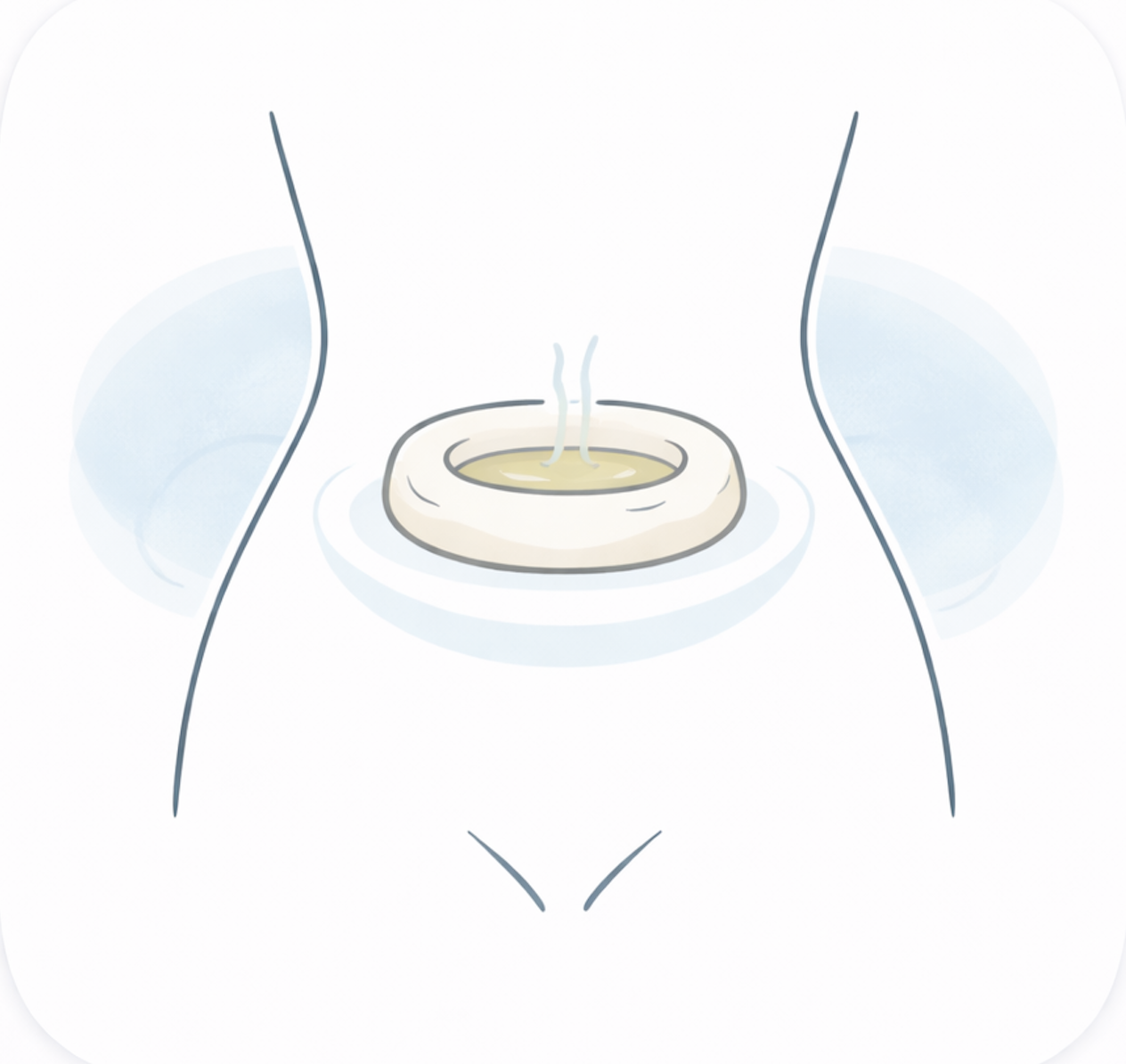
Lower Abdomen
A grounding abdominal oil pooling to support pelvic comfort, digestive ease, and cyclical or menstrual balance.
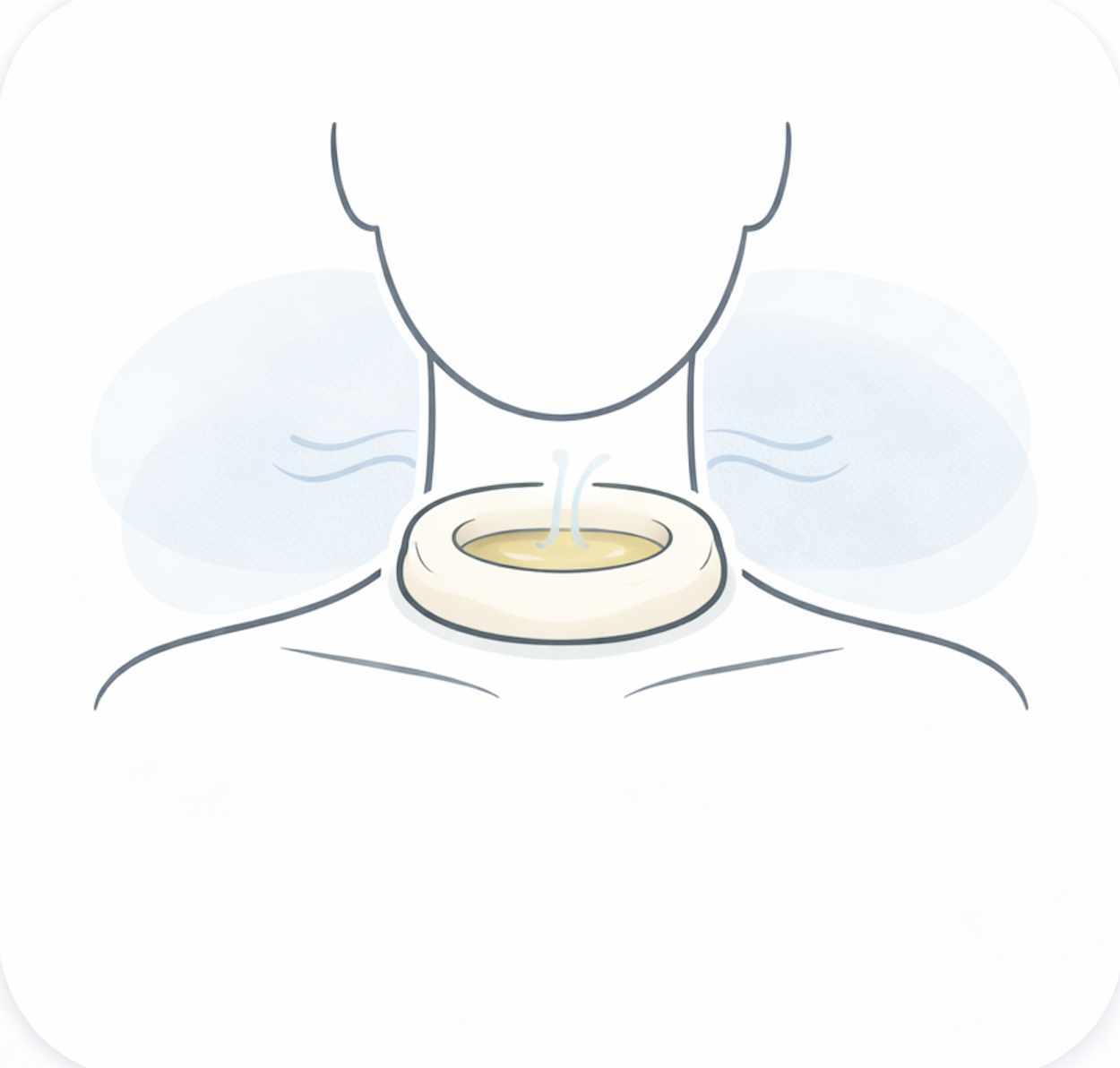
Thyroid/Parathyroid
Gentle warm oil pooling at the throat and neck to encourage softness, circulation, and balanced tension in this sensitive region.
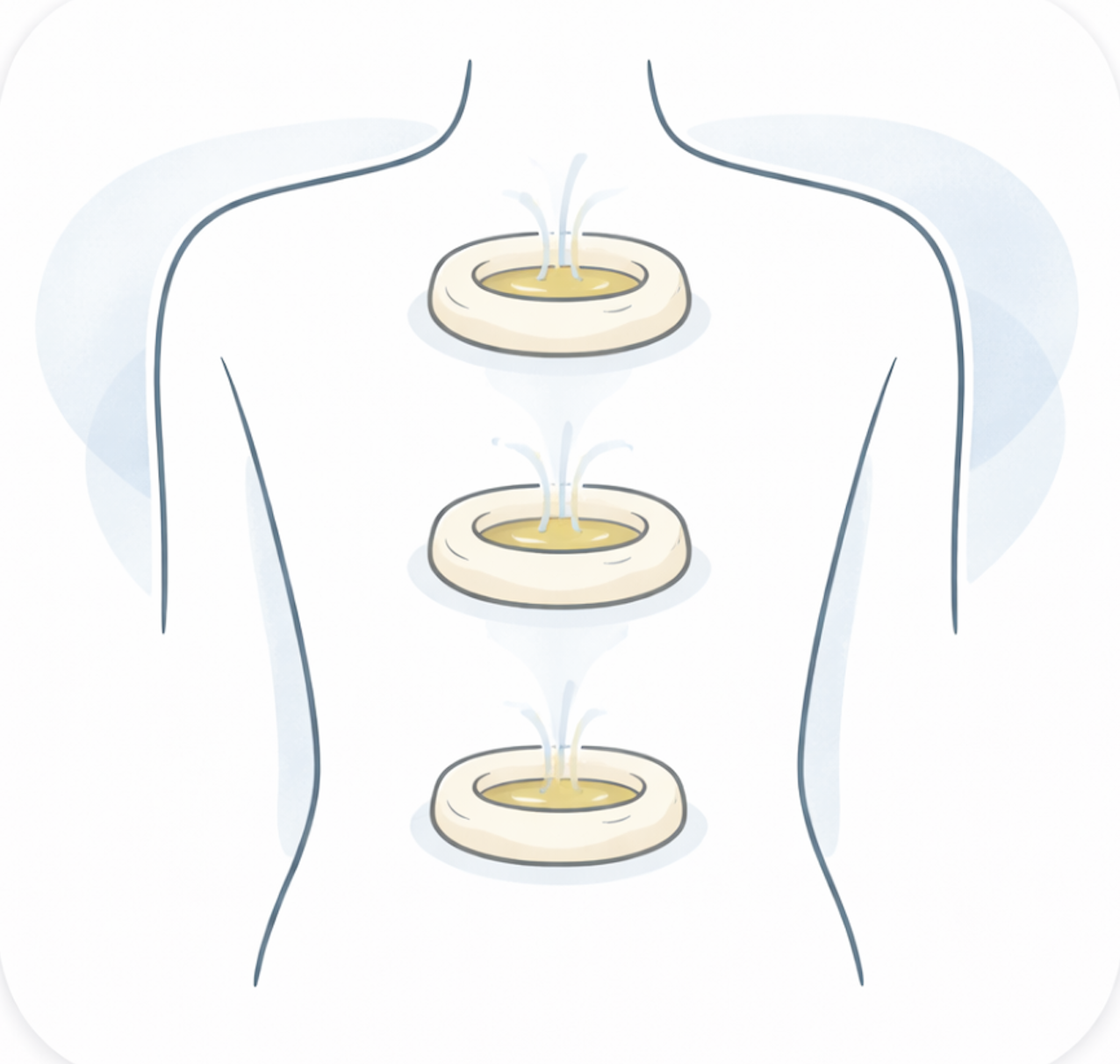
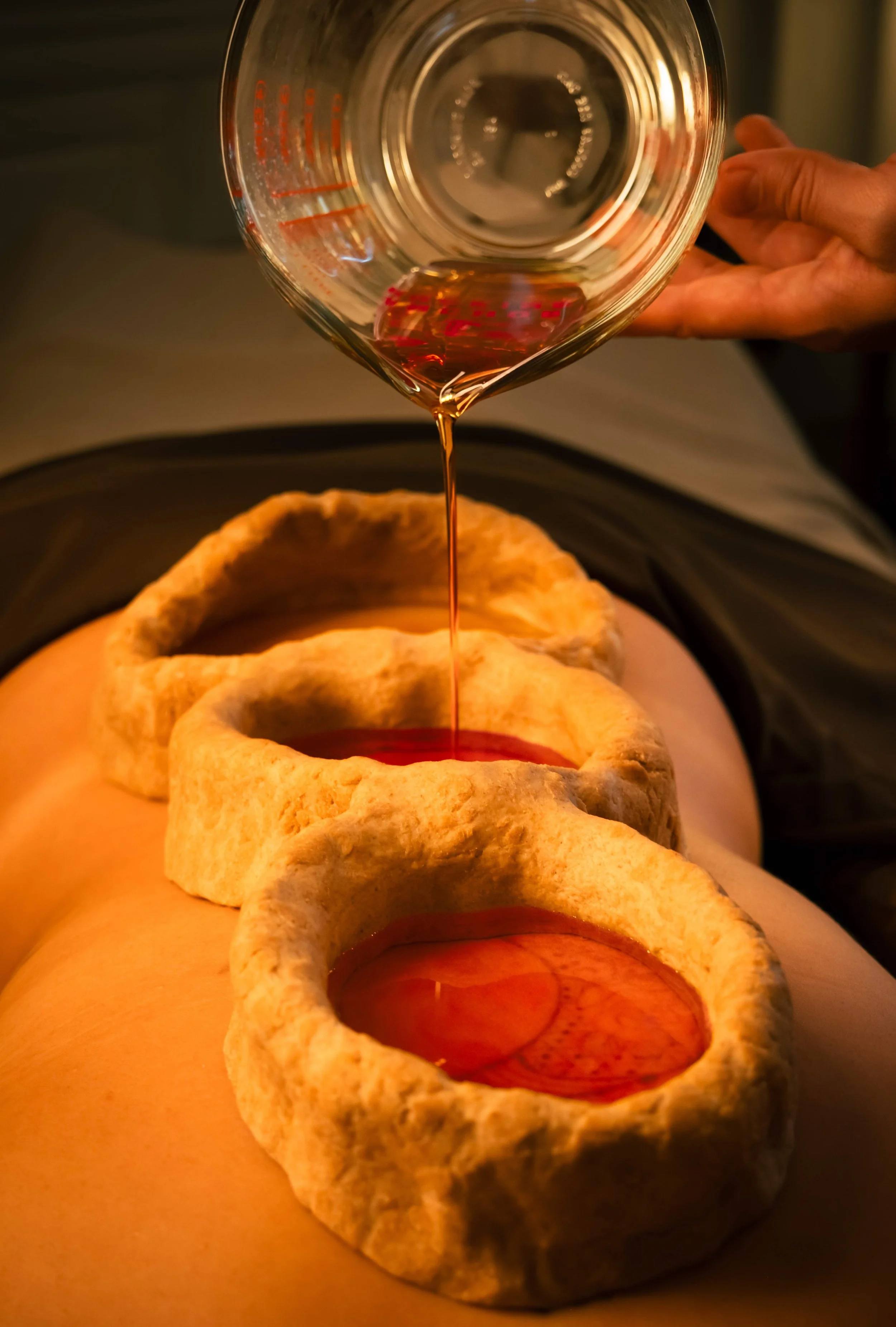
Spinal Basti
Multiple warm oil pools placed along the spine to deeply soothe the back, support the nervous system, and invite whole-body relaxation.
Topical basti can be customized with different herbal oils and blends and applied to many regions: heart/chest (uro basti), throat/thyroid area (jatru basti), lower abdomen for vata type menstrual cramping (nabhi basti), knees (janu basti), eyes (netra basti), and the low, mid, or upper back—based on your constitution and what the tissues need.
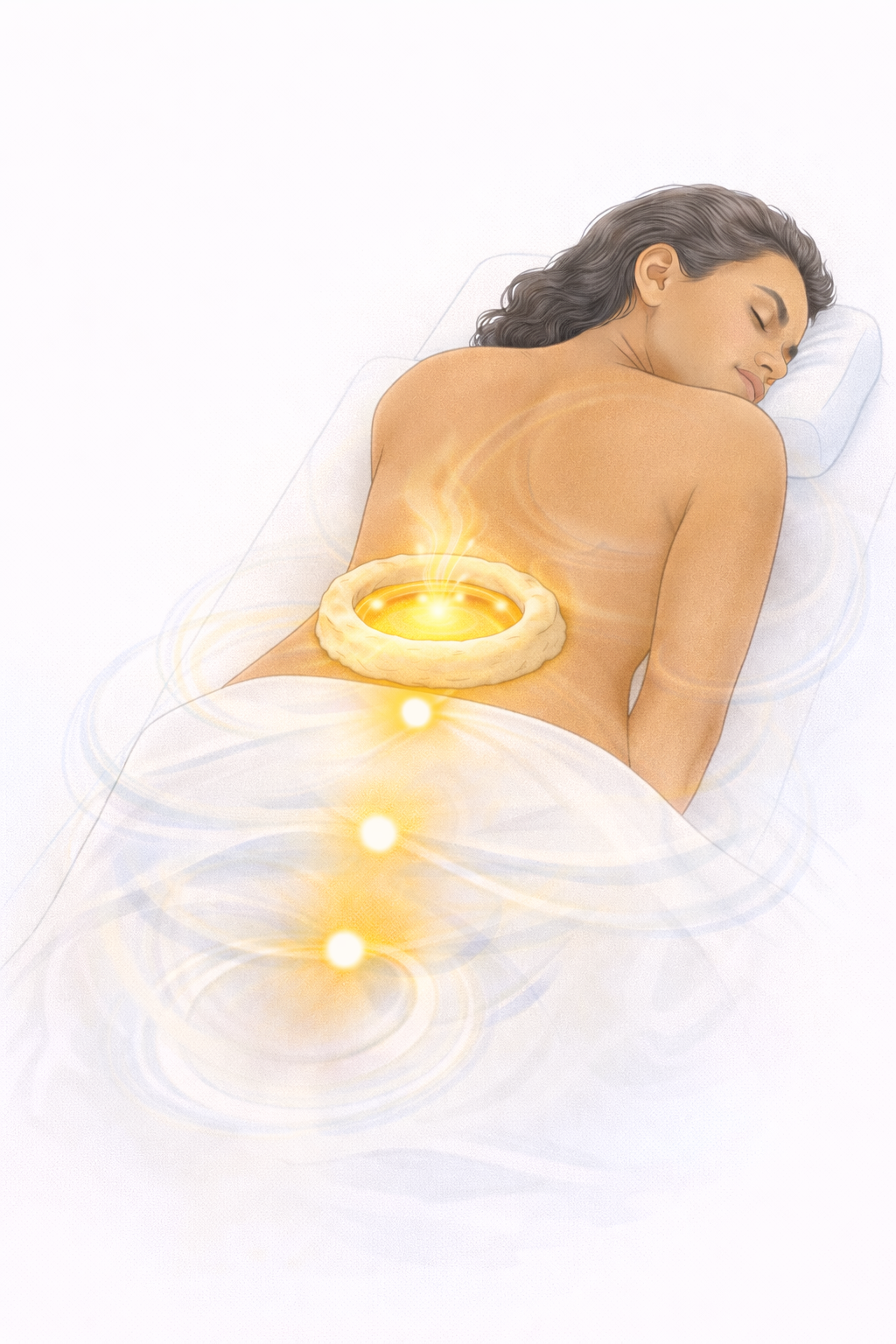
Energetics, Prana, and the Nervous System
Subtly, this therapy is about restoring containment. Pain can scatter attention, and the body often holds a background brace around the problem area. When warm oil is held in one place long enough, the tissues begin to trust the contact. Many people notice the region feels more coherent and less reactive afterward, like the body no longer has to keep watch there.
Aṣṭāṅga Hṛdaya, Sūtrasthāna 19.1
देवनागरी
वातोल्बणेषु दोषेषु वाते वा वस्तिरिष्यते ।
उपक्रमाणां सर्वेषां सोऽग्रणीस्त्रिविधस्तु सः ॥ १ ॥
Translation
When vata is predominant, basti is regarded as the foremost among treatments
In topical basti, we apply the same core logic in a gentle external way, directing warmth and unctuousness precisely to regions where stiffness tends to lodge, especially joints, spine, and chronically tense tissues.
From an Ayurvedic lens, topical basti is a focused form of snehana paired with gentle warmth. It brings snigdha (unctuousness), mṛdu (softness), and sthiratā (steadiness) into places that feel dry, rigid, depleted, or chronically guarded.
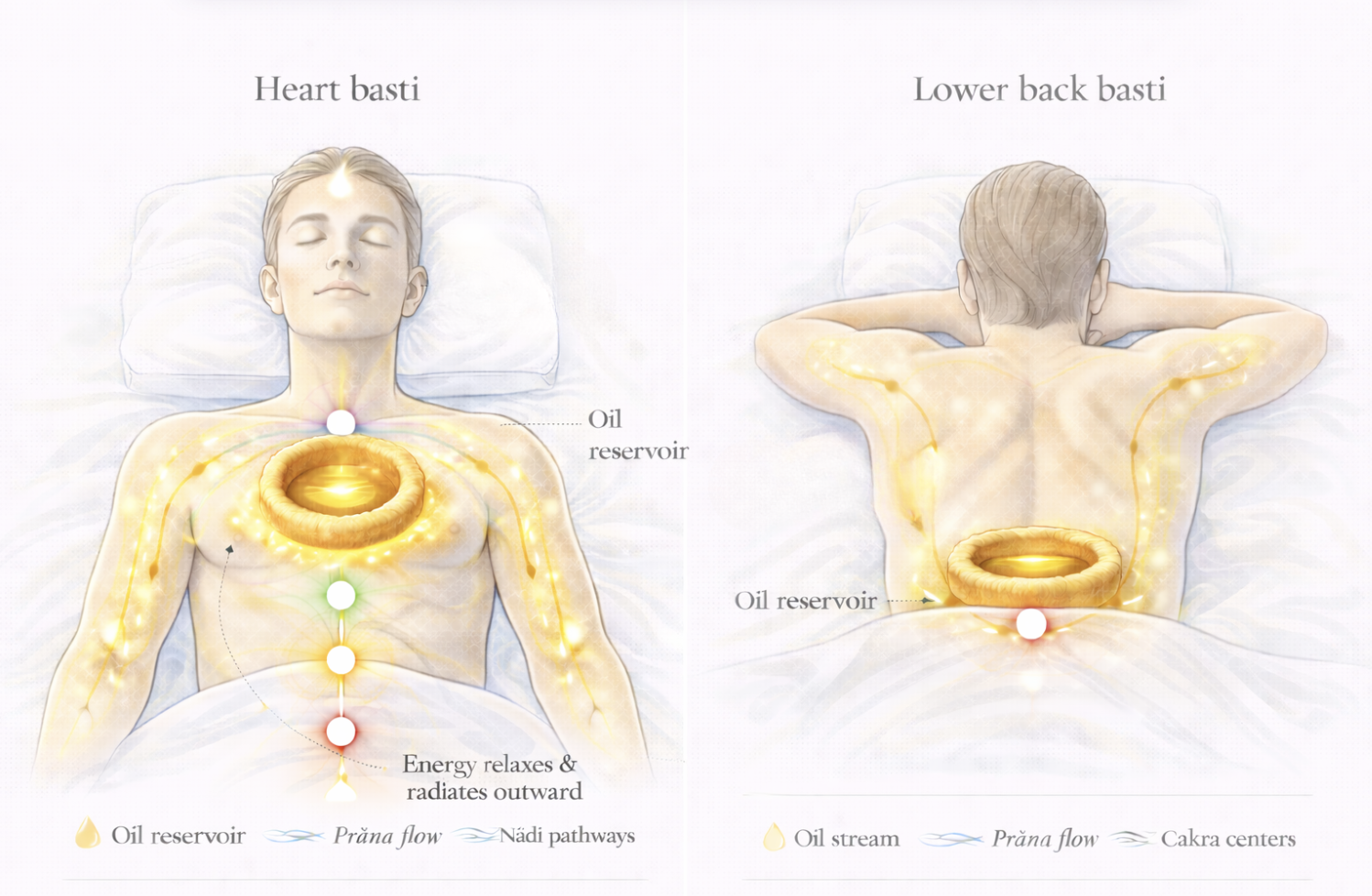
A practical way to understand topical basti is through the combined effects of continuous local warmth and sustained contact. Reviews of superficial heat therapy for low back pain describe benefits including pain relief and improved flexibility, and clinical trials of continuous low-level heat wraps show improved functional outcomes in acute low back pain.
Sesame oil is a classic base oil in Ayurveda, and there is also published clinical research on topical sesame oil in pain-related contexts, with some studies reporting reduced pain severity and reduced need for analgesics.
Cramping Patterns and Menstruation
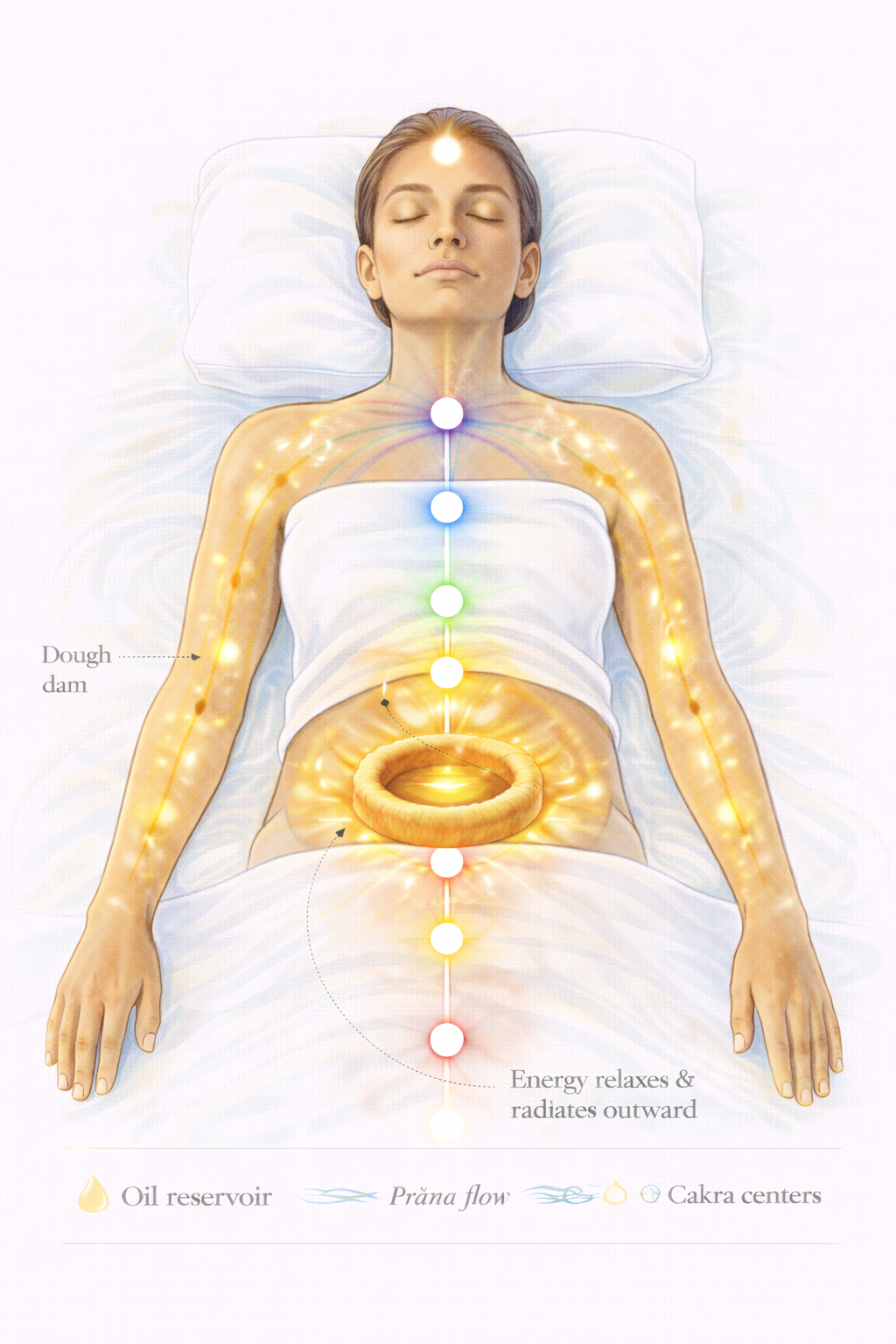
For cramping patterns with a clear vata signature, topical basti at the navel or lower abdomen is sometimes used as supportive care in the weeks leading up to the bleeding phase. In Ayurvedic language, this is closely related to settling apāna vāyu, which governs downward movement in the pelvis and colon. When apāna is disturbed, cramping can feel sharp, spasmodic, and irregular, often paired with dryness, tension, constipation or variable stools, anxiety, lower-back pulling, or a sense that the body can’t “let go” into the downward flow of the cycle.
When warm oil is held steadily over the abdomen, the tissue receives two things vata responds to immediately: consistent warmth and steady containment. Many people feel the belly soften, the pelvic floor stop gripping, and the low back become less reactive. In practical terms, this can translate to fewer “spike” cramps, less guarding around the uterus and intestines, and a smoother transition into the bleed, especially when combined with gentle walking, warm meals, hydration, and adequate rest.
Timing matters. For most clients, this is most helpful in the 1–2 weeks before bleeding, when the body is building toward downward movement. We typically avoid strong abdominal work during active heavy bleeding, and we adjust the approach for signs of pitta (heat, burning pain, heavy bright-red flow, irritability) or kapha (heaviness, sluggish congestion), where different strategies may be more appropriate. If you’re unsure what pattern you have, we can assess and choose the safest timing and technique for your body.
Sympathetic to Parasympathetic, Why it Matters
When an area has been hurting for a while, the nervous system often treats it like a problem that needs constant protection. Muscles brace, fascia gets “guarded,” and the body limits movement—not because you’re weak, but because your system is trying to stay safe. That protective tone is closely tied to sympathetic activation: vigilance, tension, shallower breathing, and a body that has a harder time fully settling.
Topical basti supports the opposite state through a very simple recipe: sustained warmth + steady contact + time. Continuous gentle heat helps increase local circulation and tissue pliability, which can reduce stiffness and the “stuck” feeling in fascial layers and chronic tension patterns. As tissues warm and soften, movement often feels less restricted—not because anything is forced open, but because the body stops gripping as much.
This matters because local threat signals drive global stress signals. When pain and guarding quiet down in one region—low back, neck, knees, upper back—the whole system often follows. Many people notice their breath drops lower, the jaw unclenches, and the body feels less reactive afterward. In other words, topical basti can be a direct way to reduce the inputs that keep the sympathetic system “on,” so parasympathetic functions like recovery, digestion, and sleep have more room to come online.

What Doctors & Researchers are Seeing
Sustained, comfortable heat has well-described effects on soft tissue: it increases local blood flow, helps reduce pain sensitivity, and improves the elasticity of connective tissues. In practical terms, when a region is warmer and better perfused, it often feels less “stuck,” less guarded, and easier to move, especially in chronic patterns where fascia and muscle tone have been holding a protective brace. That local softening matters for the nervous system, because guarding itself is a sympathetic strategy: if the body senses threat, it restricts movement and keeps the area on alert. Heat-based therapies are commonly used specifically for subacute-to-chronic stiffness and pain patterns for these reasons.
Clinically, the strongest modern parallel to topical basti is the research on continuous low-level heat therapy for back pain and musculoskeletal pain, steady warmth over time rather than intense bursts. Reviews and trials report improvements in pain and function, including reduced pain and disability in acute/subacute low back pain, and improved flexibility/strength outcomes in broader low back pain populations, especially when combined with gentle movement. The takeaway for basti language is simple: when warmth and contact are consistent (not aggressive), tissues tend to soften and function improves, which reduces the body’s need to brace.
Heat → blood flow + connective-tissue elasticity; best for subacute/chronic stiffness
PM&R KnowledgeNow. Therapeutic Modalities – Thermal (physiologic effects include pain relief, increased local blood flow, and increased elasticity of connective tissues; typical indications include subacute-to-chronic conditions, decreased joint stiffness).
Continuous low-level heat → improved pain + function in low back pain (and related outcomes)
Freiwald J, et al. A Role for Superficial Heat Therapy in the Management of Non-Specific, Mild-to-Moderate Low Back Pain… Narrative review (2021). Summarizes mechanisms + multiple clinical trials; notes continuous low-level heat therapy provides pain relief and improves strength/flexibility; also summarizes work/activity/sleep impacts in some studies.
Mayer JM, et al. Treating acute low back pain with continuous low-level heat wrap therapy and/or exercise: a randomized controlled trial. Spine J. 2005. (Heat + exercise improved functional outcomes vs either alone/control.)
Targeted Warm Oil Therapy (Basti) FAQ’s
-
Arrive hydrated and avoid a very heavy meal right before. If we are working on the low back or abdomen, a lighter meal earlier often feels best.
-
Most people feel calmer and more inward afterward. If you can, plan a lighter schedule so your nervous system can integrate the treatment. You can drive home, but we recommend giving yourself extra time and avoiding rushing.
-
Usually no. It is best for lingering ache or stiffness, not fresh acute injuries. If something is new, hot, swollen, sharply worsening, or medically unclear, we will help you choose a safer option.
-
We select oils based on your constitution, the season, and the quality of discomfort. Oils may be kept very simple when there are scent sensitivities. We use high-quality organic oils and herbs, and infuse many oils in-house.
We use high-quality organic oils and herbal preparations, and all oils are infused in-house.
-
We choose oils based on your constitution, the season, and what your system is asking for. Oils may be infused with traditional herbs such as bhringraj, brahmi, gotu kola, sandalwood, and jatamansi. If you have sensitivities, we can keep the oil simple and avoid strong aromas.
All oils and herbs used in our practice are 100% USDA Organic
-
Yes. Let us know ahead of time about allergies, asthma, migraine triggers, or fragrance sensitivity. We can use a simpler oil and keep the session very gentle.
-
Most of the oil is absorbed during the session. We remove excess oil so you leave feeling comfortable.
-
Some people benefit from a short series (2-3x/week), especially for chronic low back or joint stiffness.
Others use it as occasional support during heavy weeks, travel, or periods of increased stress. -
In most cases, we do not schedule abdominal or pelvic topical basti during active bleeding, especially in the first days. For vata type cramping patterns, it is usually most helpful in the one to two weeks leading up to the bleeding phase, or sometimes near the final day or two when flow is light. We can always adjust and focus on gentler supportive care instead, depending on how your body feels that day.
By appointment. Closed Tuesdays.
Available times vary by service and practitioner.
Questions or help booking?
We’ll help you choose the right first visit.