


Ayurvedic Warm Oil Massage (Abhyanga) in Kailua
Ayurvedic warm oil massage and whole-body care on Oʻahu.
Ayurvedic Warm Oil Massage (Abhyanga) - अभ्यंग
60 minutes · $125 | 90 minutes · $175
Ayurvedic Warm Oil Massage + Warm Oil Stream Therapy (Abhyanga + Shirodhara): 90 minutes · $199
With Bryce. Book an appointment.
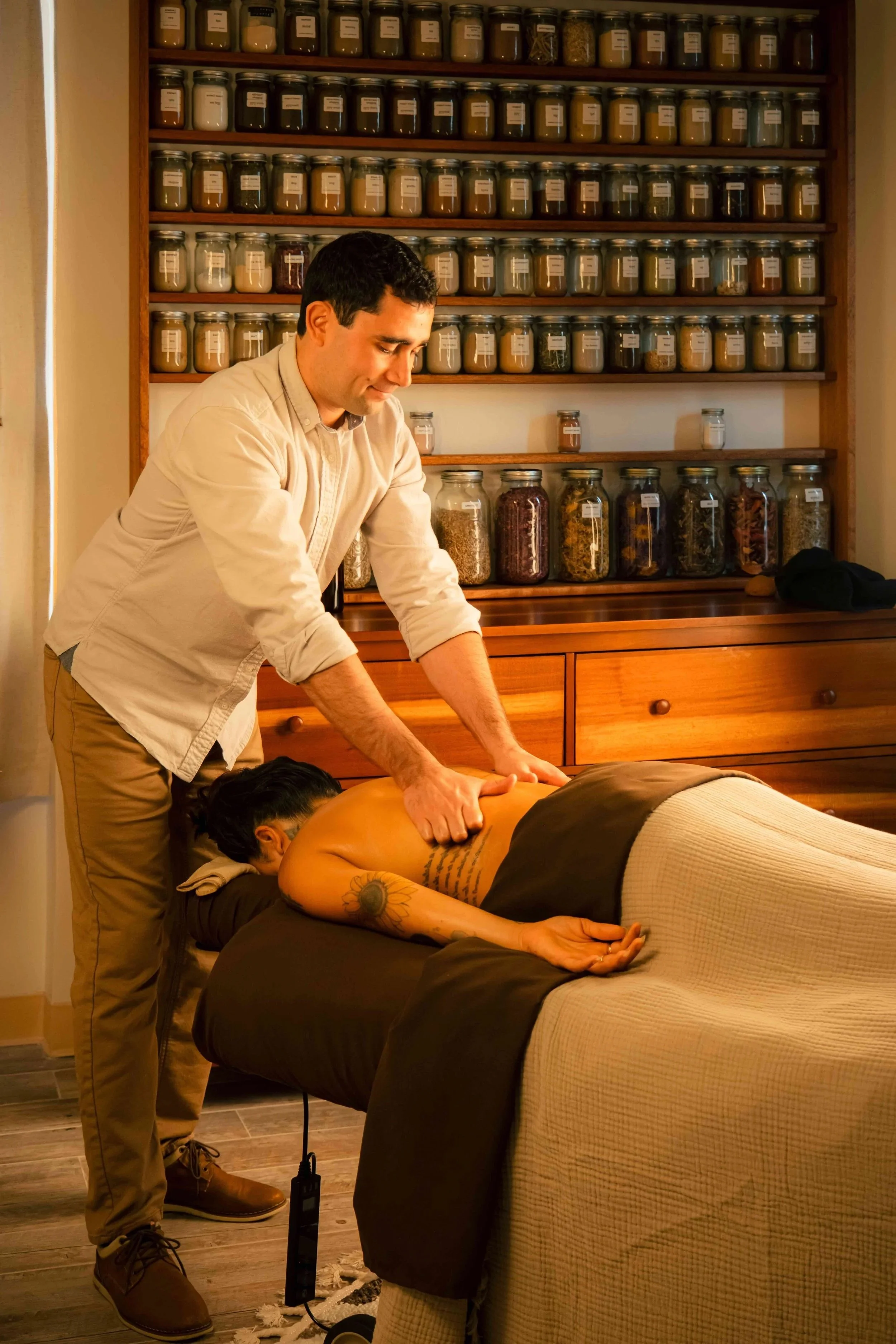
Abhyanga is a traditional Ayurvedic warm oil massage where warm herbal oils are applied with steady, rhythmic strokes, chosen for your constitution, season, and current needs.
When life feels dry, fast, irregular, or overstimulating (classic vāta aggravators), Abhyanga offers the opposite: warmth, rhythm, and nourishment. It is one of Ayurveda’s foundational therapies for calming the nervous system, easing tension patterns, supporting joint comfort, and helping the mind settle back into the body.
Best for: stress, anxious or scattered feeling, chronic tightness, sleep support, vāta type aches, desk body discomfort, travel fatigue, and feeling depleted.
Many people experience Abhyanga as both deeply relaxing and surprisingly stabilizing. It is not only about loosening muscles. It is about giving the whole system a steady organizing signal so you can breathe better, sleep better, and feel more at home in your body.
How Abhyanga tends to feel (what clients notice)
Common feedback includes:
• The nervous system softens and the mind gets quieter
• The body feels more stable and less reactive for a day or two
• Stiffness eases without forcing stretching
• The breath drops lower and becomes more natural
• Sleep comes more easily and feels more restorative
• Skin feels softer and more hydrated
Many clients notice the most meaningful changes in the small, practical places that matter day to day. Shoulders sit lower without effort. The jaw unclenches. The belly feels less tight and digestion feels calmer. Aches that normally “talk” all day become quieter, and the body moves with less hesitation. Over time, consistent Abhyanga tends to support better recovery between workouts or work weeks, steadier energy, and a more resilient response to stress, as if the system has more capacity and less background noise.
What Happens: A Session at Ayurveda Wellness Hawaiʻi
Every session is tailored to your body and nervous system that day. We begin with a brief check-in around comfort, consent, boundaries, and how you’re feeling. Fully draped; we check in on pressure and boundaries throughout.
Traditionally, Abhyanga is received fully disrobed, but many clients choose to keep underwear on (or other garments) for comfort—either is welcome. We’re trained and licensed professionals and are able to work around clothing. If you choose to wear something, we recommend simple garments you wouldn’t mind getting a drop or two of oil on.
Step 1
Herb + oil selection
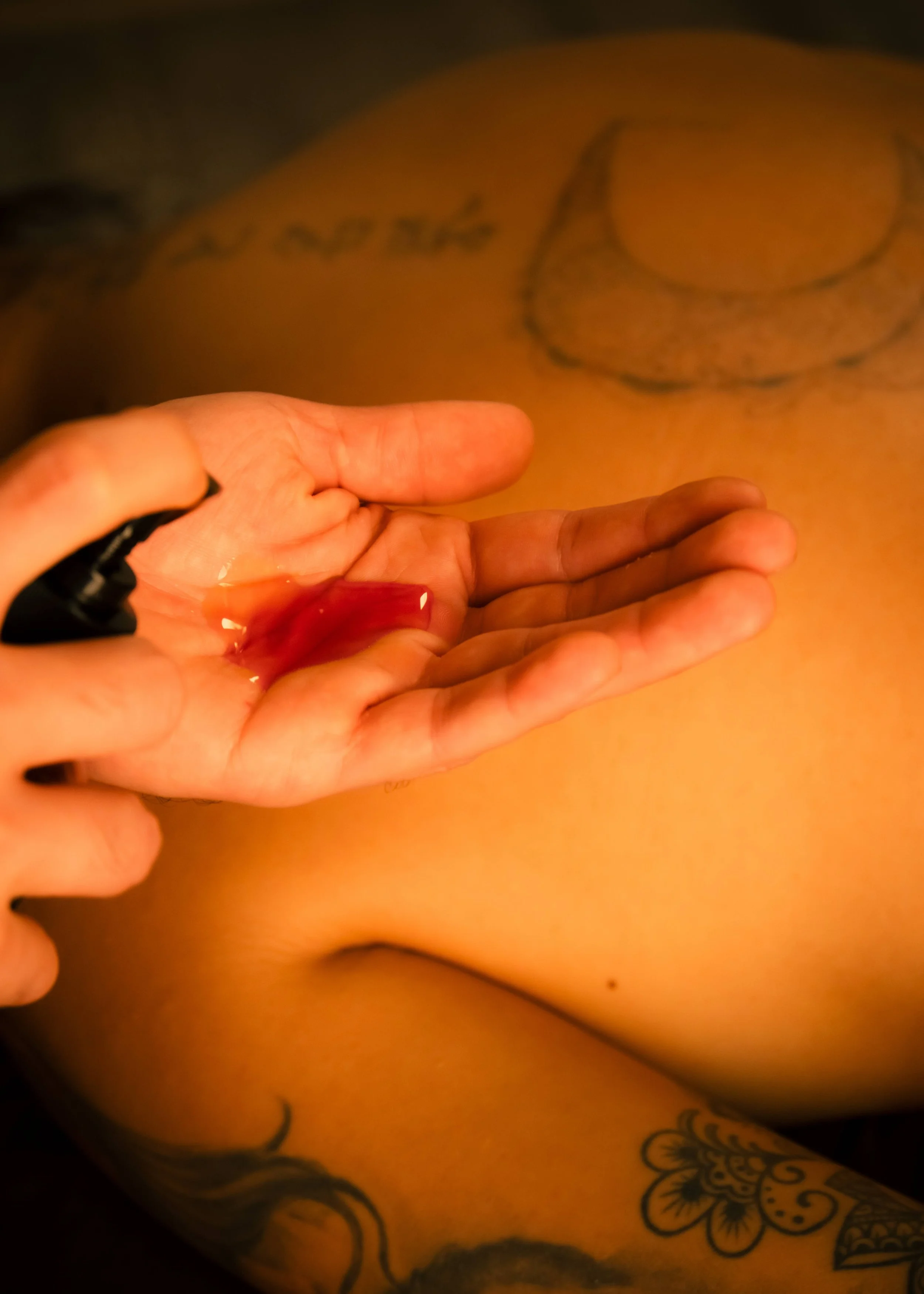
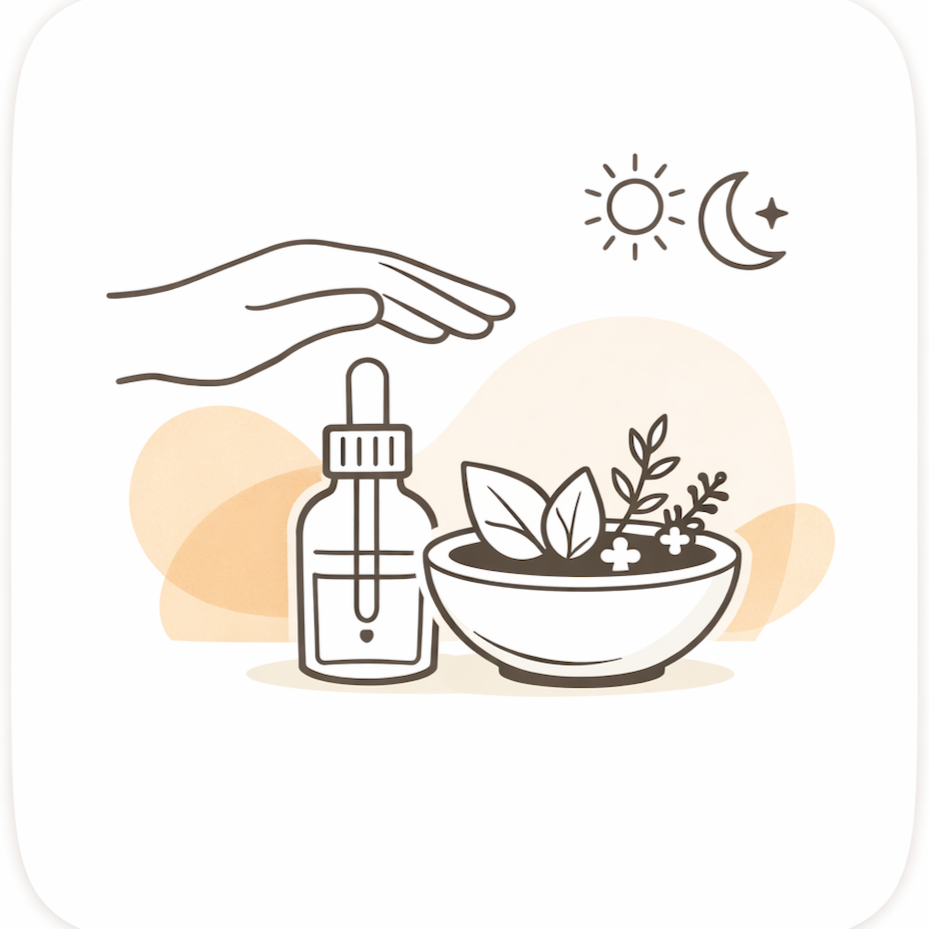
We choose the oils (and herbal support when indicated) based on season, sensitivity, and what your system is asking for today.
Step 2
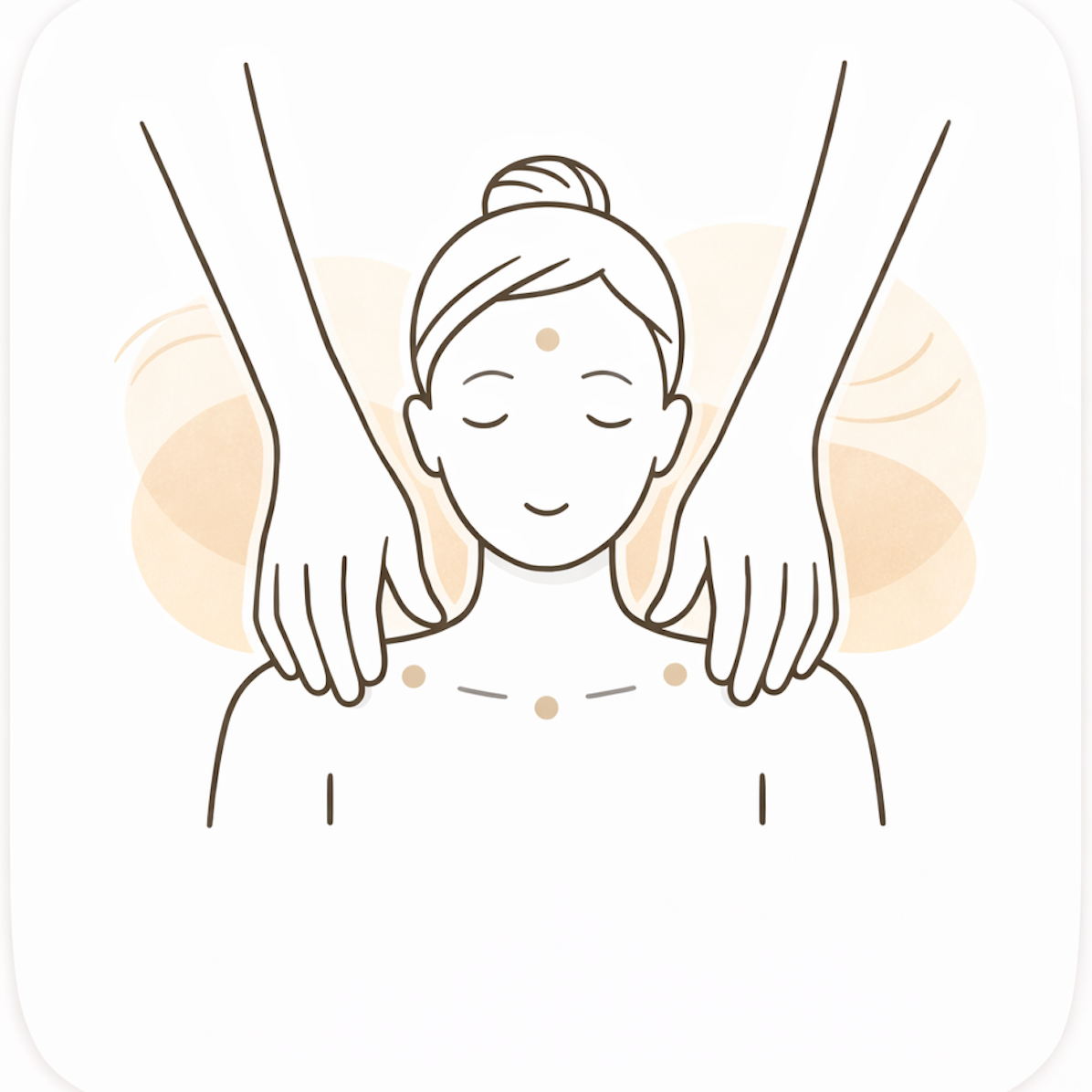
Gentle marma (acupressure) holds to cue relaxation, support breath + circulation, and help the nervous system settle before deeper work.
Step 3
Ayurvedic Warm Oil Massage (Abhyanga)
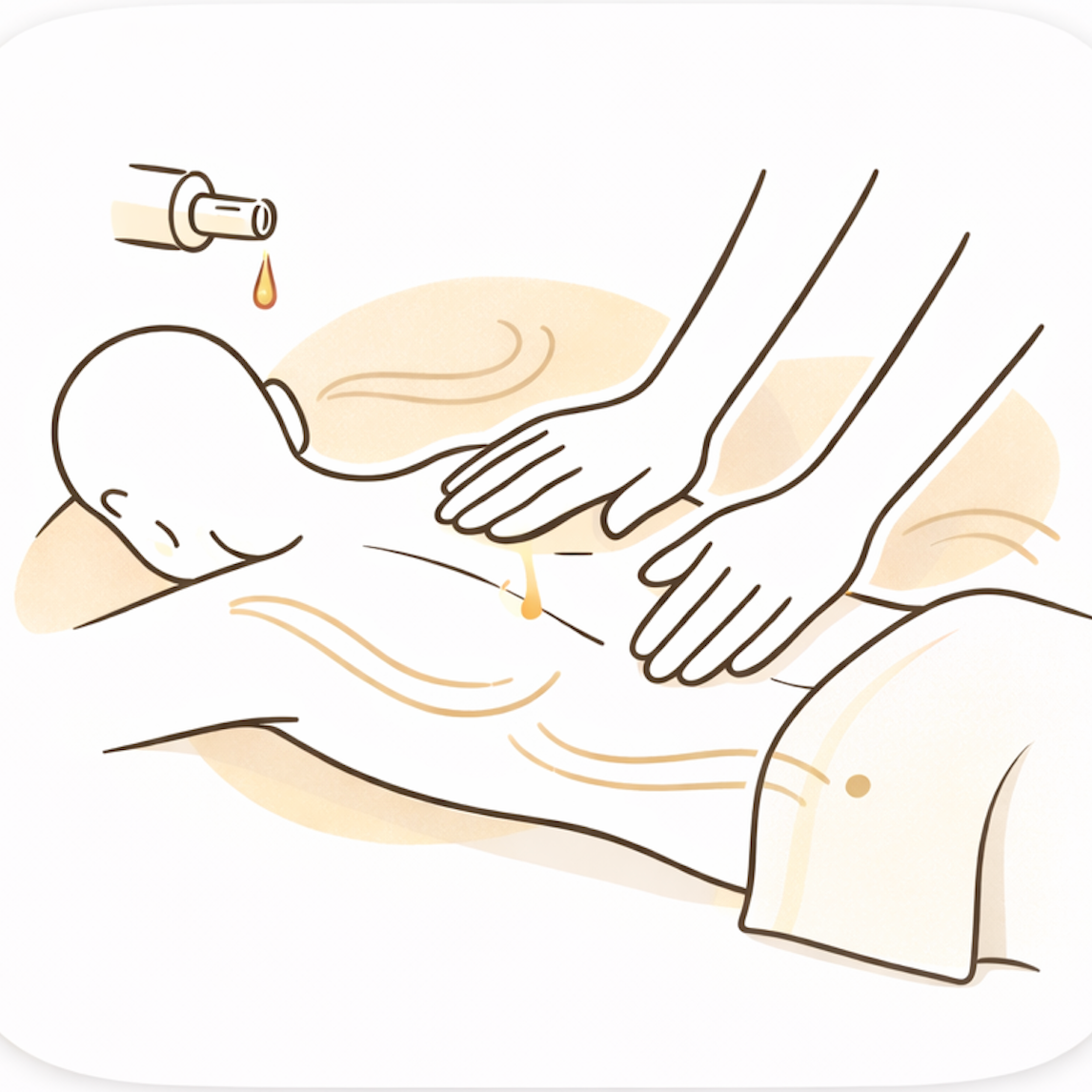
Steady full-body warm-oil massage to soften tension, support tissue receptivity, and encourage healthy circulation—extra attention where your body needs it most.
Integration + aftercare
A quiet finish to help the treatment land, plus simple aftercare guidance (hydration, taking it slow, and when to shower or wash oil out).
Energetics, Prana, and the Nervous System
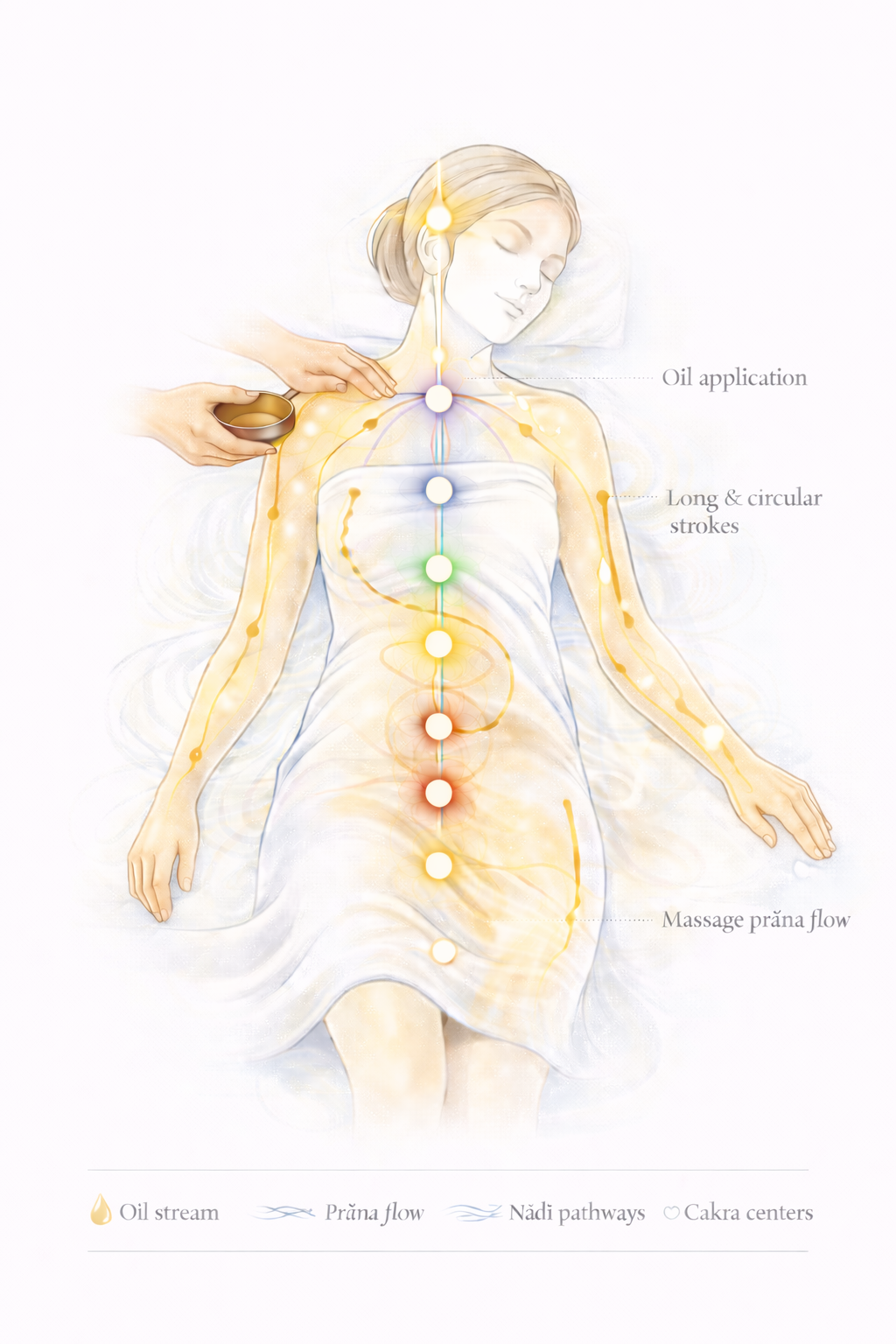
Abhyanga is also traditionally valued for supporting the flow and function of srotas (the body’s channels). When tissues feel properly nourished and less dry, the system tends to move with less friction, and chronic holding patterns often soften without needing intensity.
Aṣṭāṅga Hṛdaya, Sūtrasthāna 2.8–9
देवनागरी
अभ्यङ्गमाचरेन्नित्यं स जराश्रमवातहा ।
दृष्टिप्रसादपुष्ट्यायुःस्वप्नसुत्वक्त्वदार्ढ्यकृत् ॥ ८ ॥
शिरःश्रवणपादेषु तं विशेषेण शीलयेत् ।
वर्ज्योऽभ्यङ्गः कफग्रस्तकृतसंशुद्ध्यजीर्णिभिः ॥ ९ ॥
Translation
Daily oil massage supports resilience and steadiness, helping with fatigue and vata-type strain, supporting nourishment, sleep, skin quality, and firmness. It is especially recommended for head, ears, and feet. It is traditionally avoided during kapha-heavy congestion, right after strong cleansing therapies, and during indigestion.
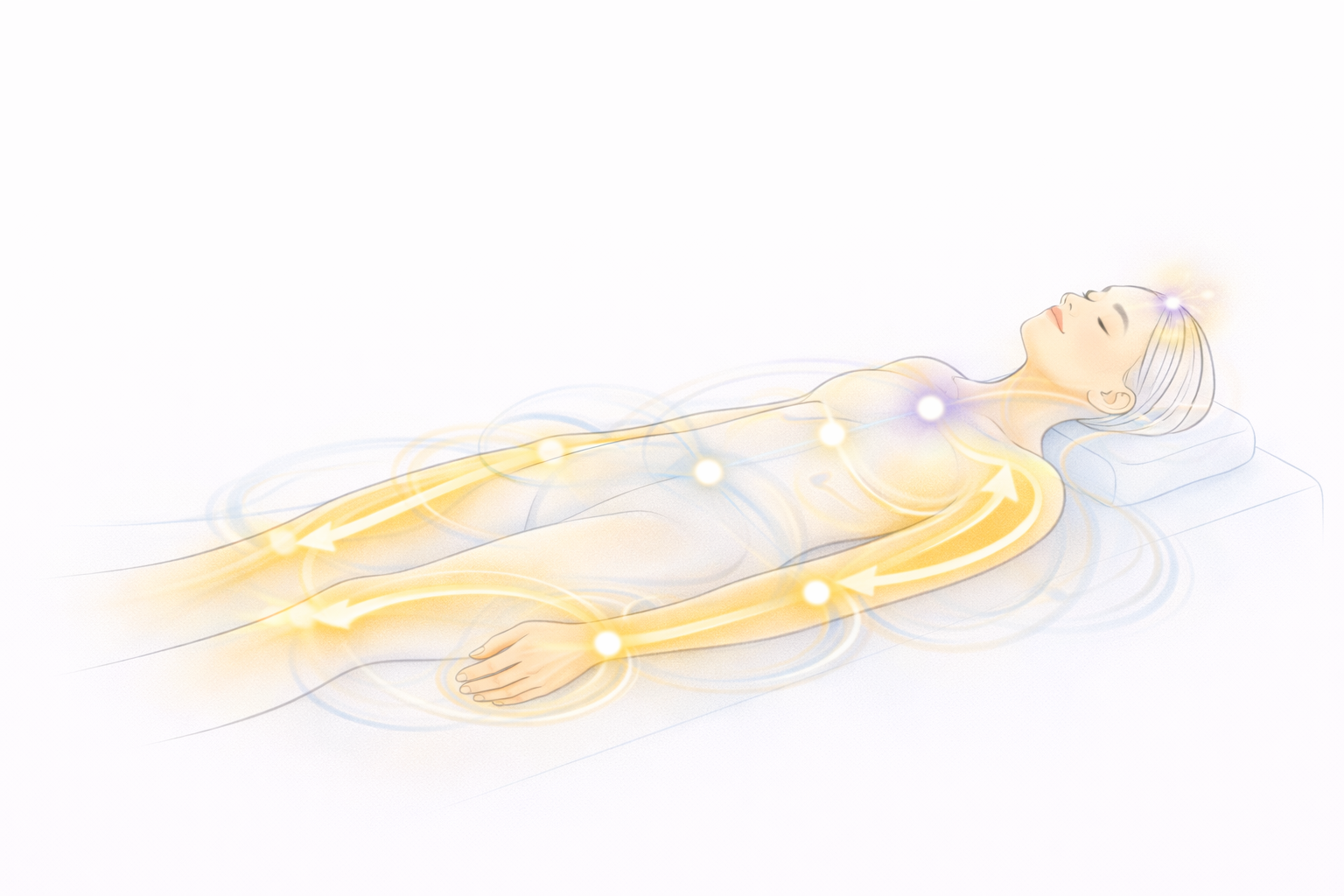
In Ayurveda, oil massage (Abhyanga) is a core snehana therapy supporting the qualities of snigdha (unctuous), mṛdu (soft), and sthira (steady). When life is dry, fast, irregular, or overstimulating, Abhyanga offers the opposite: warmth, rhythm, and nourishment.
You can think of it as a kind of metronome for the nervous system. When touch is steady and predictable, the system stops scanning, stops bracing, and starts settling. As the surface mind softens, prana often distributes more smoothly through the body, and people feel more grounded, less scattered, and more present.
At a subtler level, warm oil and steady strokes support a sense of healthy boundary. When stress has been high, many people feel porous, wired, or overly influenced by their environment. Abhyanga tends to restore containment—as if the body remembers where it ends and the world begins—which often improves sleep, digestion, and emotional steadiness.
Sympathetic to Parasympathetic, Why it Matters
When someone has been living in sympathetic mode (rush, vigilance, “on” all day), the body prioritizes output: fast thinking, bracing, shallow breathing, and a readiness to respond. That’s useful in short bursts—but when it becomes the default, the system has less access to the restorative side of physiology: digestion, tissue repair, immune regulation, and deep sleep. Research on stress physiology commonly uses heart-rate variability (HRV) as one window into this balance, and perceived stress has been linked with reduced parasympathetic HRV—a sign that the body is spending less time in the “rest-and-digest” lane.
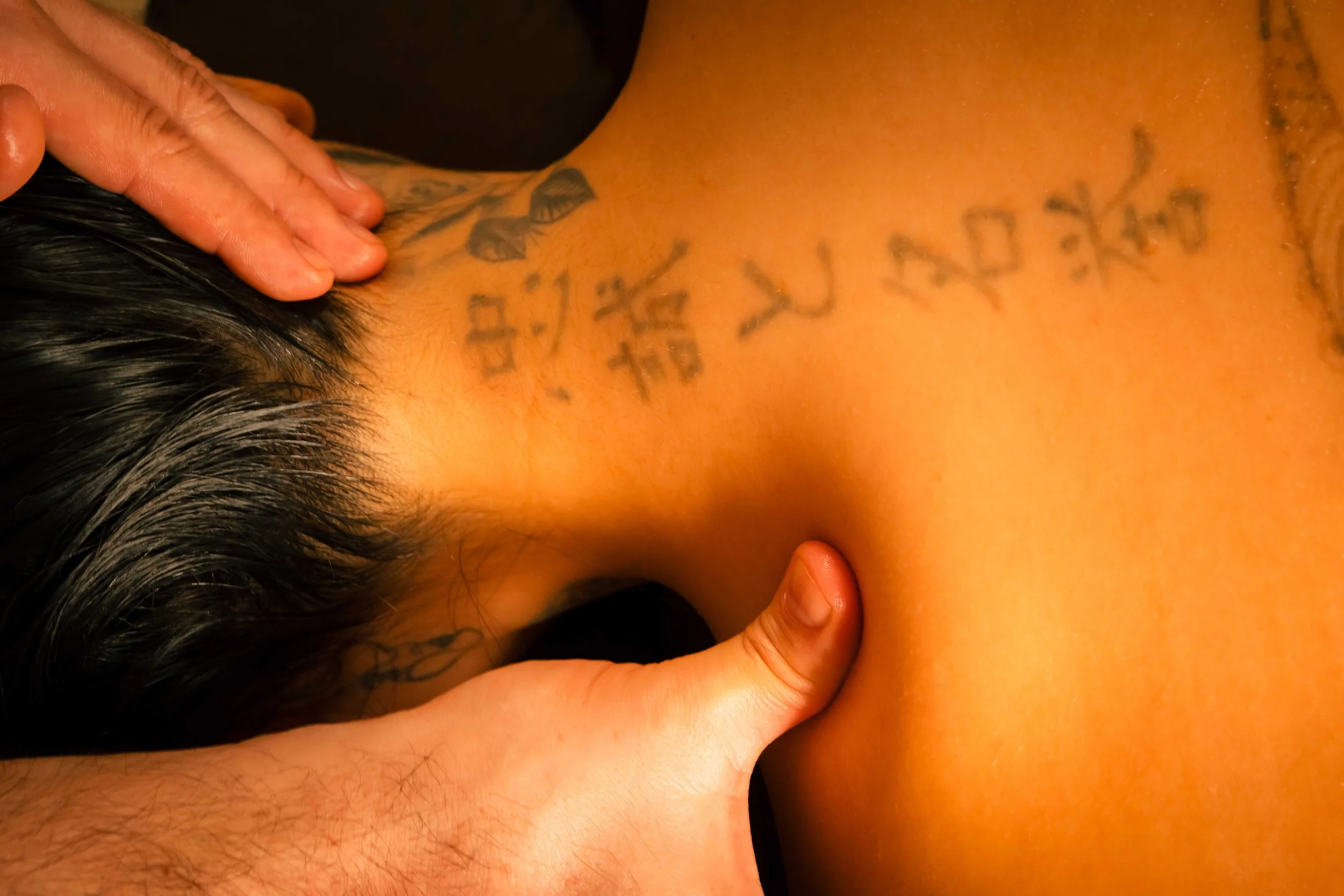
Abhyanga is designed to help the system exit vigilance. Warm oil, steady rhythm, and predictable pressure provide a nonverbal “all clear” signal. In lab research, even short standardized massage protocols increased high-frequency HRV (HF-HRV)—a measure the authors interpret as increased parasympathetic activity—more than resting alone, alongside reductions in subjective stress and increases in relaxation. This aligns with what many people feel after Abhyanga: breathing drops lower, the jaw and belly unclench, and sleep comes with less effort.
From a modern lens, Abhyanga is essentially “rhythm + warmth + safe pressure.” From an Ayurvedic lens, that same trio is how we invite the system back toward steadiness when it’s been running on irregularity. The goal isn’t just relaxation in the moment—it’s improving recovery: helping the body switch out of vigilance more easily, and return to baseline with less friction.

What Doctors & Researchers are Seeing
Abhyanga-specific evidence (early but promising). A small clinical pilot study looked at a single 1-hour Abhyanga session in healthy adults and found statistically and clinically significant reductions in subjective stress, along with reductions in heart rate. Blood pressure reductions were seen specifically in a pre-hypertensive subgroup (not across the entire sample).
Massage, HRV, and nervous system tone. A controlled laboratory trial in Scientific Reports found that two brief standardized massage protocols increased HF-HRV (parasympathetic activity) more than a resting control condition, while participants reported feeling more relaxed and less stressed. A separate pilot randomized crossover trial of head massage also found increases in total HRV and a shift toward higher parasympathetic activity, suggesting a measurable autonomic “downshift” after touch.
Massage, HRV, and nervous system tone. A controlled laboratory trial in Scientific Reports found that two brief standardized massage protocols increased HF-HRV (parasympathetic activity) more than a resting control condition, while participants reported feeling more relaxed and less stressed. A separate pilot randomized crossover trial of head massage also found increases in total HRV and a shift toward higher parasympathetic activity, suggesting a measurable autonomic “downshift” after touch.
Touch as a broader health intervention. A large pre-registered systematic review and multilevel meta-analysis (touch interventions across the lifespan, including massage) reported benefits across many outcomes, with comparatively stronger effects for anxiety, depression, fatigue, and pain, and meaningful reductions in cortisol compared with some purely cardiovascular measures. This doesn’t mean touch “treats everything,” but it does support the core claim that consistent, well-tolerated touch can be a legitimate lever for stress regulation and symptom relief.
Sleep and blood pressure (supportive, not a replacement for medical care). A 2025 home-based study in Healthcare (Basel) found that a relaxation massage session prior to bedtime significantly improved sleep efficiency in people with insomnia symptoms. For blood pressure, a systematic review in hypertensive patients reported that massage (especially when combined with antihypertensive medication) was associated with reductions in systolic and diastolic blood pressure—while also noting that safety reporting across studies can be limited.
What this means in practice: the more frequently you can help the body spend meaningful time in parasympathetic mode—and return there more easily after stress—the more “capacity” most people feel day to day: steadier energy, calmer digestion, better sleep depth, and a less reactive nervous system. The goal isn’t to be parasympathetic all the time; it’s flexibility—being able to mobilize when needed, then truly recover.
References (as listed on-page)
Abhyanga specific
• PubMed 21568717
Massage and nervous system tone (HRV)
• Scientific Reports 2020 (HF-HRV and massage protocols)
• PubMed 26562003 (head massage + autonomic modulation)
Touch interventions (systematic review + multilevel meta-analysis)
• PMC 11199149
Massage and sleep
• Healthcare (Basel) 2025, 13(2):180
Massage and blood pressure (systematic review)
• PubMed 24990417
EasyAyurveda clinical/traditional notes (vāta + contraindications + oils)
• External oil therapies: Abhyanga for increased vāta
• Contraindications (indigestion/fever/kapha-heavy states)

Ayurvedic Warm Oil Massage (Abhyanga) FAQ’s
-
Try to arrive hydrated and avoid coming in very hungry. A light meal one to three hours before is usually ideal. If you are sensitive to caffeine, consider keeping it light earlier that day so your system can settle more easily.
-
Most people feel calmer and more inward afterward. If you can, plan a lighter schedule so your nervous system can integrate the treatment. You can drive home, but we recommend giving yourself extra time and avoiding rushing.
-
If your schedule allows, leaving the oil on for one to three hours can deepen the benefit. If you need to shower sooner, that is fine. Most of the oil is absorbed during the session, and we provide warm towels to remove excess so you leave feeling comfortable.
-
We choose oils based on your constitution, the season, and your current needs. If you have sensitivities such as skin reactivity, migraines, asthma, or fragrance sensitivity, we can keep the oil simple and avoid strong aromas.
We use high-quality organic oils and herbal preparations, and all oils are infused in-house.
-
Yes. Let us know ahead of time about allergies, asthma, migraine triggers, or fragrance sensitivity. We can use a simpler oil and keep the session very gentle.
-
Traditionally, Abhyaṅga is avoided during indigestion, kapha-heavy congestion, or immediately after strong cleansing therapies. If you have acute illness, fever, a fresh injury, an active skin infection/rash, or any medical condition where massage is restricted, let us know and we’ll help you choose the safest option.
By appointment. Closed Tuesdays.
Available times vary by service and practitioner.
Questions or help booking?
We’ll help you choose the right first visit.